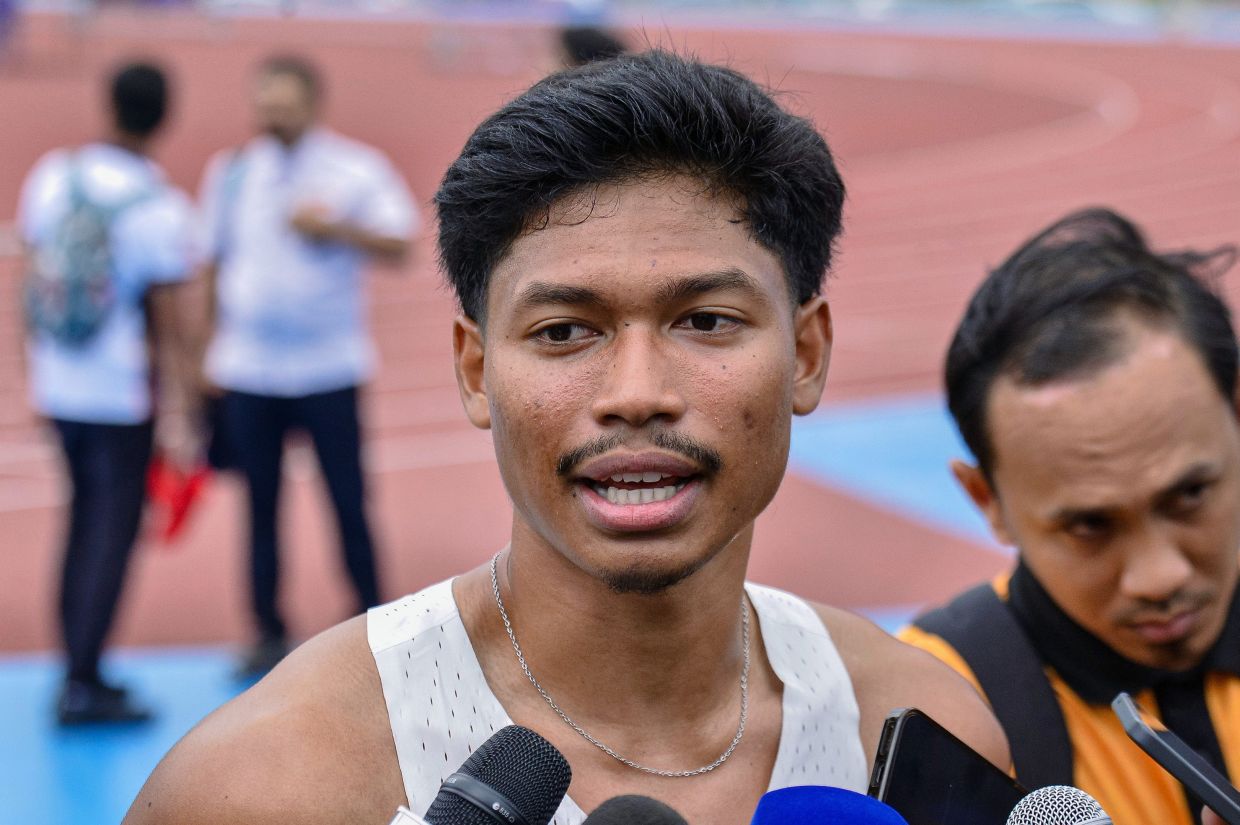
National sprinter Mohd Azeem Fahmi is set to take the next step in his athletic and academic journey by enrolling in a master's programme at Universiti Malaya, Malaysia's oldest and most prestigious university. The announcement comes shortly after Azeem finished his undergraduate studies at Auburn University in the United States, where he spent the past two years developing his sporting prowess while balancing academic commitments.
During a courtesy visit to the university's administrative headquarters in Kuala Lumpur, Azeem was formally received by Universiti Malaya's vice-chancellor, Prof Datuk Seri Dr Noor Azuan Abu Osman, signalling the institution's serious commitment to supporting the athlete's continued development. The meeting also included senior personnel from the university's sports infrastructure, namely the dean of the Faculty of Sports and Exercise Sciences, Associate Prof Dr Zulkarnain Jaafar, and the Sports Centre director, Afizal Abu Othman. The presence of these key figures underscores the university's institutional backing for Azeem's educational pathway and reflects a deliberate effort to create an environment where elite athletes can thrive academically while maintaining their competitive edge.
Universiti Malaya has established itself as a haven for Malaysia's most accomplished sportspeople, with a track record spanning decades of nurturing world-class talent across multiple disciplines. The university counts among its alumni some of the nation's greatest sporting icons, including Olympic diving champions Datuk Pandelela Rinong and Ooi Tze Liang, as well as Commonwealth Games medalist Bryan Nickson Lomas. The institution has also produced excellence in badminton, with former national women's doubles player Vivian Hoo graduating with a Bachelor of Sports Science degree in 2019. This established lineage of sporting achievement positions Universiti Malaya as a natural choice for ambitious athletes seeking to integrate their competitive aspirations with serious academic advancement.
Azeem's decision to pursue postgraduate studies in Malaysia represents an interesting countermovement in the context of Southeast Asian sports talent development, where many elite athletes traditionally complete their studies abroad before returning home. His two-year tenure at Auburn University in Alabama, beginning in January 2023, provided him with exposure to world-class coaching and training methodologies under the guidance of Ken Harnden, one of the United States' most respected sprint coaches. During that period, Azeem focused on exercise physiology and kinesiology, subjects that directly complement his practical experience as a high-performance athlete and position him uniquely to contribute to the development of Malaysian sports science.
The timing of Azeem's return aligns with a particularly productive phase of his athletic career. Just recently, the sprinter delivered an outstanding performance at the Malaysian Open athletics championships held at Universiti Putra Malaysia's Serdang campus. Competing in the men's 100 metres, Azeem secured the gold medal, demonstrating the technical refinement and explosive power he has developed through his American training experience. Beyond individual success, he also anchored Malaysia's 4x100 metres relay team to victory, running alongside teammates Danish Iftikhar Mohd Roslee, Pengiran Aidil Auf Hajam and Mohd Armin Zahryl. These recent achievements validate the effectiveness of his development pathway and suggest that Azeem's continued investment in education will enhance rather than diminish his competitive prospects.
At just 21 years of age, Azeem occupies a unique position within Malaysian athletics. He possesses the rare combination of international exposure through elite American university training, proven competitive success against domestic rivals, and the intellectual foundation necessary to engage with advanced sports science concepts. His willingness to pursue a master's degree rather than focusing exclusively on professional competition suggests a long-term perspective on his career development and a recognition that sustained success in sport increasingly depends on scientific understanding and continuous adaptation to evolving training methodologies.
The synergy between Azeem's practical experience as an athlete and his academic study of exercise physiology and kinesiology positions him as a potential bridge figure in Malaysian sports development. Coaches, strength and conditioning specialists, and sports administrators increasingly draw from evidence-based practices, and athletes with formal education in these areas can contribute meaningfully to professionalising the entire ecosystem. Universiti Malaya's investment in supporting Azeem's postgraduate ambitions signals confidence that his participation will enrich not only the university's research output but also the broader Malaysian athletics programme.
For Malaysian athletic development, Azeem's trajectory offers several lessons and opportunities. The integration of elite athletes into tertiary research environments can accelerate innovation in training methods, injury prevention, and performance enhancement—benefits that extend well beyond any single individual. Furthermore, the return of American-trained athletes to local universities strengthens the knowledge transfer pipeline, ensuring that best practices discovered abroad become embedded in domestic sporting infrastructure. This circulation of expertise, combined with the institutional support Universiti Malaya is providing, creates conditions conducive to sustained competitive excellence.
As Azeem embarks on his master's studies, the broader question of how Malaysia can sustain and develop its sprinting talent becomes increasingly relevant. With recent success in regional and international competitions, the sport has attracted renewed attention and investment. Azeem's presence at Universiti Malaya, combining rigorous postgraduate research with continued training and competition, models a pathway that other emerging talents might follow, ultimately strengthening the entire sporting ecosystem while advancing academic knowledge.

