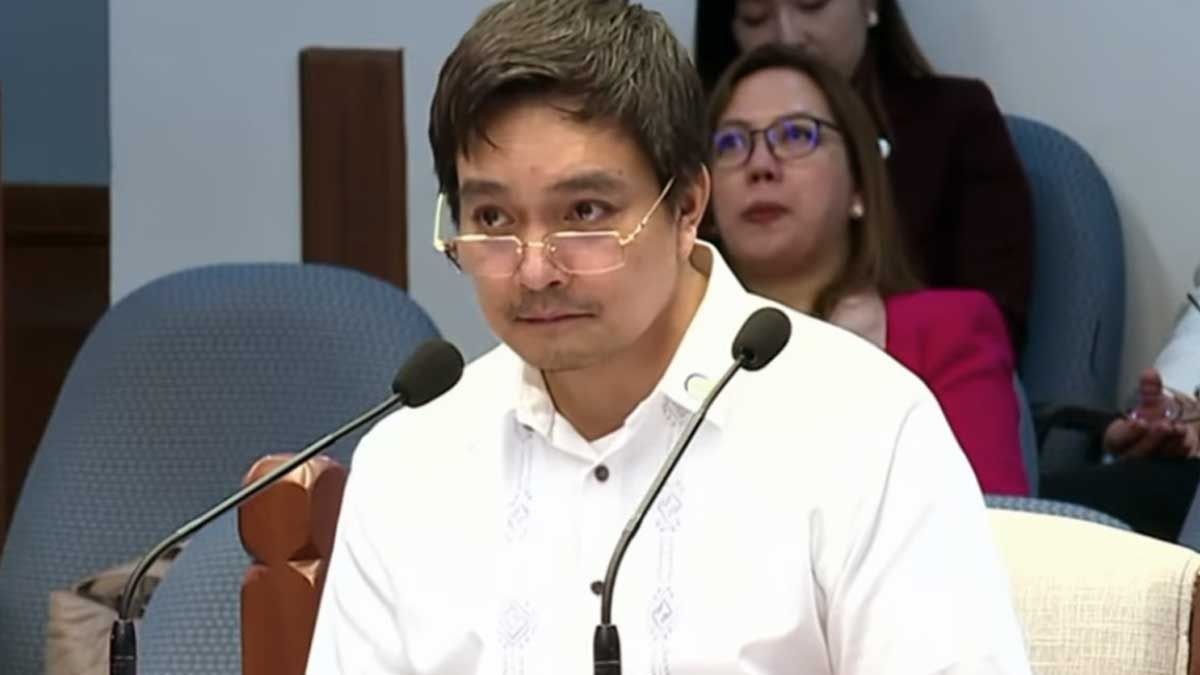
The National Bureau of Investigation's regional director facing questioning in Vice President Sara Duterte's impeachment proceedings has drawn a distinction between direct personal knowledge and circumstantial evidence, arguing that investigative materials collected point toward her culpability in an alleged assassination scheme against President Ferdinand Marcos Jr., even as he conceded the absence of eyewitness testimony or confessions establishing the conspiracy.
Jeremy Lotoc, heading the NBI's Crime Division during the investigation, testified on Tuesday at the continued cross-examination phase of the Senate impeachment trial that while he personally witnessed no contract being signed or money changing hands, the collective body of evidence gathered by his team suggested Duterte had engaged someone to kill the president, First Lady Liza Araneta-Marcos, and former House Speaker Martin Romualdez. The distinction proved crucial as Duterte's defence counsel pressed Lotoc on whether he possessed the kind of direct knowledge that would typically undergird a criminal conspiracy charge.
The investigative focus originated from remarks Duterte made during an online media briefing on November 23, 2024, when she issued what prosecutors characterised as threats against the president's life. Those utterances became the foundation for the fourth article of impeachment filed against her, transforming an apparent statement of political frustration into formal criminal accusation. Lotoc's role in documenting and interpreting the context of those remarks placed him at the centre of the prosecution's case during the trial phase now proceeding in the Senate.
The testimony revealed fundamental tensions in how circumstantial evidence operates within impeachment proceedings, a quasi-judicial process that occupies different legal terrain than conventional criminal trials. Defence lawyer Mark Vinluan methodically attempted to isolate what Lotoc could personally attest to versus what remained inference or interpretation, creating space for reasonable doubt about whether the evidence truly established an assassination conspiracy or merely reflected Duterte's angry rhetoric captured on video.
When Vinluan pressed whether Lotoc had personal knowledge of the alleged contract, the NBI official provided an answer designed to maintain his credibility while sustaining the prosecution's narrative: he acknowledged the absence of personal knowledge while emphasising that the investigated evidence supported their belief in her involvement. This formulation allowed Lotoc to testify honestly about his own epistemic limits while still providing the prosecution with testimony suggesting guilt.
Tensions escalated during the proceeding when discussions turned to Duterte's broader allegations of corruption levelled against various government figures in the same video. Vinluan attempted to highlight what he portrayed as the witness's selective acceptance of Duterte's claims, suggesting that if investigators credited her conspiracy statement, they should equally credit her corruption allegations. This manoeuvre sought to undermine the logical consistency of the prosecution's case by demonstrating that the same video contained statements ranging from plausible to contested to doubtful.
Senate Presiding Officer Francis "Chiz" Escudero intervened repeatedly as the cross-examination devolved into rhetorical sparring, ultimately characterising the proceedings as not a "college debate" and demanding that counsel and witnesses provide more precise and complete responses. The intervention reflected broader concerns that the impeachment trial, while televised and significant, risked becoming more theatrical performance than careful legal fact-finding, with each side mining the testimony for rhetorical advantage rather than pursuing truth.
When Senate President Sherwin Gatchalian questioned what evidence demonstrated Duterte's actual capability to execute such threats, Lotoc initially responded that her position as vice president itself conferred such capacity. Gatchalian's subsequent objection—that holding high office does not automatically establish one's ability to commit murder—forced the witness to articulate what additional evidentiary foundation supported the allegation. This exchange illuminated a critical gap in the prosecution's case: demonstrating motive and opportunity differs substantially from proving intent and capability to murder.
Lotoc then invoked the International Criminal Court investigation into Duterte's father, former President Rodrigo Duterte, regarding alleged extrajudicial killings during his administration's drug war, suggesting that familial connection to such practices indicated the Vice President possessed both knowledge of how to orchestrate unlawful killings and psychological predisposition toward violence. This reasoning drew on inferences about inherited traits and family culture, raising questions about whether guilt could legitimately attach based on a parent's alleged crimes and whether association with state violence necessarily indicated personal willingness to commit private murder.
The testimony underscored the fundamental challenge confronting the impeachment proceedings: transforming political hostility and inflammatory rhetoric into legal proof of criminal conspiracy. While Duterte's November remarks were undeniably provocative and disturbing as statements from a sitting vice president, converting such utterances into evidence of an actual contract killing required interpretive leaps that the defence systematically questioned throughout the cross-examination.
For Malaysian observers and others in the Southeast Asian region watching the Philippine impeachment proceedings, the trial illustrates how democracies grapple with accountability for leaders whose conduct transgresses norms even when direct criminal proof remains elusive. The question of whether high-ranking officials can face removal for statements suggesting serious crimes, absent conventional evidence, touches issues of institutional power, constitutional interpretation, and the boundaries of political accountability that resonate across the region.
The ongoing impeachment trial continues to hinge on whether senators will view the collective investigative evidence as sufficiently establishing guilt, or whether they will demand the kind of direct proof that Lotoc himself acknowledged the NBI had not obtained. The distinction may ultimately determine whether Duterte faces conviction or acquittal in what has become one of the Philippines' most significant political trials in recent years.

