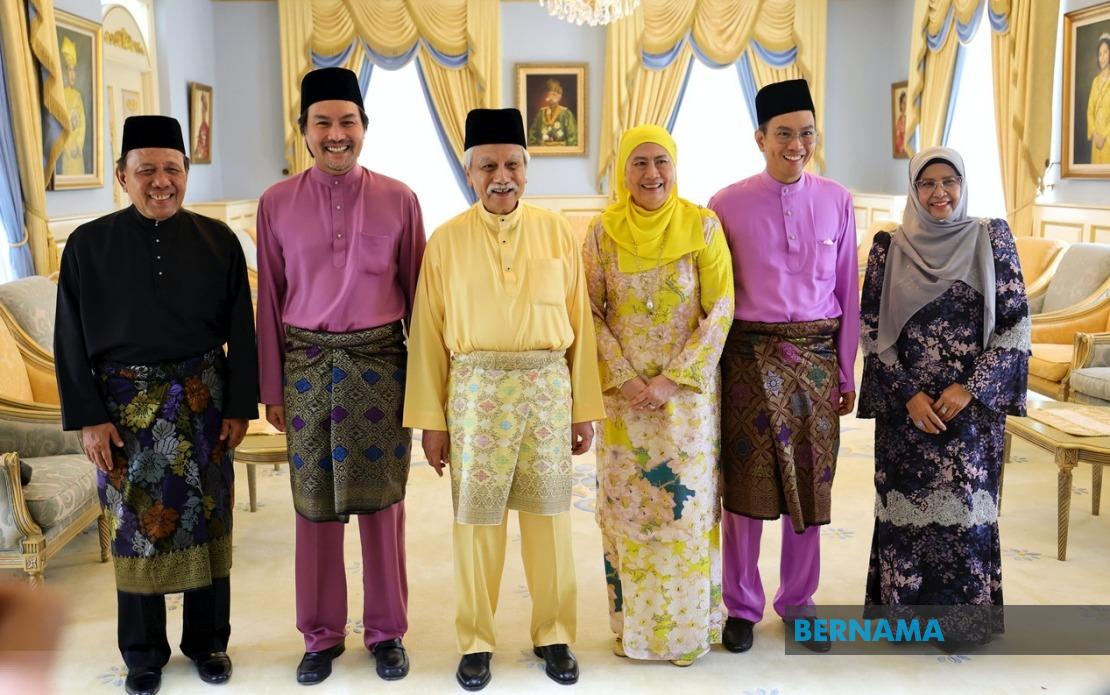
Negeri Sembilan's newly appointed Menteri Besar Datuk Ismail Lasim has pledged to finalise the state cabinet composition within days, marking the beginning of what promises to be a carefully orchestrated transition following the state election. Speaking at his inaugural press conference after taking his oath before Tuanku Muhriz Tuanku Munawir at Istana Besar Seri Menanti in Kuala Pilah, Ismail outlined a structured timeline for unveiling the executive council that will govern the state over the coming years.
The process ahead involves multiple layers of political negotiation that reflect the complex dynamics now shaping Negeri Sembilan's governance structure. Ismail indicated that Barisan Nasional leadership will be consulted first, establishing the coalition's preferences before any formal proposal reaches the Yang Dipertuan Besar for royal endorsement. This methodical approach underscores the importance of securing stakeholder buy-in before presenting the cabinet configuration to the state's paramount ruler, acknowledging both constitutional propriety and political necessity.
Central to the cabinet-building exercise is the incorporation of component parties within the broader Barisan Nasional framework. Beyond UMNO's own representatives, the state assembly includes members from the Malaysian Chinese Association and Malaysian Indian Congress, each expecting meaningful representation in executive positions. Ismail's acknowledgment that these factors would be carefully weighed suggests that portfolio allocation will reflect not merely administrative efficiency but also the delicate ethnic and political balance that characterises Malaysian coalitional governance.
A particularly significant dimension involves the potential inclusion of Perikatan Nasional assemblymen in the executive council structure. Rather than treating PN as adversaries despite their competing positions in the recent election, there are indications of pragmatic collaboration. Ismail made clear that any decisions regarding PN participation would require consultation with UMNO president Datuk Seri Dr Ahmad Zahid Hamidi, reflecting hierarchical party protocols and the need for consensus among coalition partners before broadening the cabinet beyond Barisan Nasional's own ranks.
The forthcoming electoral outcome provided a compelling mandate for governance stability. Barisan Nasional captured eighteen of the thirty-six state assembly seats contested, while Perikatan Nasional secured seven positions. Together, these two coalitions command a comfortable two-thirds parliamentary majority, a threshold that confers both legitimacy and operational flexibility for pursuing ambitious legislative and policy agendas without depending on defections or independent assemblymen. This distribution removes the precariousness that has characterised several other state governments in recent years.
Regarding the structure itself, Ismail signalled a preference for maintaining the existing ten-member cabinet format that has served the state administration previously. This choice appears driven by pragmatism rather than ideological preference—a cabinet of manageable proportions can function more cohesively whilst accommodating the representation demands of multiple political parties and ethnic constituencies. The decision whether to retain this established size or expand the executive council remained contingent on ongoing discussions with party hierarchies.
The underlying governance philosophy articulated by Ismail emphasises continuity in policy priorities whilst allowing for fresh leadership perspectives. His assertion that welfare and public wellbeing constitute the state administration's foundational commitments reflects standard Malaysian political rhetoric, yet gains particular resonance given the economic pressures and infrastructural development needs that persist across Negeri Sembilan's constituencies. The incoming government faces expectations to deliver tangible improvements in living standards whilst managing state finances prudently.
For Malaysian political observers, the Negeri Sembilan transition carries implications extending beyond the state's immediate borders. The collaboration between Barisan Nasional and Perikatan Nasional, rather than outright confrontation, suggests potential governance models for other states where no single coalition secured overwhelming majorities. This pattern of pragmatic power-sharing, if successfully implemented in Negeri Sembilan, could reshape expectations about what coalition arrangements might achieve across the federation's diverse political landscape.
The expedited timeline for finalising the cabinet—with Friday positioned as the target deadline—reflects pressure from multiple quarters to establish clarity and operational legitimacy quickly. The Yang Dipertuan Besar's apparent preference for swift resolution adds urgency to these processes, as does the practical necessity of assembling a functioning administration capable of addressing pressing state matters. The compressed schedule also signals to the public that the new government intends to move decisively from campaign mode to governance mode.
Ismail himself, representing the Juasseh state assembly seat, embodies the administrative continuity that Barisan Nasional sought to project during the electoral campaign. His appointment followed established protocols and reflected the coalition's confidence in experienced stewardship rather than radical restructuring. The looming cabinet announcements will test whether this stability extends into the broader executive structure or whether the government introduces significant personnel changes that might reshape policy directions and administrative priorities.
Looking ahead, the success of Negeri Sembilan's governance experiment will depend partly on how effectively the disparate elements within the expanded coalition—Barisan Nasional core components alongside potential Perikatan Nasional participation—can navigate competing interests whilst maintaining functional unity. The cabinet composition emerging this week will signal early indicators regarding the new government's governing philosophy and its commitment to either conventional power-distribution patterns or experimentation with more inclusive coalition arrangements.

