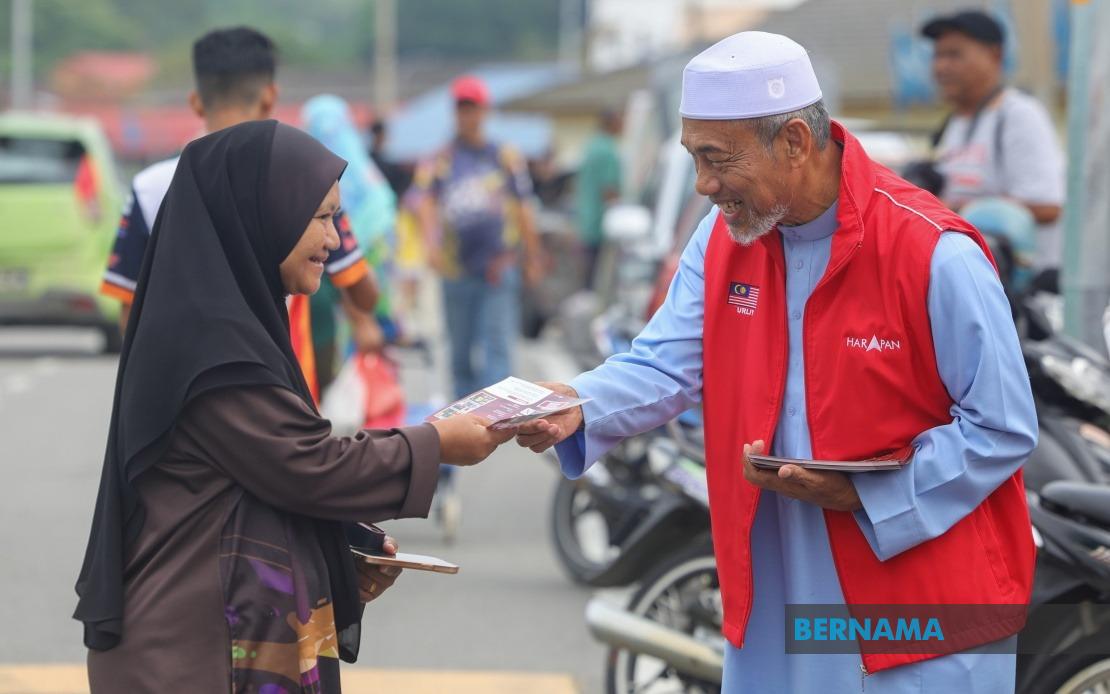
The campaign for Negeri Sembilan's 16th state election has shifted into high gear, with candidates from all political camps executing intensive grassroots strategies to connect directly with voters in the 12 days remaining before polls open on August 1. From early morning mosque visits to evening community dinners, the competition has become notably personal and localised, moving beyond traditional rallies to emphasise one-on-one voter engagement across market squares, residential areas, and informal gathering spots throughout the state.
Menteri Besar Datuk Seri Aminuddin Harun has emerged as a particularly visible presence on the campaign trail, beginning his second day of campaigning with Subuh prayers at Masjid Jamek Pasir Panjang before transitioning to a resident breakfast session. As the PKR politician defending the Linggi seat, Aminuddin subsequently conducted a series of neighbourhood walkabouts spanning Pasir Panjang town, Taman Setia, Taman Kekatong, and two locations in Telok Pelandok, interspersing these routes with a targeted community engagement session addressing Indian residents. His approach underscores a deliberate strategy among frontline Pakatan Harapan figures to frame campaigning as an exercise in listening and relationship-building rather than merely broadcasting party messages.
The intensity of the schedule reflects broader competition pressures. Multiple candidates have committed to running between eight and nine separate programmes daily, a workload that demands coordination across distinct neighbourhoods and demographic groups within single constituencies. This saturation approach seeks to maximise the probability that voters will encounter candidates in informal settings where conversation flows naturally rather than through orchestrated events. For candidates like Kamarul Ariffin Wafa contesting Seri Menanti under the PH banner, this translates to morning market visits followed by community engagements that extend into evening hours, creating multiple touchpoints with different voter segments throughout the day.
Among opposition figures, DAP secretary-general Anthony Loke has adopted similar tactics whilst defending his Chennah seat. Beginning his campaign day at Seremban Central Market—a traditionally significant venue for reaching diverse cross-sections of voters—Loke paired morning grassroots work with evening electoral dinners, a blend combining accessibility with formal political engagement. This mixed approach appears designed to demonstrate both approachability and substantive party presence, avoiding the perception that campaigns consist solely of informal glad-handing without serious political content.
PH candidates have emphasised the philosophical dimension of their grassroots strategy. Serting candidate Yaacob Mahmood characterised his breakfast meetings and voter interactions at business premises in Felda Raja Alias 3 and Bandar Seri Jempol as deliberate efforts to foster informal discussion spaces where community concerns could surface naturally. His framing suggests that grassroots campaigning, when executed properly, functions as genuine consultation rather than performative presence, positioning candidates as receptive to local grievances rather than as top-down messengers imposing party talking points.
Barisan Nasional's campaign apparatus has pursued parallel strategies, though with particular emphasis on incumbent advantage. Mohamad Hasan, the incumbent Rantau assemblyman and BN deputy chairman popularly known as Tok Mat, has leveraged his existing community presence by conducting campaign activities from BN polling district centres, a choice that builds upon established institutional infrastructure. Similarly, Negeri Sembilan UMNO Liaison Committee chairman Datuk Seri Jalaluddin Alias balanced youth engagement—attending a Pertang constituency sepak takraw tournament—with outreach to the Orang Asli community in Kampung Utara Putra, suggesting BN's approach encompasses demographic-specific strategies layered across the same intensive daily schedule.
The electoral context lending urgency to these efforts reflects substantial participation potential. The Election Commission registered 889,490 eligible voters across Negeri Sembilan, comprising 867,151 ordinary voters alongside 16,884 military personnel and their spouses and 5,455 police personnel eligible for early voting on July 28. This voter population, dispersed across multiple constituencies with distinct geographic and demographic characteristics, necessitates the candidate visibility and personal engagement that now defines the campaign environment. Early voting provisions for uniformed personnel also compress the effective campaign window for reaching these cohorts, likely intensifying activities in the fortnight between dissolution and polling day.
The state legislative assembly's dissolution on June 5 established the timeline within which these campaign activities occur, with the Election Commission setting polling for August 1 following standard campaign duration protocols. This calendar structuring means that the intensive grassroots engagement observed midway through the campaign period represents the critical phase for candidate positioning, occurring at sufficient distance from polling day to allow campaign momentum to build whilst remaining close enough that voter attention remains focused on electoral choices.
For Malaysian observers and Southeast Asian analysts tracking electoral dynamics in the region, Negeri Sembilan's campaign patterns demonstrate evolving candidate communication strategies that prioritise direct voter contact over purely mediated messaging. The proliferation of morning markets, breakfast sessions, and informal walkabouts suggests that political parties across the spectrum have accepted that contemporary electorates increasingly expect personalised engagement rather than accepting broadcast campaign models. This shift carries implications for campaign resource allocation and the premium placed on candidate personal appeal, factors that may reshape how competitive state elections develop across Malaysia's varied political landscape in coming electoral cycles.

