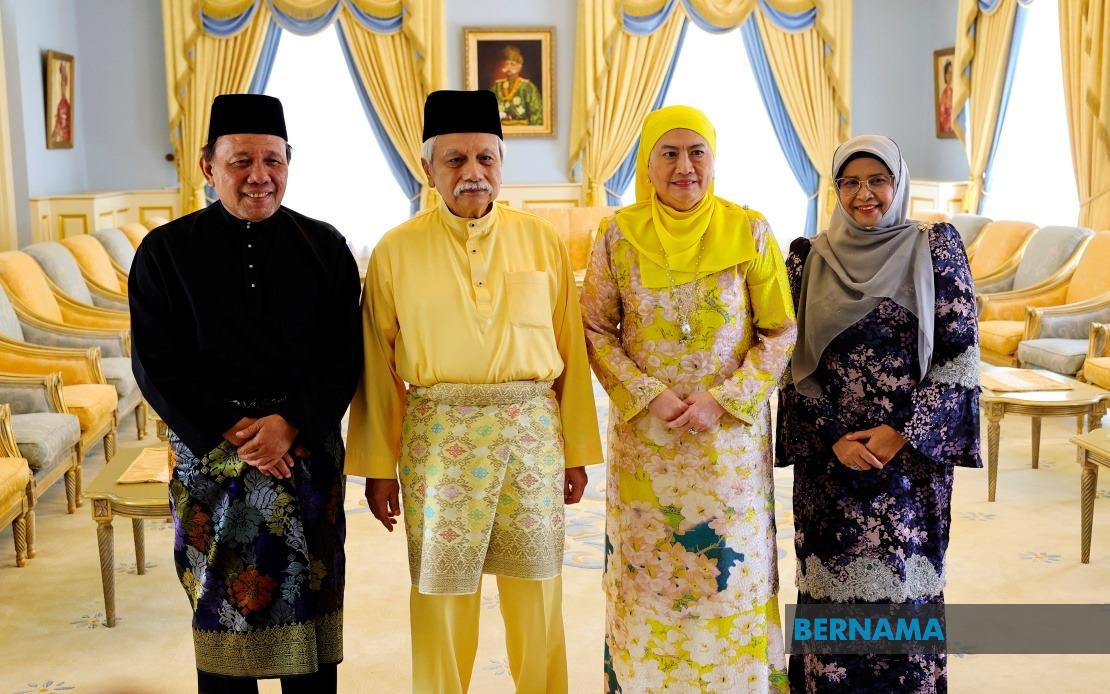
Negeri Sembilan's newly installed Menteri Besar, Datuk Ismail Lasim, has underscored his administration's unwavering dedication to preserving and reinforcing the royal institution as a cornerstone of state governance. Taking the oath of office in Kuala Pilah before the Yang Dipertuan Besar Tuanku Muhriz Tuanku Munawir at Istana Besar Seri Menanti, Ismail articulated a vision of government grounded in respect for constitutional monarchy and cultural heritage. The pledge comes at a time when Malaysia's political landscape continues to evolve, with federal coalitions reshaping state dynamics across the country.
The Juasseh assemblyman framed protection of the royal institution not merely as a government obligation but as a civic responsibility embedded in Negeri Sembilan's identity. In his press conference remarks, Ismail established a two-pronged approach to institutional stewardship: first, ensuring all citizens develop a thorough understanding of the state's established customs and traditions, and second, creating practical mechanisms to honour and defend the monarchy's constitutional role. This formulation suggests an administrative philosophy that treats cultural literacy and institutional respect as complementary pillars rather than separate concerns.
Ismail identified conflict mitigation as a critical component of his stewardship agenda. By emphasising the importance of identifying "the most appropriate ways to minimise conflicts and related issues," he signalled an intent to address any friction between the state administration and the palace proactively. This approach acknowledges potential tension points while positioning the government as seeking collaborative solutions. For Negeri Sembilan residents, such language offers reassurance that governance will prioritise harmony between executive and constitutional authorities, a concern that resonates across Malaysian states where state-monarchy relations occasionally experience strain.
The new Menteri Besar's reaffirmation of stability as a governing principle reflects broader currents in Malaysian politics. He explicitly tied the royal institution's protection to maintaining "close relations between the monarchy and the state administration," recognising that functional government depends on alignment between these spheres. In the Malaysian constitutional framework, where rulers retain significant ceremonial and consultative authority, such harmony proves essential to effective governance. Ismail's rhetoric suggests he views himself as a custodian of both democratic administration and constitutional propriety.
Regarding federal relations, Ismail moved to assure observers that Negeri Sembilan would maintain its cooperative stance with the central government despite recent political shifts. He reiterated that the state's Barisan Nasional component remains integrated within the federal-level Unity Government framework, a point he characterised as unremarkable. This positioning reflects the pragmatic reality that state administrations functioning within broader federal coalitions must balance autonomy with coordinated policy-making. For Malaysian observers, his comments suggest Negeri Sembilan will continue participating in federal initiatives without abandoning state-level autonomy.
The Menteri Besar's willingness to preserve previous administrations' popular policies demonstrates continuity-focused governance. Rather than pursuing wholesale policy overhaul—a temptation facing newly installed leaders—Ismail pledged to maintain and enhance programmes that demonstrably serve public interests. This stance proves particularly significant in Malaysia's context, where frequent transitions between state administrations sometimes interrupt long-term development trajectories. By adopting a merit-based evaluation framework, he signalled that his administration would evaluate policies on efficacy rather than partisan origins.
Ismail's comments reflect an emerging consensus among Malaysian state leaders regarding institutional responsibility. The emphasis on preserving royal prerogatives alongside advancing popular interests represents a delicate equilibrium that characterises successful sub-national governance in Malaysia's constitutional monarchy. His framing suggests awareness that legitimacy flows from honouring both democratic principles and traditional authority structures. This balancing act matters particularly in Negeri Sembilan, where the Yang Dipertuan Besar's consultative role carries historical weight and cultural significance.
The practical implications of Ismail's pledges will unfold as his administration engages with pressing state-level challenges. Negeri Sembilan faces the standard pressures confronting Malaysian states: economic diversification, infrastructure development, and service delivery improvements. Maintaining royal-administrative harmony while advancing developmental agendas requires sustained effort. Ismail's inaugural messaging establishes a framework for managing these dual imperatives, though actual performance will determine whether his stated principles translate into effective governance.
For the broader Southeast Asian context, Negeri Sembilan's political trajectory offers insights into how constitutional monarchies function within federal frameworks. Malaysia's decentralised system permits states considerable autonomy while requiring alignment with national governance structures. Ismail's approach demonstrates how state leaders navigate this complexity by emphasising institutional respect while advocating for constituent interests. As regional democracies experiment with diverse governance models, the Malaysian experience of balancing monarchy, federalism, and democratic accountability remains instructive.
The significance of Ismail's inaugural statements extends beyond ceremonial politics. They establish governing principles that will shape policy priorities and administrative decisions throughout his tenure. By positioning the royal institution's protection as foundational rather than ornamental, he signals that governance legitimacy in Negeri Sembilan depends on honouring constitutional frameworks and cultural traditions. This approach resonates with Malaysian voters who value stable institutions and transparent governance. Moving forward, observers will assess whether these carefully articulated principles translate into tangible benefits for Negeri Sembilan's residents.

