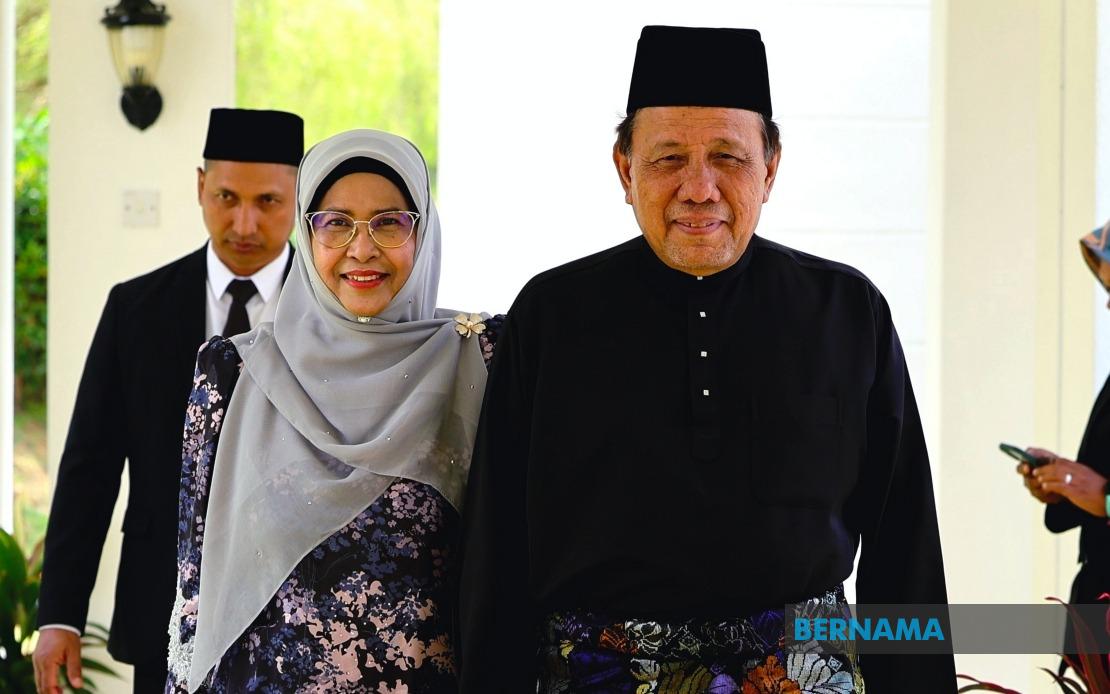
Negeri Sembilan's newly appointed Menteri Besar Datuk Ismail Lasim announced today that August 3 will be an additional public holiday across the state, offering residents a chance to recuperate following the conclusion of the 16th state election held yesterday. The declaration, made during his inaugural press conference after taking the oath of office before the Yang Dipertuan Besar Tuanku Muhriz Tuanku Munawir at Istana Besar Seri Menanti in Kuala Pilah, serves as an acknowledgment of the extensive efforts expended by voters, election officials, and community stakeholders throughout the electoral process.
Ismail, aged 67, emphasised that the decision to declare the occasional holiday was made with the explicit approval of Tuanku Muhriz, highlighting the collaborative relationship between the newly elected state leadership and the royal institution. In his remarks to the media, the Menteri Besar expressed deep gratitude to the Yang Dipertuan Besar for endorsing both his appointment to the chief ministerial position and the subsequent announcement of the public holiday. This ceremonial acknowledgment reflects the constitutional protocols governing state governance in Malaysia, where the ruler's consent remains essential for major executive decisions.
The rationale behind the holiday declaration centred on recognising the physical and mental exhaustion experienced by both electoral workers and the general population following the intensive campaign period and polling day activities. Ismail noted that providing citizens with an additional day of rest would allow them to recover while simultaneously serving as a gesture of appreciation for their participation in the democratic process. The decision underscores how state administrations increasingly recognise the significance of acknowledging public contribution to elections through tangible measures.
Yesterday's electoral outcome demonstrated a decisive mandate for centrist and right-leaning coalitions in the state. Barisan Nasional secured 18 seats within the 36-member State Legislative Assembly, whilst Perikatan Nasional captured seven seats. This combined total of 25 seats grants both coalitions a comfortable two-thirds supermajority, providing substantial legislative capacity for the next state government to advance its policy agenda without requiring external support. The commanding majority reflects voters' preference for political stability and continuity in Negeri Sembilan's governance framework.
The electoral contest involved 103 candidates competing across the full slate of 36 state constituencies, demonstrating vigorous democratic participation despite Malaysia's humid equatorial climate and complex voting procedures. The campaign season and polling activities represented considerable logistical undertakings for election authorities and candidates alike, necessitating extensive resource mobilisation and coordinated efforts from multiple government and non-governmental entities. The scale of participation warranted official recognition of the collective exertion involved.
Ismail's swearing-in ceremony this morning formalised the transition of executive power in the state, with Tuanku Muhriz administering the constitutional oath in the presence of government officials and state dignitaries. The timing of the oath-taking and subsequent announcement of the public holiday demonstrated the new Menteri Besar's intention to establish a collaborative and receptive approach to state administration from his inaugural day in office. Such symbolism carries particular weight during leadership transitions, as it signals the incoming administration's values and priorities to the broader public.
The decision to proclaim an occasional public holiday carries practical implications beyond symbolic recognition. Businesses, schools, and public institutions across Negeri Sembilan will observe closure or curtailed operations on August 3, allowing workers and students to benefit from the extended weekend period. Retailers, restaurants, and service providers may experience altered consumer patterns during this period, though the short notice may limit significant economic disruption. Families and individuals will gain unexpected opportunities for leisure activities, domestic obligations, or personal recuperation.
From a regional perspective, Negeri Sembilan's electoral outcome and transition to new leadership contributes to the broader political landscape of Peninsular Malaysia. The state's decision-making often influences perceptions regarding voter preferences and coalition viability across neighbouring constituencies and states. The decisive performance by Barisan Nasional and Perikatan Nasional's coalition in securing governance reflects wider national political dynamics and may provide interpretive frameworks for upcoming elections in other states or at the federal level.
Ismail's immediate prioritisation of public appreciation through the holiday declaration suggests an administration oriented toward consensus-building and recognition of stakeholder contributions to electoral processes. This approach contrasts with more confrontational political styles and may facilitate smoother implementation of state policies by cultivating public goodwill during the initial phase of his leadership tenure. The gesture extends beyond mere symbolism, offering concrete benefits to the state's population and signalling administrative priorities during the critical early period following electoral transition.

