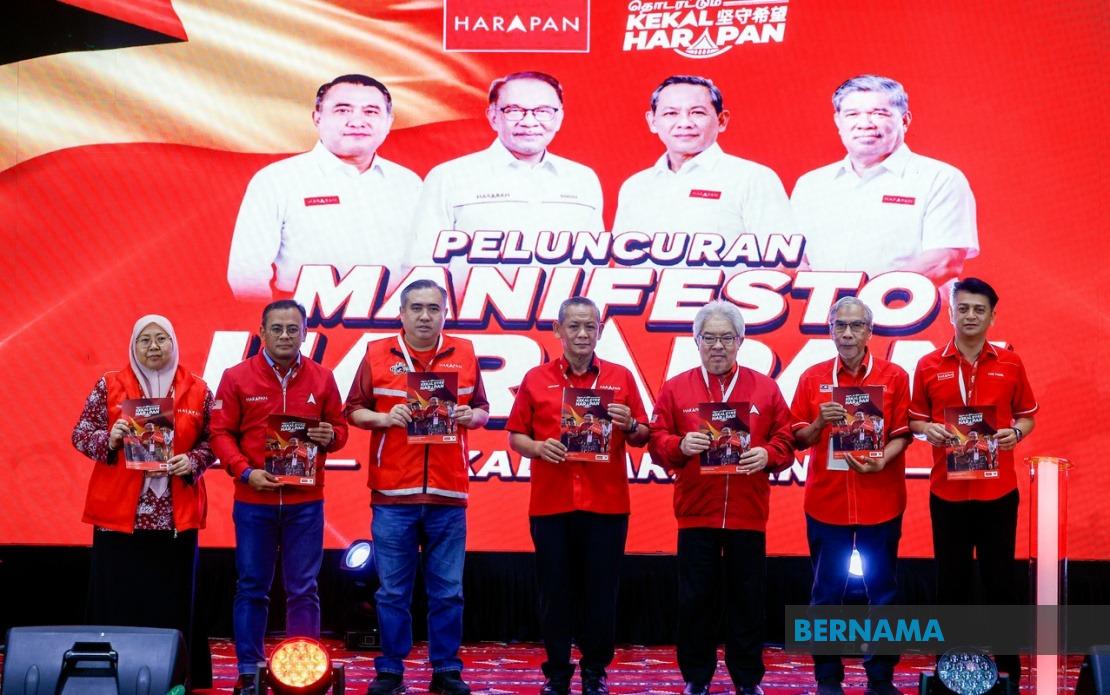
Pakatan Harapan has moved decisively to distinguish itself from typical campaign narratives by framing its Negeri Sembilan state election manifesto as a roadmap grounded in measurable outcomes rather than aspirational soundbites. State coalition chairman Datuk Seri Aminuddin Harun, who also serves as Menteri Besar, made this positioning clear at the manifesto launch in Seremban on July 20, emphasising that the coalition's slate of commitments reflects lessons learned and institutional knowledge accumulated during its eight-year tenure governing the state.
The strategic pivot towards emphasising implementation capability over rhetorical flourish represents a calculated response to voter fatigue with conventional campaign messaging. By anchoring the manifesto in existing initiatives rather than proposing an entirely fresh agenda, Pakatan Harapan is attempting to project competence and continuity—qualities that resonate particularly with Malaysian constituencies weary of constant promises without corresponding outcomes. This approach acknowledges that many voters now prioritise demonstrated capability and pragmatic governance over charismatic pledges that frequently evaporate after elections.
Aminuddin's framing of the next five-year period as fundamentally about converting plans into reality signals a maturation in the coalition's political communication strategy. Rather than positioning Negeri Sembilan as a state undergoing transformation, the messaging emphasises consolidation and enhancement of established programmes. This distinction matters significantly for Malaysian governance discourse, where the gap between campaign commitments and actual delivery has become a persistent point of public cynicism. By inverting the narrative to focus on what already exists rather than what might be created, the coalition sidesteps vulnerability to accusations of unfulfilled promises.
The manifesto, unveiled under the thematic banner 'Negeri Sembilan Kekal Harapan' (Negeri Sembilan Stays With Harapan), encapsulates ten key commitments that presumably reflect the priorities identified during eight years of state-level governance. The choice of the word 'kekal'—meaning 'remains' or 'stays'—carries linguistic significance beyond translation. It suggests stability and continuity rather than disruption or radical reinvention, a positioning that appeals to middle-ground voters concerned about economic uncertainty and administrative consistency.
For regional observers monitoring Malaysian electoral dynamics, Negeri Sembilan's state contest functions as a preliminary indicator of voter sentiment regarding the coalition's broader governance narrative. The state's relatively compact electorate and manageable complexity allow political strategists to test messaging frameworks that may eventually scale to national campaigns. The emphasis on deliverables represents a test of whether Malaysian voters genuinely reward pragmatism and institutional competence, or whether opposition parties can still mobilise support through alternative narratives.
Aminuddin's personal positioning as a contestant in the Linggi state seat underscores a deliberate alignment between the manifesto's messaging and individual accountability. By placing himself directly before voters in a specific constituency, the Menteri Besar embodied the principle that leaders should bear personal responsibility for manifesto implementation. This contrasts with some political cultures where campaign documents become detached from individual responsibility once elections conclude. The personal stake signals that the coalition leadership views the manifesto as a binding commitment rather than symbolic documentation.
The emphasis on creating 'strong foundations' for future generations reflects a longer-term perspective increasingly absent from Malaysian political discourse, which often privileges immediate gratification and short-term populist measures. By invoking intergenerational benefit, the manifesto attempts to elevate the conversation beyond transactional vote-buying and appeal to voters concerned about structural resilience and sustainable development. This rhetorical strategy recognises demographic shifts in Malaysian electorates towards younger, more analytically sophisticated voters sceptical of conventional patronage politics.
Negeri Sembilan's state election carries disproportionate importance within the broader Pakatan Harapan architecture, given the state's historical role as a coalition stronghold and its geographical significance within the greater Kuala Lumpur metropolitan orbit. Should the coalition successfully execute and communicate delivery on its manifesto commitments, it establishes credibility for applying similar approaches in other contested states. Conversely, any significant shortfall between committed and delivered initiatives could amplify opposition narratives questioning the coalition's competence and sincerity across multiple electoral contests.
The manifesto's deliberate framing around enhancing rather than initiating programmes also reflects the practical constraints facing incumbent governments operating within fiscal limitations and inherited institutional structures. Rather than promising expensive new infrastructural megaprojects or sweeping social programmes, Pakatan Harapan is signalling fiscal prudence and realistic governance parameters. This positioning may disappoint voters seeking transformative change, but it simultaneously reduces the political vulnerability of over-promising in constrained economic circumstances.
Regionally, Negeri Sembilan's electoral trajectory carries implications for how Pakatan Harapan packages its governance brand across Southeast Asia's broader democratisation landscape. As multiple countries in the region grapple with voter disillusionment regarding political parties' delivery capacity, the coalition's explicit commitment to measuring itself against manifestos rather than rhetorical excellence represents a significant positioning choice with potentially wider resonance. The outcome will likely influence how other regional political movements approach electoral communication and accountability frameworks.

