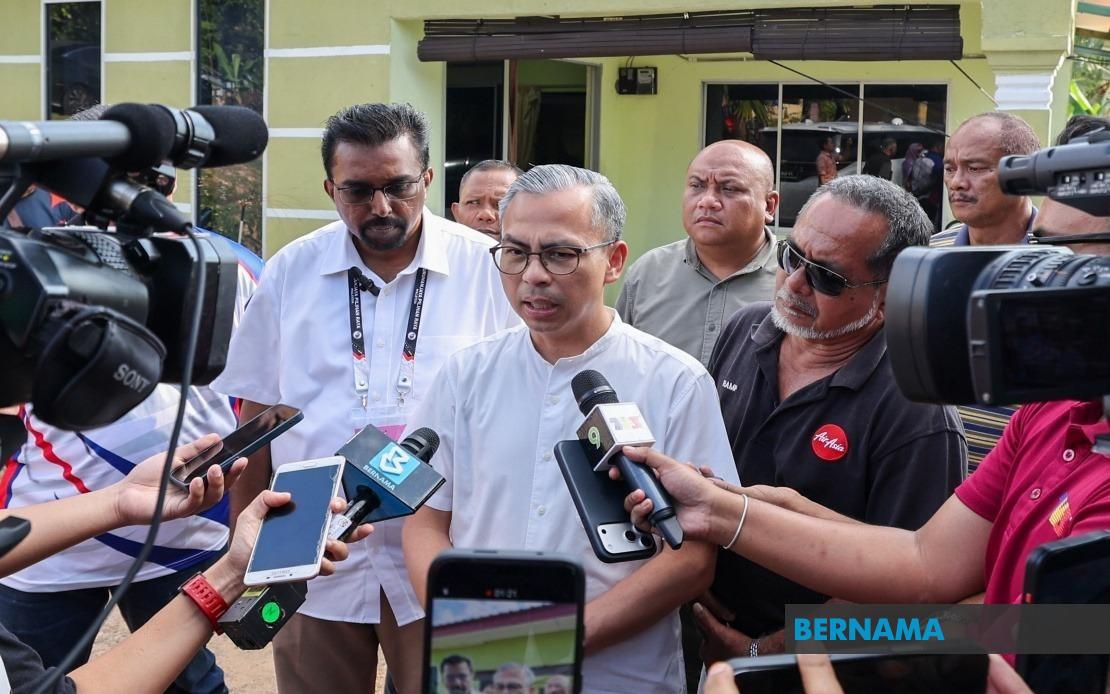
The Negeri Sembilan state election campaign has proceeded without significant disruption to the social media landscape, according to Communications Minister Datuk Seri Fahmi Fadzil, who reported that the Malaysian Communications and Multimedia Commission has fielded only 16 complaints since the campaign period commenced. The restrained level of complaints suggests that electoral stakeholders and the public have largely adhered to established guidelines governing online political discourse, a positive indicator for the integrity of the democratic process in the state.
The composition of complaints received reveals where actual problems have surfaced during the early campaign period. Of the 16 grievances lodged with MCMC, 14 stemmed from technical failures affecting telecommunications networks rather than electoral misconduct or platform abuse. The remaining two complaints involved the creation and circulation of fraudulent social media accounts, a persistent challenge in managing digital election environments across the region. This breakdown indicates that infrastructure deficiencies pose a more pressing immediate concern than deliberate misinformation campaigns at this stage of the electoral calendar.
Fahmi's appeal to the voting public emphasises the shared responsibility for maintaining electoral integrity in digital spaces. Residents have been encouraged to identify and report any content that contravenes either election laws or the terms of service established by social media platforms themselves. Should platform operators prove unresponsive to initial complaints, Fahmi instructed constituents to escalate matters to MCMC for formal investigation and intervention. This multi-layered reporting mechanism reflects the government's recognition that no single institution can effectively police the vast ecosystem of online political speech.
With the campaign still in its early phases—six days into what remains a roughly two-week period before voting—election authorities have begun calibrating their vigilance for anticipated turbulence ahead. Fahmi acknowledged that the final 72 to 96 hours typically generate exponential increases in social media engagement, as candidates intensify outreach efforts and supporters mobilise their networks. This well-documented pattern creates a compressed timeframe within which false narratives can proliferate with minimal opportunity for fact-checking or counter-messaging, presenting genuine challenges to maintaining an informed electorate.
The Communications Minister's caution regarding potential disinformation surges reflects lessons learned from prior electoral contests across Southeast Asia, where closing weeks have frequently witnessed coordinated campaigns of misleading content. Such false information can manipulate voter perceptions on consequential matters, from candidate positions to voting logistics themselves. By publicly flagging this risk, Fahmi has signalled that authorities will heighten monitoring during this critical window, though he stopped short of outlining specific enforcement measures that might be deployed.
Beyond electoral management, the minister used his Negeri Sembilan visit to address a persistent infrastructure challenge affecting the Felda Palong 1 settlement. Network coverage gaps along primary access roads serving the settlement represent not merely an inconvenience but a potential safety liability during emergencies when reliable communications can prove lifesaving. Fahmi's emphasis on the principle that internet access should follow roads wherever they extend reflects a broader Malaysian aspiration toward digital inclusion and universal connectivity.
The identification of root causes reveals systemic obstacles within Malaysia's telecommunications sector. Despite telecommunications companies executing a memorandum of understanding on network sharing infrastructure during the previous year, implementation progress has lagged significantly behind schedule. The mechanism was designed to enable more efficient coverage expansion by permitting carriers to leverage each other's infrastructure, yet the anticipated acceleration in rural and remote area connectivity remains largely unrealised. This gap between policy intention and operational reality mirrors comparable challenges observed across the wider region.
Addressing these infrastructure deficiencies will require multifaceted approaches, according to Fahmi's assessment. Construction of additional telecommunications towers remains the foundational solution but entails substantial capital investment and land acquisition complexities. Concurrently, optimisation of existing infrastructure through technology upgrades can extend coverage without requiring new physical assets. More innovatively, satellite-based connectivity services such as Starlink have been identified as potential interim measures while terrestrial solutions develop, a pragmatic acknowledgment that transformative infrastructure projects necessarily unfold across extended timelines.
Telecommunications companies have additionally been directed to strengthen their customer engagement systems, particularly through artificial intelligence applications that would permit subscribers to independently monitor complaint resolution progress. Enhanced transparency regarding service restoration timelines and technical status updates can reduce frustration and build public confidence in network operators' responsiveness. This focus on customer-facing technology aligns with contemporary expectations regarding digital service delivery and accountability.
The Negeri Sembilan election framework establishes early voting opportunities on July 28, with primary polling scheduled for August 1, granting campaign participants and election administrators approximately one week to navigate the intensification phase that Fahmi anticipates. This timeline compression underscores why preventive measures against disinformation must be robustly established now, before the final electoral sprint generates the informational chaos historically associated with campaign conclusions. The coordination between MCMC, platform operators, and law enforcement will prove critical during this interval.
For Malaysian observers and Southeast Asian analysts monitoring electoral health and democratic resilience, the Negeri Sembilan contest offers an instructive case study in managing digital campaign environments. The relatively low complaint volume and predominantly technical rather than malicious character of reported issues suggest that messaging to the public regarding acceptable online conduct may be achieving intended effects. However, Fahmi's explicit warning against anticipated closing-period disinformation acknowledges that stability in early campaign phases offers no guarantee against late-stage disruption, a pattern that extends across democracies navigating the complexities of social media-saturated elections.

