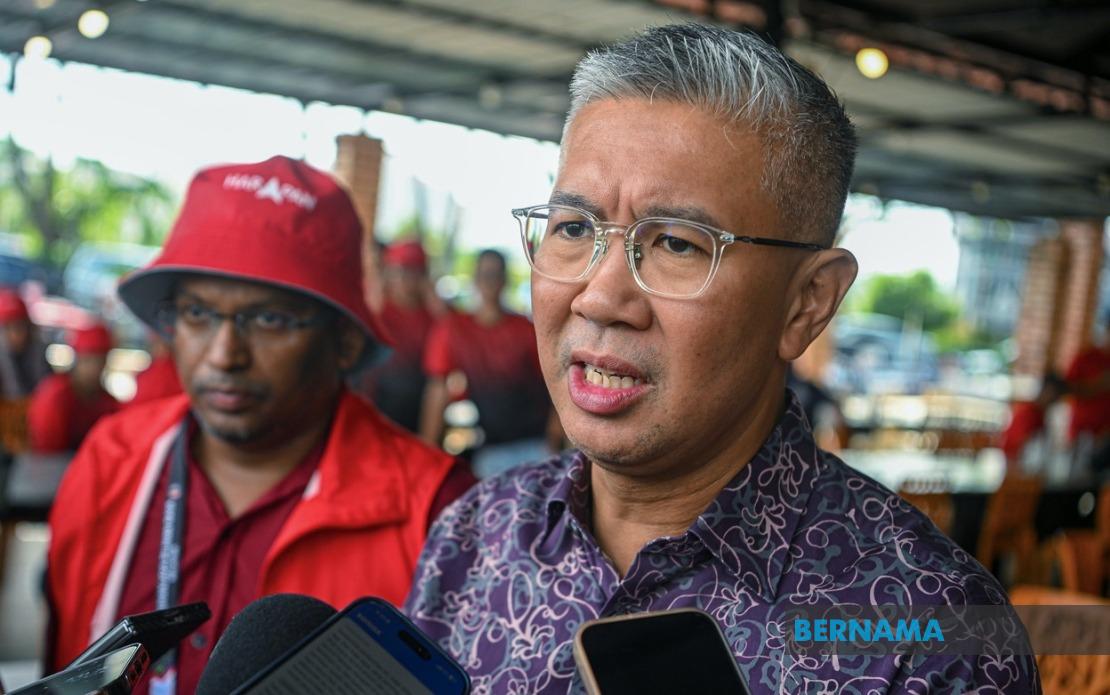
With the 16th Negeri Sembilan State Election drawing near, Prime Minister's senior political advisor Tengku Datuk Seri Zafrul Tengku Abdul Aziz has counselled voters to look beyond campaign rhetoric and assess competing parties on their capacity to translate pledges into tangible outcomes. Speaking in Port Dickson on July 26 whilst campaigning alongside Pakatan Harapan candidate Datuk Dr G. Rajasekaran for the Sri Tanjung seat, Tengku Zafrul struck a note that distinguishes the substance-over-style approach increasingly expected in Malaysian electoral politics—a shift away from the transactional nature of manifesto launches that dominated earlier election cycles.
The distinction Tengku Zafrul draws between promise-making and promise-keeping reflects a broader maturation in how Malaysian voters, particularly in an urban state like Negeri Sembilan, evaluate political performance. This framing implicitly critiques the tradition of ambitious manifestos that gather dust once campaigns end, a pattern that has eroded public trust in political institutions across Southeast Asia. By emphasizing implementation capacity, he essentially invites voters to conduct a comparative audit of the three major contenders—Pakatan Harapan, Barisan Nasional, and Perikatan Nasional—based on institutional competence rather than rhetorical appeal. For Negeri Sembilan voters, this translates into examining which coalition possesses the administrative machinery, fiscal discipline, and political will to execute their stated priorities.
The Negeri Sembilan PH administration's two years and eight months in power provides the empirical foundation for this argument. Tengku Zafrul pointed to the government's track record of implementing commitments outlined in its previous manifesto, suggesting that voters can observe concrete results rather than rely on future assurances. This creates a measurable baseline—projects completed, policy reforms enacted, service delivery improvements—that allows voters to extrapolate future performance. The approach acknowledges that governing a state requires navigating budget constraints, federal-state coordination, and competing sectoral demands, all of which test the resolve and competence of elected officials. In Negeri Sembilan's context, where economic development hinges on investment in industrial zones and agricultural modernization, the ability to execute infrastructure and regulatory commitments directly affects household prosperity.
However, Tengku Zafrul's emphasis on implementation capacity does not simply vindicate the incumbent administration. Rather, it establishes criteria by which all three coalitions should be assessed. Barisan Nasional's manifesto would similarly be judged on whether its proposed initiatives—likely emphasizing federal-state integration and traditional development models—align with demonstrated delivery capability. Perikatan Nasional's offerings would face scrutiny regarding whether the party, as a relative newcomer to state-level governance in Negeri Sembilan, has articulated realistic timelines and possesses the technical capacity to execute. This framework places pressure on all contenders to move beyond aspirational language toward specificity regarding budget allocation, timeline, and responsible agencies.
The Negeri Sembilan contest also illustrates the fragmentation increasingly visible in Malaysian state politics. The Sri Tanjung seat alone features a five-cornered contest involving the PH candidate Rajasekaran, Barisan Nasional's A. Achuthan, Bersatu's M. Leevineshwaraan, and two independent candidates—Datuk A. Saravanan and Islah Wahyudi. This multiplicity of contestants dilutes voter choice and complicates the ability to hold any single party accountable, as post-election coalition-building may not align with pre-election voter preferences. For constituency-level voters, the dispersion of candidates means that manifesto promises must be evaluated alongside the likelihood of the candidate's party achieving a majority, since isolated legislators face constraints in delivering local benefits.
Tengku Zafrul's remarks also address the reported internal tensions within Negeri Sembilan PKR, with allegations of sabotage and factional rivalry that have shadowed the campaign. By asserting that he has observed no such problems during his engagement with party machinery across several constituencies, he attempts to neutralize concern about internal dysfunction undermining campaign coherence and post-election governance. These assertions require scrutiny, however, as factional tensions in PKR have been documented across multiple states and the party's Negeri Sembilan chapter has historically grappled with leadership contestation. If internal conflicts do persist but remain unresolved post-election, the government's capacity to implement its manifesto could be seriously compromised, regardless of the ambition of its stated commitments.
The PH candidate for Sri Tanjung, Rajasekaran, expressed confidence stemming from positive voter reception during the campaign trail. This sentiment must be contextualized within the dynamics of incumbent advantage and urban-rural polarization. In Port Dickson and surrounding urban localities in Negeri Sembilan, PH's appeal typically runs stronger, particularly among younger voters and those concerned with governance standards. Conversely, rural constituencies remain more firmly anchored to Barisan Nasional, creating a patchwork electoral landscape where national trends do not uniformly apply. Rajasekaran's optimism, therefore, may reflect strong performance in certain constituencies while obscuring challenges in others where PH faces demographic and historical headwinds.
The election schedule—early voting on July 28 and polling on August 1—provides a compressed timeline in which Tengku Zafrul's manifesto-focused messaging must resonate. This condensed campaign period limits voter exposure to detailed policy scrutiny, paradoxically making his emphasis on implementation capacity more difficult to operationalize. Voters with limited time to research manifestos or assess track records may revert to affinity-based voting or rely on social media cues, neither of which necessarily reflects the substance-oriented evaluation Tengku Zafrul advocates. The challenge, then, is translating his rational framework for voter decision-making into actual voting behavior across a diverse electorate with varied information access and political sophistication.
For Malaysian observers and international stakeholders monitoring regional governance trends, the Negeri Sembilan election reflects evolving expectations around political accountability. The shift toward evaluating delivery rather than promises suggests that Malaysian voters, particularly in urbanized states, are developing more stringent criteria for electoral choice. This maturation could have ripple effects on national politics, raising pressure on all coalitions to move beyond manifesto launch theaters and toward genuine implementation frameworks with measurable outcomes and enforceable timelines. Should voters reward demonstrated delivery with re-election, parties will face incentives to prioritize execution over rhetorical expansion—a trend that could meaningfully improve governance outcomes across the region.
Ultimately, Tengku Zafrul's call for manifest-focused accountability serves both the PH campaign and the broader democratic process in Negeri Sembilan. By encouraging voters to distinguish between campaign oratory and governmental capacity, he frames the election not as a popularity contest but as a choice among competing administrative competencies. Whether voters adopt this lens or revert to traditional indicators—party affiliation, personal networks, identity markers—will largely determine whether the August 1 election produces leadership capable of translating the various manifestos into sustained improvements in state services, economic opportunity, and governance quality. The results will offer insight into whether Malaysian voters in urban states have genuinely shifted toward results-oriented electoral decision-making or whether campaign rhetoric retains its customary gravitational pull.

