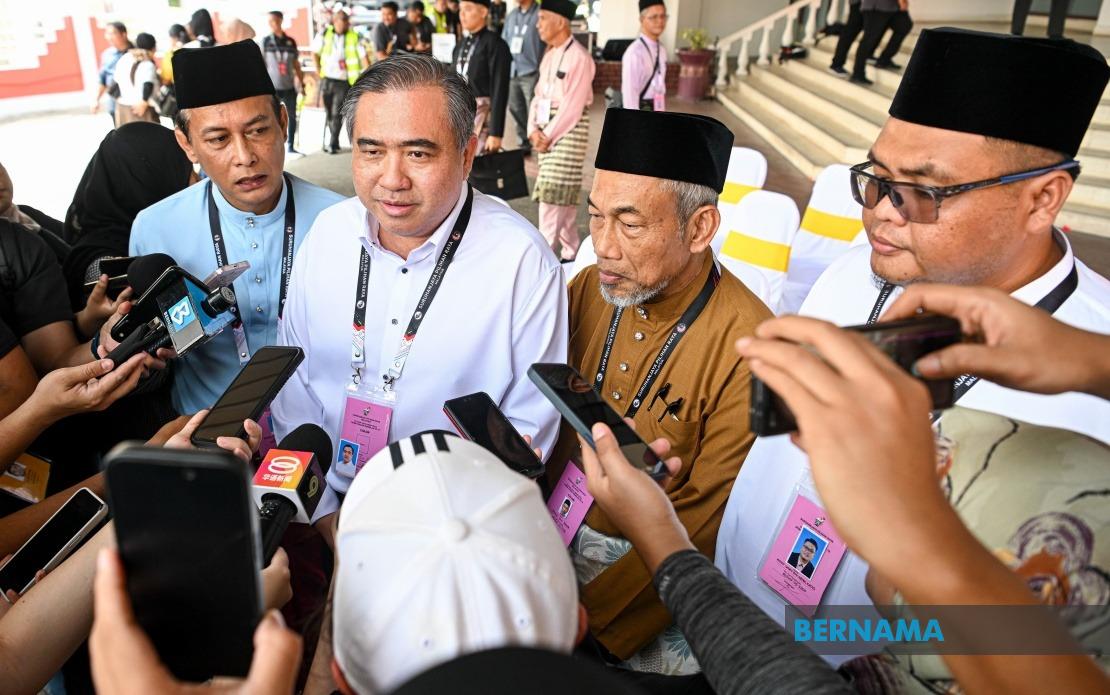
Transport Minister Anthony Loke has pinpointed the Chennah state seat as one of four pivotal constituencies within Jelebu parliamentary division that will determine whether Pakatan Harapan can successfully retain control of Negeri Sembilan's state government when voters head to the polls. The significance of this particular battleground underscores how Malaysia's federalised electoral system often hinges on the performance of individual seats rather than statewide swings, a dynamic that has shaped Negeri Sembilan politics for over a decade.
Speaking to reporters after the formal nomination process at Dewan Besar Kuala Klawang, Loke framed the Chennah contest as a straight fight between himself and Barisan Nasional candidate Siow Kong Choon, reflecting the binary political landscape that has characterised Malaysian state politics since the 2018 general election. The direct two-way contest eliminates complications from splinter candidates or independent challengers, creating a clearer mandate for whichever coalition prevails in the constituency.
Loke's emphasis on Negeri Sembilan's development trajectory under Pakatan Harapan's stewardship since 2018 reflects the ruling coalition's broader electoral strategy of leveraging incumbency and tangible governance records. The Transport Minister argued that six years of continuous administration has allowed PH to demonstrate administrative competence and deliver infrastructure improvements, positioning the party as a proven administrator rather than an untested opposition force. This narrative has become increasingly important as Malaysian voters, particularly in traditionally competitive states like Negeri Sembilan, weigh governance performance against campaign promises.
The historical context that Loke invoked—highlighting how Chennah and Kelawang together contributed to forming the state government in 2018—reveals the mathematical reality of Negeri Sembilan politics, where slim majorities can hinge on just a handful of seats. If the state assembly's composition mirrors the national structure with roughly 36 seats, controlling even two constituencies can mean the difference between commanding a majority and sitting in opposition. This arithmetic has made previously overlooked constituencies suddenly prominent in coalition strategy.
The Jelebu parliamentary constituency itself represents a microcosm of the broader ideological and demographic contest between Pakatan Harapan and its opponents. As Negeri Sembilan contains both urban pockets and significant rural areas, the constituencies within Jelebu likely reflect this diversity, necessitating tailored messaging that addresses both metropolitan concerns about cost-of-living and rural anxieties about service access and agricultural support.
Loke's confidence in PH's chances, grounded in what he characterised as proven delivery on progress and stability, depends on several implementation factors. Government visibility in seat improvement, whether through road infrastructure, school facilities, healthcare access, or economic opportunities, becomes tangible evidence that voters can evaluate. In the Chennah area specifically, any significant developmental projects or services enhanced during the PH tenure would likely feature prominently in campaign communications.
The Barisan Nasional's fielding of Siow Kong Choon as their candidate suggests a calculated attempt to contest this traditionally contested territory. BN's candidate selection strategy often reflects both local political dynamics and the coalition's assessment of electoral vulnerability. By putting forward a challenger in Chennah despite PH's incumbency advantage, BN is signalling that they believe the seat remains winnable or at minimum contestable, rather than conceding it to the ruling coalition.
For Malaysian observers monitoring state-level politics, the Negeri Sembilan election serves as an important barometer of whether PH's governance narrative carries sufficient weight with voters to overcome any electoral fatigue or opposition tactics. State governments, while operating within the federal framework, control significant portfolios including education, local government, agriculture, and state land matters—areas where competent or inadequate administration becomes visible to constituents in their daily lives.
The identification of Chennah as crucial rather than peripheral also reflects PH's sophisticated electoral data analysis. Modern Malaysian political campaigns increasingly rely on demographic studies, voter behaviour analysis, and historical polling patterns to identify truly marginal constituencies where campaigning resources yield the highest return. By elevating Chennah's importance in party messaging, Loke is simultaneously signalling to supporters that the seat requires maximum effort while acknowledging to internal party stakeholders which battlegrounds will determine the overall outcome.
Negeri Sembilan's particular political dynamics differ from other PH-governed states. The state's size, demographic composition, and historical voting patterns create distinct strategic imperatives compared to larger jurisdictions like Selangor or Penang. The concentration of importance on specific constituencies like Chennah and Kelawang reflects how smaller states operate under different political mathematics, where individual seats carry disproportionate weight in coalition calculations.
As Negeri Sembilan heads toward its state election, the heightened focus on seats like Chennah demonstrates that Malaysian electoral politics, despite featuring state and federal contests, ultimately revolves around granular, seat-by-seat mathematics. Loke's clear articulation of this reality to media serves multiple purposes: reassuring PH supporters that the campaign has direction and clarity, warning opponents that PH takes the contest seriously, and establishing a narrative framework through which the eventual electoral results will be interpreted.
The straight-fight scenario between Loke and Siow Kong Choon means that the Chennah contest will likely attract significant attention from both coalitions, potentially making it a bellwether for broader state and even national political trends. Should PH convincingly retain Chennah, it would suggest that the ruling coalition's governance message resonates with voters and that BN has difficulty dislodging entrenched incumbents. Conversely, a BN victory would indicate that voter appetite for change exists even in areas where the government has administered for six consecutive years, a warning signal for PH's broader electoral prospects.

