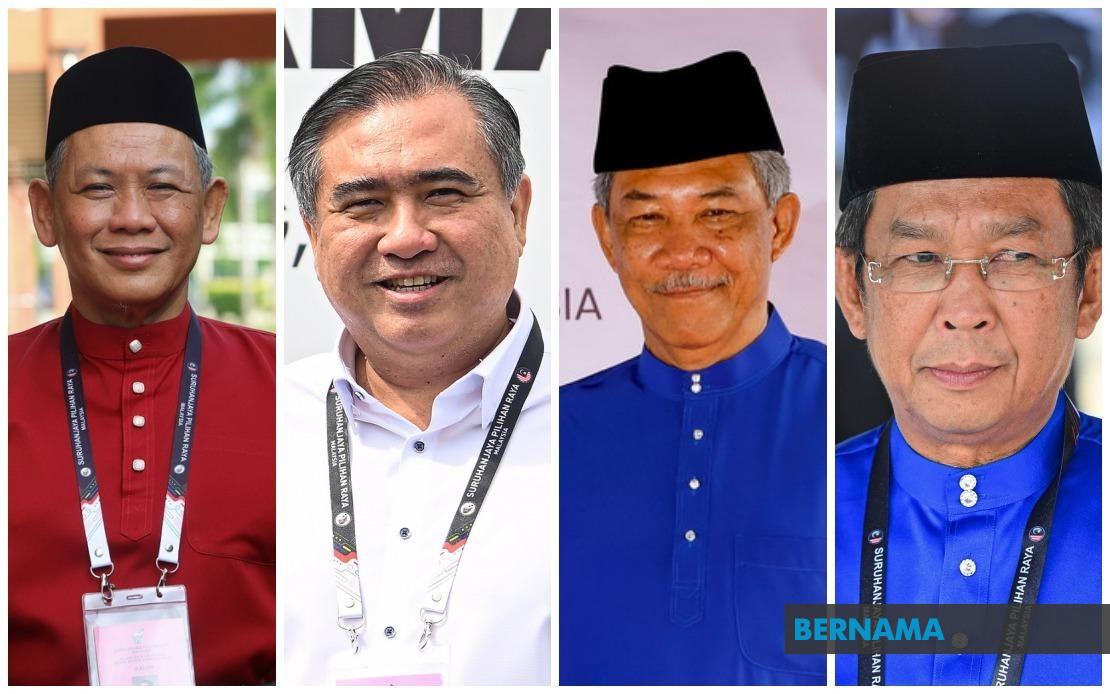
The forthcoming Negeri Sembilan state election has emerged as a fiercely contested affair, with virtually no incumbent or established figure assured of an unchallenged path to victory. Senior politicians across the main coalitions have discovered that their standing and experience offer limited protection against determined challengers, signalling a significant shift in voter sentiment and the growing fragmentation of the electoral landscape in the state.
Among the most closely watched constituencies is Linggi, where Datuk Seri Aminuddin Harun, the caretaker Menteri Besar and PKR vice-president, finds himself in a three-way tussle that threatens his continuity in office. Aminuddin, who holds the position of Pakatan Harapan chairman in Negeri Sembilan, must contend not only with Barisan Nasional incumbent Datuk Mohd Faizal Ramli but also with Bersatu's Datuk Zamri Md Said. This triangular contest undermines what might otherwise be a straightforward choice between the ruling coalition and the opposition, instead allowing a third force to potentially fracture the anti-incumbent or anti-government vote.
The Rantau constituency presents perhaps the most symbolically significant challenge, with Datuk Seri Mohamad Hasan facing an unexpectedly stiff fight. Mohamad, who doubles as Foreign Minister and UMNO deputy president, has represented Rantau consecutively since 2004, establishing what many presumed to be an unassailable political stronghold. Yet he confronts Dr Azizul Hakim Mahdi from Pakatan Harapan in what amounts to a direct generational and ideological encounter. The 70-year-old BN figure, affectionately known as Tok Mat among constituents, suddenly faces a youthful, well-credentialed challenger half his age, reflecting broader anxieties within the electorate regarding political renewal and fresh perspectives.
In Chennah, a DAP bastion since 2013, Transport Minister Anthony Loke discovers that the party's long tenure in the constituency cannot be taken as licence for complacency. Loke, simultaneously serving as DAP secretary-general, must navigate a challenge from Siow Kong Choon, fielded by Barisan Nasional through its MCA component and positioned as Chennah's youth representative. The contest symbolises the tactical repositioning of BN in urban and predominantly Chinese-majority areas, where the coalition is deploying younger, more contemporary faces to pierce the armour of incumbency.
Pertang emerges as another flashpoint, hosting a three-cornered battle between incumbent Datuk Seri Jalaluddin Alias of BN, Mohd Umry Abdul Khois representing Pakatan Harapan, and Bersatu's Mohd Faizal Fadli Mohd Idrus. Jalaluddin has held the seat since 2013, yet the presence of two rival challengers introduces unpredictability into what might have been a binary contest between government and opposition.
The Nilai constituency encapsulates the complexity of contemporary Malaysian electoral politics through its five-cornered configuration. DAP national deputy chairman J. Arul Kumar, running as the Pakatan Harapan incumbent, competes against Datuk Lai Chien Kong of Barisan Nasional, Datuk V. Saravana Kumar from Bersatu, independent Omar Mohd Isa, and Berjasa's Zamani Ibrahim. Such multiplication of candidates dilutes each faction's reach and introduces elements of chance into vote distribution.
Similarly, Sri Tanjung witnesses a five-way contest involving PH incumbent Dr G. Rajassekaran, BN's A. Achutan, two independent competitors in Saravanan Arumugam and Islah Wahyudi Zainudin, and notably Bersatu's Leevineshwaraan Murugan, aged just 23 and the youngest candidate across the entire Negeri Sembilan state election. The emergence of such youthful candidates, regardless of their electoral viability, underscores the generational pressures reshaping Malaysian politics and the determination of parties to project dynamism and contemporary relevance.
The overall composition of the candidate field reveals significant strategic calculations by competing coalitions. Pakatan Harapan has fielded the maximum complement of 36 candidates across all constituencies, seeking to contest every seat. Barisan Nasional follows with 25 candidates, suggesting a more selective approach, whilst Bersatu, despite its fractured status within Malaysian politics, has deployed 24 candidates throughout the state. Perikatan Nasional collectively presents 11 candidates, likely concentrated in specific constituencies where the coalition perceives electoral opportunity. Additionally, smaller outfits including Berjasa, ASLI, and PSM have each fielded single representatives, alongside four unaffiliated independent candidates, bringing the total candidate pool to 103 individuals vying for the 36 available seats.
This distribution pattern reflects deeper currents within Negeri Sembilan's political economy. The state, whilst not Malaysia's wealthiest or most populous, carries disproportionate political significance as a perennial swing territory. Unlike states where particular coalitions enjoy entrenched dominance, Negeri Sembilan has historically switched allegiances between BN and opposition groups, making it a bellwether of shifting national sentiment. The saturation of candidates this election indicates that multiple parties perceive genuine opportunity to advance their interests and reshape the state's political configuration.
The campaign timeline, formally commencing after nomination closures at 10 am on July 18 and running through July 31, compresses the messaging window into a fourteen-day sprint. Early polling on July 28 precedes general voting on August 1, compacting the period during which campaigns can shift voter preferences or mobilise sympathetic constituencies. This compressed timeframe arguably disadvantages well-known incumbents less than challengers seeking to establish credibility from lower base levels of recognition.
For Malaysian political observers, the Negeri Sembilan election transcends local significance. As a traditionally competitive state characterised by relative ethnic and religious pluralism and substantial urban populations, electoral outcomes here often foreshadow national trends. Performances by the three main coalitions—Pakatan Harapan, Barisan Nasional, and Perikatan Nasional—will provide indicators regarding voters' receptiveness to each grouping's messaging and personnel. The apparent vulnerability of senior figures across all coalitions simultaneously suggests that Malaysian voters in 2023 remain fluid in their preferences, reluctant to grant any political formation unqualified endorsement based upon past achievement or institutional position.
The profusion of closely contested seats, involving multiple candidates from differing coalitions and independent contenders, means that seat allocation could pivot substantially based upon local dynamics, personality factors, and micro-level campaign execution. Traditional models presuming straightforward contests between two major forces have become obsolete in constituencies now hosting three, four, or five serious candidates. Such fragmentation advantages parties capable of targeted grassroots mobilisation and potentially disadvantages coalitions dependent upon broad appeal and traditional voting patterns. The results on August 1 will illuminate whether Malaysian electoral fragmentation has become endemic or represents transitional turbulence preceding political consolidation.

