The 16th Negeri Sembilan State Election, scheduled for August 1, is emerging as a pivotal test of Malaysia's evolving political landscape, with constituency-level contests reflecting a fundamental fragmentation of the national two-coalition system. Across the 36 state legislative seats in contention, the electoral geography has shifted markedly towards multi-cornered battles, a trend that carries significant implications not only for this central Malaysian state but for broader political realignments heading toward the next federal election.
The most striking transformation is the dramatic swing away from bipolar contests. Straight fights—contests between just two candidates—have plummeted to only 11 seats, down sharply from 27 in the 2023 state election. This represents a tectonic shift in how Malaysian voters now confront their ballot papers. Simultaneously, three-cornered contests have surged to 21 seats, tripling their previous representation of seven constituencies. This acceleration suggests that third-force politics, whether rooted in Bersatu's breakaway appeal, the Perikatan Nasional coalition's growth, or independent candidacies, has gained substantially more organisational muscle and electoral credibility than two years ago.
Even more dramatically, two constituencies—Nilai and Sri Tanjung—will see five-way contests, a phenomenon entirely absent from the 2023 polling. Two additional seats, Jeram Padang and Rahang, will witness four-cornered fights. This proliferation of multi-candidate races fundamentally alters voter choice calculus and increases the likelihood of fragmented results where winning margins could prove razor-thin. The emergence of such complex electoral geometry suggests that traditional party machines have lost their monopoly on candidate recruitment, with independent candidates and smaller registered parties now fielding credible contenders.
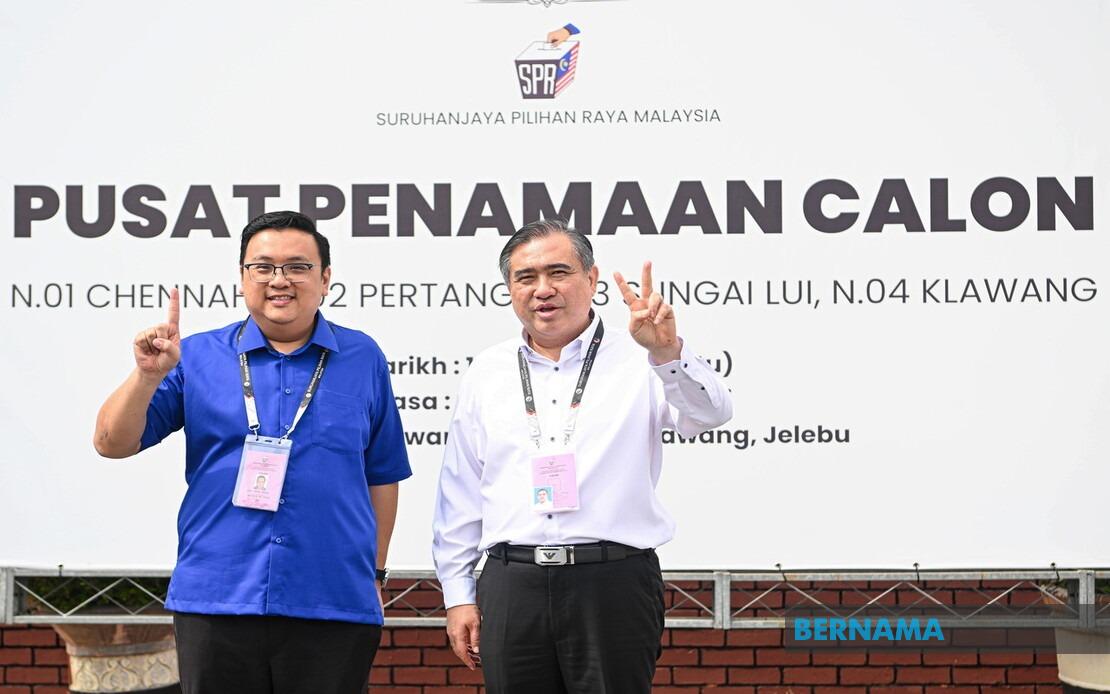
Among the high-profile straight fights, two contests stand out for their national prominence. The Chennah seat will pit DAP secretary-general and Transport Minister Anthony Loke directly against Barisan Nasional candidate Siow Kong Choon, representing a rare head-to-head between a Pakatan Harapan national leader and BN. Similarly, the Rantau constituency will see UMNO deputy president and Foreign Minister Datuk Seri Mohamad Hasan defending his seat against PH's Dr Azizul Hakim Mahdi. These high-stakes individual races inject personality-driven politics into the state contest and may well determine its overall trajectory.
The three-cornered fights, however, reveal the real story of Negeri Sembilan's shifting political dynamics. The Linggi seat pits incumbent PKR vice-president and Menteri Besar Datuk Seri Aminuddin Harun against both a BN candidate and Bersatu's Zamri Md Said. This configuration is replicated across multiple constituencies, suggesting a pattern where Bersatu has successfully positioned itself as a serious alternative to both Pakatan Harapan and Barisan Nasional, rather than remaining a marginal force. In the Pertang seat, Negeri Sembilan UMNO chairman Datuk Seri Jalaluddin Alias faces competition not only from PH's Mohd Umry Abdul Khois but also from Bersatu's Mohd Faizal Fadli Mohd Idrus.
The Klawang constituency illustrates a different dynamic: Perikatan Nasional's entry into the state race through Danni Rais, son of veteran Tan Sri Rais Yatim, against incumbent PH representative Datuk Bakri Sawir and a Bersatu candidate. This configuration suggests potential coordination challenges within the opposition and third-force blocs, or alternatively, reflects genuine voter appetite for multiple political options beyond the traditional Pakatan-Barisan binary.
The four-cornered contests introduce even greater complexity. Jeram Padang will see incumbent BN candidate Datuk Mohd Zaidy Abdul Kadir challenged by PH's G. Manivannan, Bersatu's R. Sri Sanjeevan, and Parti Orang Asli Malaysia's Dayana Dal. Similarly, Rahang's incumbent PH representative Siaw Meow Keong will face competition from BN's Yap Siok Moy, Parti Sosialis Malaysia's S. Thinagaran, and Bersatu's Tang Jay San. These races underscore how niche political movements—whether indigenous rights-focused or socialist-oriented—have found sufficient organisational capacity to field candidates in state elections.
The two five-way contests represent the most extreme manifestation of this fragmentation. In Nilai, incumbent J. Arul Kumar of PH must contend with BN's Lai Chien Kong, Bersatu's Datuk V. Saravana Kumar, Berjasa's Zamani Ibrahim, and independent Omar Mohd Isa. In Sri Tanjung, incumbent PH's Datuk Dr G. Rajasekaran faces BN's A. Achuthan, Bersatu's M. Leevineshwaraan, and two independents, Datuk A. Saravanan and Islah Wahyudi Zainudin. These races will almost certainly be decided by relatively modest vote pluralities, creating scenarios where vote-splitting between ideologically similar candidates could determine outcomes.
The underlying voter base is substantial and engaged. A total of 889,490 electors are eligible to participate, comprising 867,151 ordinary voters, 16,884 military personnel and their spouses, and 5,455 police personnel. This electorate represents a cross-section of Malaysia's diverse communities and economic interests, making Negeri Sembilan's results potentially indicative of broader national sentiment. The Election Commission has scheduled early voting for July 28, with the main polling day on August 1, allowing sufficient preparation time for both electoral authorities and political parties.
The trajectory from 27 straight fights in 2023 to just 11 in 2024, coupled with the dramatic rise in three-cornered and multi-way contests, signals a fundamental reshaping of Malaysian electoral dynamics. The emergence of Bersatu as a consistent third force, the viability of independent candidates, and the capacity of smaller registered parties to field contenders all point toward a political system in transition. Rather than the predictable Pakatan-Barisan showdown that has dominated recent elections, Negeri Sembilan's voters now confront a genuinely multi-option landscape. How voters navigate these fragmented choices, and which parties or candidates emerge victorious in these complex races, will provide crucial data for understanding whether Malaysia's two-coalition framework remains durable or whether the nation is experiencing a more fundamental political realignment.

