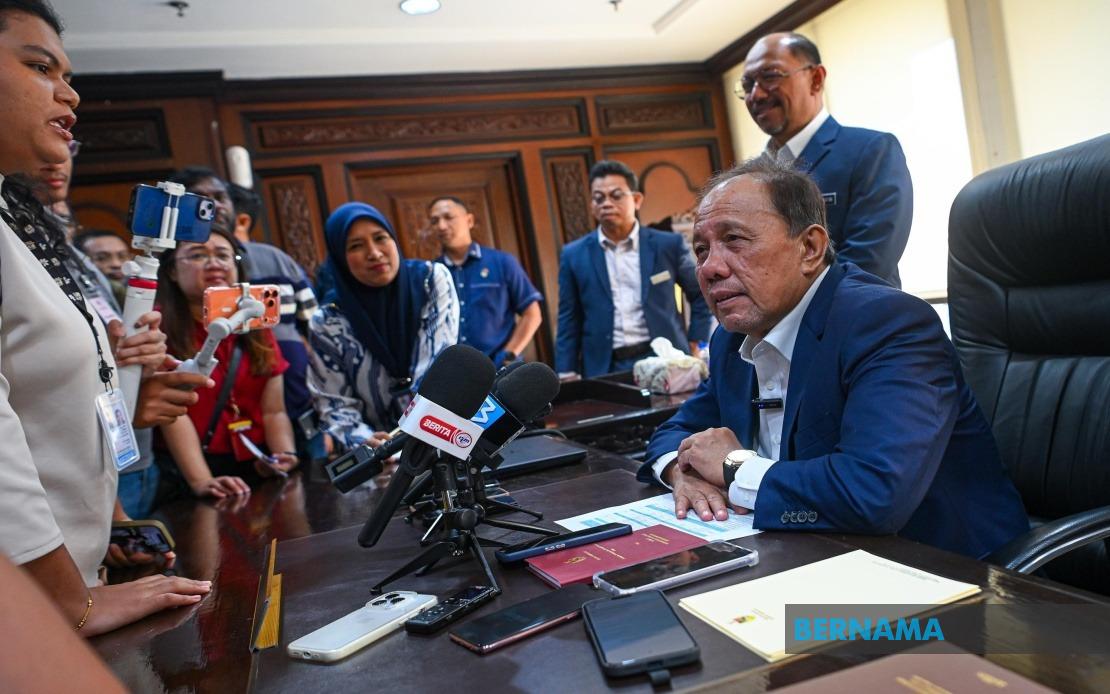
The newly appointed Menteri Besar of Negeri Sembilan, Datuk Ismail Lasim, is exploring the creation of Deputy Executive Council positions as part of a fresh approach to managing the state's administrative structure. Speaking to reporters at Wisma Negeri in Seremban on his first working day in office, Ismail explained that the proposal would allow the state government to fill additional positions across several important portfolios without expanding the full Exco membership beyond current constraints. This initiative reflects the practical challenges facing the administration as it seeks to accommodate political expectations while operating within constitutional limits on cabinet size.
The proposal represents a significant shift in how Negeri Sembilan structures its executive decision-making. Rather than appointing more full Executive Council members, which would require constitutional adjustments or face resistance, the state government would instead establish deputy-level positions to distribute responsibilities among a broader range of state assemblymen. These positions would be filled by representatives from the coalition partners, including PAS and Parti Wawasan Negara (Wawasan), alongside Barisan Nasional component parties. The strategy acknowledges political realities in the state's new governing arrangement while attempting to expand opportunities for elected representatives to hold ministerial-level roles.
Ismail, the 67-year-old Juasseh assemblyman, was sworn in as Menteri Besar on Sunday before the Yang Dipertuan Besar of Negeri Sembilan, Tuanku Muhriz Tuanku Munawir, at Istana Besar Seri Menanti. He commenced his duties at the Menteri Besar's Office this morning, receiving a formal welcome from State Secretary Datuk Mohd Zafir Ibrahim and departmental heads. This ceremonial beginning marks the launch of what promises to be a notably restructured state cabinet compared to previous administrations.
The political context underlying this administrative proposal stems from the recent state election results. Barisan Nasional secured 18 seats whilst Perikatan Nasional won seven, giving the two coalitions a commanding two-thirds majority and enabling them to form a stable government. Pakatan Harapan captured the remaining 11 seats, placing it in opposition. This distribution means the ruling coalition must balance competing demands from multiple partners—both within BN's traditional components and the newer partnership with Perikatan Nasional—while maintaining internal cohesion and preventing backbench dissatisfaction.
The Deputy Exco concept addresses a common challenge in Malaysian state and federal governance: the gap between the number of elected representatives expecting executive roles and the limited cabinet positions available. By creating deputy positions with defined responsibilities for critical portfolios, the government can expand its effective executive team without formally increasing the constitutionally recognised Exco. These deputy posts would carry substantive policy responsibilities, differentiating them from purely honorary or advisory roles.
Ismail indicated that the final structure remains undecided, with officials still deliberating on exactly how many Deputy Exco positions to establish and which portfolios would benefit most from this arrangement. The announcement of the full Exco line-up is expected either this Friday or the following Monday at the latest. Uncertainty about the precise number of positions reflects ongoing negotiations within the coalition, suggesting that consensus has not yet been reached on how broadly to distribute these appointments among BN parties and their coalition partners.
The proposal also encompasses consideration of Senior Exco positions, which represent another tier above standard Exco appointments. Ismail noted that while constitutional provisions exist for Senior Exco appointments, the decision on filling these roles has not been finalised. This multi-tiered approach—potentially combining full Exco members, Senior Exco holders, and Deputy Exco appointees—would create a hierarchical structure allowing the government to accommodate various political demands and recognise seniority among coalition partners.
For Malaysian observers, this structural innovation carries implications beyond Negeri Sembilan's borders. State-level administrative experiments often inform discussions at the federal level and across other states. The success or failure of this deputy-position model could influence how other state governments facing similar coalition pressures choose to organise their cabinets. Should the arrangement prove effective in maintaining coalition stability and enabling broader participation, other states might adopt comparable structures, particularly in coalitions with multiple partners and constrained cabinet slots.
The timing of these deliberations is significant. Malaysia's political landscape has undergone substantial shifts in recent years, with coalitions becoming more fluid and varied across states. Negeri Sembilan's approach reflects a broader trend of state governments seeking creative solutions to manage diverse coalition partners whilst maintaining efficient administration. The expansion of participation through deputy roles can serve as a safety valve for political tensions that might otherwise destabilise the government or generate complaints of exclusion from important decision-making structures.
Ismail's reference to this as a "new approach" in state administration suggests a deliberate departure from conventional cabinet structures. This language indicates the state government views the proposal not merely as a pragmatic accommodation but as a potentially advantageous governance model. If effectively implemented, the Deputy Exco system could allow the state to tap into the talents and perspectives of more assemblymen whilst maintaining clear lines of authority and decision-making through the principal Exco members.
The success of this initiative will depend heavily on how substantive the deputy positions become in practice. If they function as genuine executive roles with clear portfolios and authority, they will provide meaningful opportunities for political participation and influence. Conversely, if they devolve into largely ceremonial positions with limited real responsibility, they risk disappointing coalition partners and creating resentment among those appointed to seemingly peripheral roles. The coming weeks, as the government finalises its cabinet structure, will reveal how seriously it intends to empower these deputy positions.
For Negeri Sembilan specifically, the cabinet structure Ismail announces will set the tone for the first phase of the new administration. The government's ability to balance coalition demands whilst maintaining efficient decision-making will influence public confidence and investor perception. A cohesive, well-structured cabinet can enhance the state's ability to address economic development and social policy challenges. The decisions made over these coming days will establish whether this new approach to executive appointments ultimately strengthens or complicates state governance.

