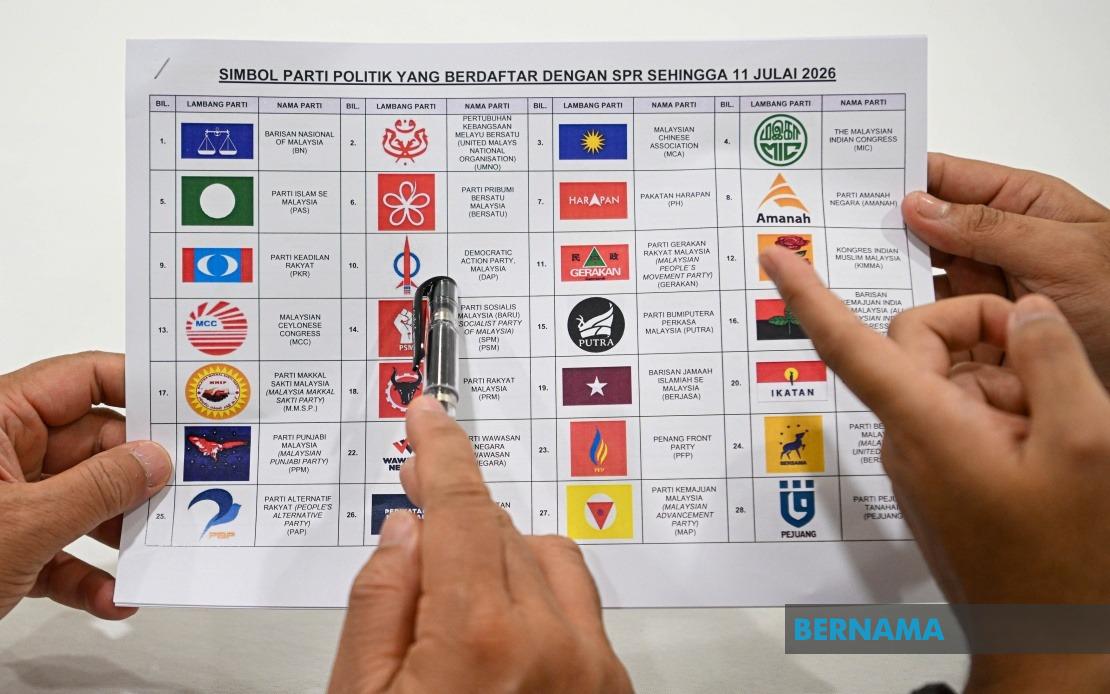
The 16th Negeri Sembilan state election has officially begun, marking the start of what is shaping up to be a competitive three-way contest between the major political coalitions. Nomination centres across eight locations throughout the state opened their doors on July 18 from 9 am, with prospective candidates required to submit their nomination papers to the Returning Officer by 10 am. This procedural milestone represents the formal kickoff of an election cycle that will determine which coalition gains the mandate to govern the state for the next five years.
As of the day before nominations opened, the Election Commission reported that 464 nomination forms had been distributed to interested candidates and 70 prospective candidates had already paid their election deposits, signalling their commitment to contesting seats. Once the official list of eligible candidates is released following the nomination deadline, the contest will formally enter its 14-day campaign phase, concluding at 11.59 pm on July 31. Voters will then head to the polls on August 1, with early voting scheduled for July 28 to accommodate military personnel, police officers and their families, as well as others unable to vote on the main election day.
The electoral ground in Negeri Sembilan appears set for a vigorous three-cornered fight. Pakatan Harapan has committed to contesting all 36 state seats, positioning itself as seeking a fresh mandate from voters. Barisan Nasional, which governed the state for decades, is fielding candidates in 25 seats, indicating a more selective approach to the contest. Perikatan Nasional, the rising coalition that has gained traction in several Malaysian states, is competing in 11 seats. Alongside these major players, several smaller parties including Parti Orang Asli Malaysia, the Socialist Party of Malaysia, and Parti Barisan Jemaah Islamiah Se-Malaysia will each contest a single seat, adding diversity to the ballot paper.
The composition of candidate slates reflects both continuity and change across the political landscape. Major parties have unveiled carefully balanced tickets combining incumbent representatives with fresh faces, demonstrating efforts to simultaneously reward loyalty while injecting new energy into campaigns. This strategic blending is particularly important in state elections where local personalities and community relationships often determine outcomes more decisively than national political trends. The decision by Bersatu to contest 24 seats, including two candidates using the Bersatu logo but formally affiliated with Urimai, illustrates the complex coalition mechanics that continue to characterise Malaysian politics at the state level.
The scale of voter participation eligible to cast ballots reveals Negeri Sembilan's size within Malaysia's electoral system. Approximately 889,490 voters are registered to participate in the election, comprising 867,151 ordinary registered voters plus 16,884 military personnel and their spouses and 5,455 police personnel and their spouses. This electorate base translates into substantial stakes for all competing parties, as gaining control of even a simple majority of the 36 seats requires navigating diverse constituencies with varying demographic compositions and political leanings.
The previous election in 2023 provides crucial context for understanding the current competitive dynamics. In that contest, Pakatan Harapan secured 17 seats, Barisan Nasional won 14 seats, and Perikatan Nasional obtained five seats. These results established PH as the dominant force in the state legislature, though without overwhelming numerical superiority. The relatively modest gap between PH and BN suggests that the political ground remains genuinely contested, with outcomes dependent on campaign effectiveness, candidate appeal, and voter sentiment regarding state and national developments over the past twelve months.
Electoral administration has been substantially reinforced to ensure the smooth conduct of the nomination process and subsequent campaign period. The Negeri Sembilan police have deployed 4,800 officers and personnel to maintain order, supplemented by an additional 1,373 officers and personnel seconded from Bukit Aman in Kuala Lumpur. This deployment reflects standard security protocols for significant electoral events, though it also indicates that authorities are taking seriously their responsibility to prevent disruptions or confrontations that could mar the democratic process. The Election Commission has explicitly reminded all candidates and their supporters to comply with electoral regulations and refrain from provocative behaviour that might undermine the nomination process.
Nomination day itself is anticipated to generate considerable activity and public engagement. Large contingents of party supporters, senior leaders, and political personalities are expected to accompany candidates to the eight nomination centres, transforming these locations into focal points for political activism and public display of organisational strength. Such gatherings are characteristic of nomination processes in Malaysia's competitive electoral environment, where parties seek to demonstrate momentum and mobilise their grassroots networks from the earliest possible moment.
Weather patterns reported by the Malaysian Meteorological Department will influence the conduct of nomination activities on July 18. Generally fair conditions are forecast for most areas during the morning hours, though Port Dickson and Seremban are expected to experience rainfall. Afternoon thunderstorms are predicted across the entire state, which may affect participation levels and the logistics of managing large crowds at nomination centres. Organisers and candidates will need to adapt their arrangements to accommodate these weather conditions while maintaining the integrity and timeliness of the nomination process.
The 14-day campaign period running until July 31 will be the crucial phase determining electoral outcomes. During this window, candidates must appeal directly to voters through door-to-door canvassing, public rallies, social media engagement, and community meetings. For Malaysian voters, particularly those in Negeri Sembilan, this campaign period offers opportunities to evaluate competing visions for state development, assess candidates' local credentials and commitment to constituency concerns, and ultimately determine which coalition best represents their interests and values.
The election assumes significance beyond Negeri Sembilan's borders. As a state election in the economically important Klang Valley region and a barometer of voter sentiment regarding both state and national issues, the result will provide insights into broader political currents affecting Malaysia. The outcome may influence calculations regarding coalition stability, regional governance effectiveness, and the positioning of major political players as the country approaches subsequent electoral contests. For regional observers tracking Southeast Asian political developments, the election demonstrates the continuing importance of competitive democratic processes in Malaysia despite occasional concerns regarding electoral integrity and political polarisation.

