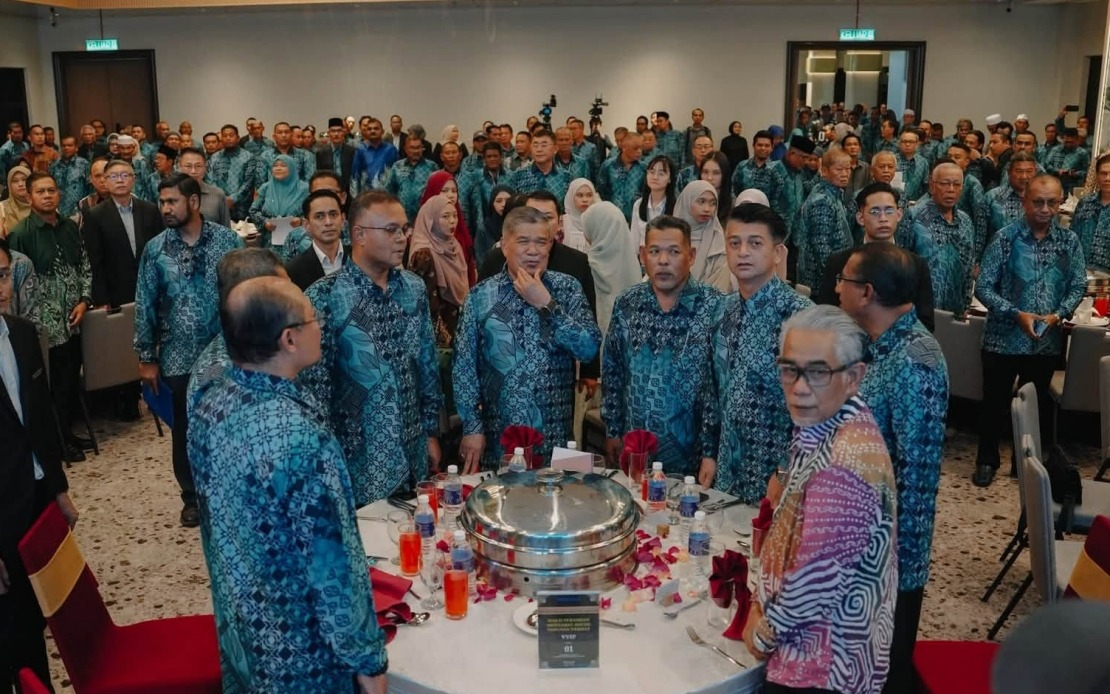
The National Fishermen's Association (NEKMAT) has demonstrated substantial financial growth, posting profits of over RM25 million in 2025 compared with RM11 million in 2024, signalling robust management practices within an organization that serves as a crucial pillar of Malaysia's fisheries sector. The more than twofold increase underscores the association's capacity to generate revenues whilst simultaneously strengthening support systems for the nation's fishing communities. Agriculture and Food Security Minister Datuk Seri Mohamad Sabu highlighted these results when addressing the organization's 41st Annual General Meeting in Kuala Lumpur, framing the financial performance as validation of NEKMAT's operational competence and its strategic commitment to advancing the broader fisheries industry.
The significance of NEKMAT's financial success extends beyond simple profit accumulation. According to Minister Mohamad, the association has methodically directed earnings toward welfare initiatives and educational programmes benefiting fishermen nationwide. This practice reflects an institutional philosophy whereby commercial success translates directly into tangible support for the organization's stakeholder base, creating a virtuous cycle where improved organizational performance enhances community benefits. The approach addresses a persistent challenge in Malaysia's fisheries sector: ensuring that productivity gains and commercial expansion genuinely reach the fishing communities that depend on these institutions for economic stability and social support.
The organization's operational diversification has been instrumental in driving profitability. NEKMAT's business portfolio now encompasses wholesale and retail diesel distribution, ice production facilities, shrimp farming operations, transportation services, marketing initiatives, and fishermen's housing development projects. This multi-faceted approach reduces vulnerability to sector-specific downturns and generates multiple revenue streams that collectively strengthen the association's financial position. Board Chairman Abdul Hamid Bahari indicated confidence that current performance trajectory would continue upward, suggesting that market conditions and operational efficiencies support sustained growth prospects for the coming period.
The improved financial results have enabled NEKMAT to enhance dividend distributions to State Fishermen's Associations, the regional bodies that interface directly with individual fishing operations. The dividend rate increased from nine percent to fifteen percent, representing a material increase in financial support flowing to state-level structures. This expansion of returns to subsidiary organizations demonstrates how headquarters-level profitability translates into strengthened capacity at regional levels, potentially enabling state associations to expand their own support services and development initiatives for member fishermen.
Among the most significant developments for the fishing community is a newly introduced protection scheme developed through NEKMAT's collaboration with the Social Security Organisation (PERKESO). The scheme provides government subsidized insurance coverage specifically designed for fishermen, substantially reducing their contribution burden. Rather than paying the standard contribution rate of RM231.20 annually, participating fishermen now contribute only RM70 per year, representing a seventy percent reduction in personal financial outlay whilst maintaining comprehensive coverage. The initiative carries particular importance given the inherent occupational risks and economic volatility that characterize fishing as a livelihood, and its implementation this month marks a significant policy advancement for labour protection in the fisheries sector.
The protection scheme's structure reflects policy thinking increasingly prevalent across Southeast Asian fisheries management. Unlike certain occupational insurance programmes that impose age restrictions, NEKMAT's scheme contains no age limitations, ensuring coverage accessibility regardless of a fisherman's position in their career lifecycle. This inclusive design acknowledges the reality that fishing communities include workers spanning diverse age groups, many of whom remain economically active well beyond conventional retirement thresholds. The scheme provides death compensation benefits of RM3,000, supplementing other coverage components and establishing a baseline safety net for fishermen's families facing the economic disruption inherent in occupational loss.
Minister Mohamad's engagement with NEKMAT's leadership extends to budgetary prioritization and resource allocation at the national level. The association's top management recently presented the minister with comprehensive proposals encompassing fisheries development projects and programmes for fishermen's associations throughout Malaysia, with budgetary implications spanning tens of millions of ringgit. Rather than shelving these proposals within the agriculture ministry, Mohamad committed to advancing them during forthcoming discussions surrounding the 2027 national budget. Framing these initiatives as priority considerations for the Ministry of Agriculture and Food Security (KPKM) signals ministerial intent to leverage the budgetary process toward fisheries sector advancement, potentially translating NEKMAT's internal success into broader sectoral benefits.
The memorandum of understanding signed between NEKMAT and Green Borneo Eco Land Sdn Bhd during the annual meeting indicates the association's engagement with environmental sustainability considerations. Though specific details regarding the partnership's scope remain limited from the available information, the collaboration suggests NEKMAT's recognition that contemporary fisheries management must integrate ecological stewardship alongside economic development. For Malaysian readers monitoring broader environmental policy directions, such partnerships signal how commodity-focused organizations increasingly incorporate sustainability frameworks into their operational models, whether driven by regulatory requirement, market demand, or institutional conviction.
NEKMAT's contribution to the Malaysian Fishermen's Foundation (YANEM) represents another dimension of its reinvestment philosophy. By channelling resources toward this foundation, NEKMAT participates in broader social welfare infrastructure serving fisheries communities beyond its direct membership base. This ecosystem approach to social support underscores how major sectoral organizations function as nodes within interconnected networks of mutual support and resource sharing. For policymakers examining how to strengthen fisheries sector resilience, NEKMAT's model demonstrates the potential for well-managed membership organizations to serve as effective vehicles for both commercial activity and social welfare distribution.
The attendance at the annual meeting by senior government figures including Ministry Secretary-General Datuk Seri Isham Ishak and Malaysian Fisheries Development Authority (LKIM) Chairman Mohd Faiz Fadzil underscores the political significance attributed to NEKMAT's operations within Malaysia's fisheries governance architecture. Such high-level participation reflects recognition that NEKMAT's performance has implications extending beyond the organization itself, touching on broader sectoral health and the effectiveness of government support mechanisms for fishing communities. The convergence of NEKMAT leadership, ministry representatives, and development authority officials at a single forum facilitates coordination on fisheries policy priorities and signals sustained governmental attention to sectoral advancement.
For Malaysian and Southeast Asian readers, NEKMAT's trajectory offers broader insights into how sectoral organizations can balance commercial viability with community welfare obligations. The association's ability to nearly double profits whilst simultaneously expanding community benefits challenges assumptions that organizational profitability necessitates diminished commitment to stakeholder welfare. The model demonstrates that efficient operations, strategic diversification, and aligned incentive structures can generate outcomes benefiting both organizational sustainability and community wellbeing. As regional countries confront challenges in strengthening artisanal and small-scale fisheries sectors whilst managing sustainability concerns, NEKMAT's experience provides a potentially instructive template for institutional design and operational philosophy.
The 2027 budget discussions referenced by Minister Mohamad will prove consequential for determining whether NEKMAT's internal success translates into expanded government resource commitments toward fisheries development. The breadth of proposals under consideration—spanning infrastructure, livelihood support, and community development—suggests ambitions extending beyond incremental sectoral improvements. Should the ministry successfully advocate for substantial budgetary allocations aligned with NEKMAT's proposals, the impact could meaningfully expand opportunity structures available to fishing communities across Malaysia, particularly in regions where artisanal fisheries remain economically significant employment sources.

