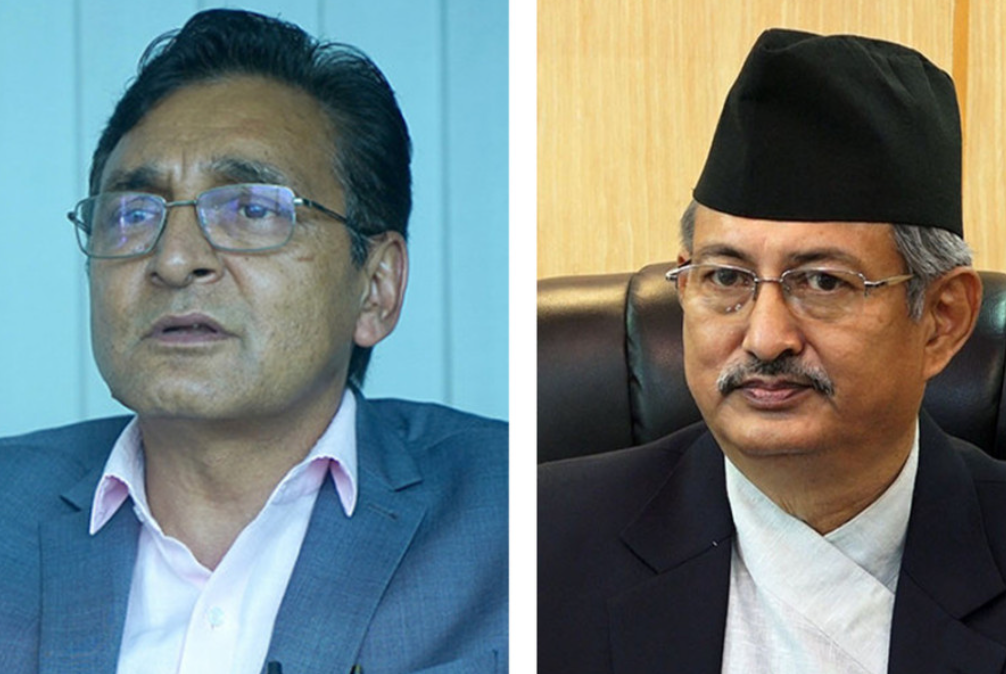
A district court in Kathmandu has delivered guilty verdicts against two senior former government officials for orchestrating a document forgery scheme designed to facilitate the illegal resettlement of Nepali citizens in the United States under false pretences as Bhutanese refugees. Former Deputy Prime Minister and Energy Minister Top Bahadur Rayamajhi received a four-year prison sentence on charges including offences against the state, fraud, and involvement in organised crime, while former Home Minister Bal Krishna Khand was sentenced to two years as an accomplice to the conspiracy. The verdicts, issued late Tuesday and confirmed through court documentation and legal representatives, mark a significant moment in Nepal's ongoing efforts to address high-level corruption within its political establishment.
Rayamajhi, who remains in custody following the conviction, and Khand, currently released on bail, declined to comment when approached by media. Both officials have consistently maintained their innocence throughout legal proceedings, refuting allegations of their participation in the fraudulent operation. Their legal teams have already signalled intentions to challenge the court's findings, with Dharma Raj Regmi, representing Rayamajhi, arguing that his client "never involved in policy making for the refugees" and confirming an appeal would be filed. Similarly, Khand's attorney Pankaj Karna announced plans to contest the conviction through the appellate process.
Beyond the two high-profile defendants, the court convicted fourteen additional individuals implicated in the scheme, including a retired senior bureaucrat who previously held a prominent position within the home ministry and a former leader of Bhutanese refugee communities. These co-conspirators received sentences reaching up to four years imprisonment, suggesting a coordinated network operated across multiple government levels and external constituencies. The breadth of convictions underscores how deeply embedded the fraudulent operation became within state institutions and civil society organisations responsible for refugee processing and resettlement coordination.
The exact scale of the illegal resettlement operation remains unclear, with authorities unable to immediately confirm whether any Nepali nationals actually succeeded in reaching the United States through the false documentation scheme. The scam came to light during 2023, well after both Rayamajhi and Khand had already departed from their ministerial positions, which complicated initial investigations and allowed several months of operational cover. This timing proved significant: by the time authorities unravelled the conspiracy, key evidence had potentially been obscured and participants had relocated, making comprehensive case-building increasingly challenging for prosecutors.
The scandal must be understood within the broader context of Nepal's complex refugee situation stretching back three decades. Beginning in the early 1990s, approximately 120,000 individuals of Nepali ethnic origin fled Bhutan, a Buddhist-majority nation with fewer than 800,000 total inhabitants, seeking refuge in Nepal due to alleged political repression and discrimination against the Nepali-speaking minority. These individuals claimed they faced systematic marginalisation within Bhutan's Buddhist-centric political framework and sought more inclusive governance arrangements. Their arrival created massive humanitarian challenges for Nepal, which struggled to accommodate such large refugee populations within its borders.
International intervention eventually provided partial resolution through coordinated third-country resettlement programmes negotiated between Nepal and Western nations. Nearly 113,000 Bhutanese refugees have subsequently been relocated to countries including the United States, Canada, and Australia through formal resettlement channels. The United States alone absorbed approximately 100,000 individuals, making it the primary destination for those seeking permanent relocation. These official resettlement numbers demonstrate both the significant humanitarian commitment of Western nations and the scale of displacement within the South Asian region.
However, thousands of individuals classified as Bhutanese refugees continue residing in camps scattered across eastern Nepal, expressing reluctance to resettle permanently abroad and instead requesting repatriation to their original homeland. Their prolonged encampment reflects unresolved tensions between Nepal and Bhutan regarding citizenship status and minority rights, as the two neighbours have never reached comprehensive agreement on repatriation frameworks. This deadlock has left vulnerable populations in limbo, neither able to return home nor willing to permanently migrate to distant countries, making them potential targets for exploitation by corrupt officials seeking financial gain through fraudulent resettlement arrangements.
The refugee fraud convictions occur within a transformative political moment in Nepal. In September of the previous year, youth-led anti-corruption demonstrations resulted in 76 deaths, ultimately precipitating the collapse of the existing government and triggering democratic renewal. These protests, primarily mobilised by Generation Z activists, reflected widespread public frustration with systemic corruption and governance failures that had plagued previous administrations. The civil unrest signalled that Nepali citizens demanded fundamental institutional change and accountability from their leaders.
Responding to this mandate for reform, Nepal elected a new government in March led by Balendra Shah, a 36-year-old former rapper who transitioned into electoral politics. Shah's administration explicitly campaigned on combating alleged corruption within predecessor governments, positioning anti-graft efforts as central to its legitimacy and governing agenda. The current refugee fraud convictions align perfectly with this anti-corruption platform, demonstrating governmental commitment to prosecuting high-level officials regardless of former ministerial status. The decisions reflect Shah's administration attempting to translate electoral promises into concrete institutional accountability.
For regional observers and neighbouring countries, the Nepali refugee fraud case illuminates vulnerabilities within refugee processing systems across South Asia. The conspiracy involved forging official documentation, corrupting government officials at multiple hierarchical levels, and exploiting resettlement programmes designed specifically to protect vulnerable populations. Similar weaknesses potentially exist in other regional refugee operations, suggesting that neighbouring Bangladesh, India, and Pakistan should conduct audits of their respective resettlement programmes to identify comparable vulnerability points. The case demonstrates how corruption can penetrate even humanitarian systems ostensibly designed to protect vulnerable individuals.
The convictions also carry implications for Nepal's international standing regarding refugee administration. Western countries, particularly the United States which absorbed the majority of relocated individuals, have invested diplomatic capital and resources into Nepal's refugee management. The discovery of systematic document fraud raises questions about verification procedures and oversight mechanisms employed during the resettlement process. Whether foreign intelligence agencies identified suspicious patterns or whether the scheme remained entirely undetected by international partners remains publicly unclear, though either scenario raises concerns about cross-border coordination on refugee security matters.
Moving forward, Nepal faces the challenge of implementing structural reforms preventing similar conspiracies while maintaining legitimate refugee resettlement operations. The new government must balance accountability through prosecution with capacity-building within institutions responsible for refugee administration. Enhanced transparency, improved documentation systems, and professional training for officials handling sensitive resettlement cases would represent necessary safeguards. Additionally, addressing the underlying corruption that enabled the conspiracy requires institutional reform transcending the refugee sector, affecting broader governance frameworks and political culture.
The case ultimately demonstrates that even programmes designed to address humanitarian crises remain vulnerable to exploitation by officials seeking personal enrichment. Nepal's judicial system has now delivered verdicts reflecting this reality, yet systemic transformation remains necessary to prevent recurrence. As Shah's government consolidates power following electoral victory, the refugee fraud convictions serve as both symbolic commitment to anti-corruption efforts and practical reminder that institutional weaknesses across multiple government levels require comprehensive, sustained attention rather than individual prosecutions alone.

