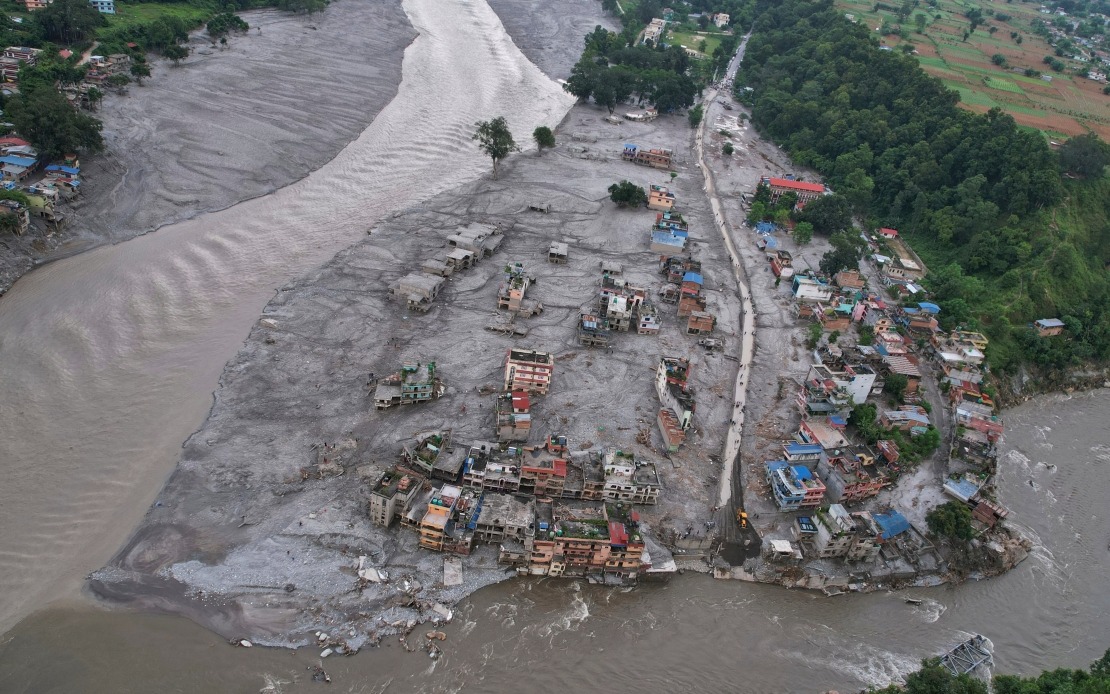
Nepal remains cautious about accepting expanded foreign search and rescue assistance in the wake of catastrophic flooding that has ravaged its central and northern territories, according to officials coordinating the international response. The government intends to complete its assessment of current conditions before deciding whether to deploy additional foreign rescue teams, even as neighbouring countries and others rush to provide critical humanitarian support.
The humanitarian crisis began Wednesday morning when the Bhote Koshi and Trishuli rivers surged destructively through Nepal and adjacent regions of China, submerging communities and infrastructure across multiple provinces. The flooding has exposed a particular vulnerability affecting the country's hydropower sector, where hundreds of workers became trapped in tunnels and underground facilities across multiple projects simultaneously. Nepalese media outlets reported that more than 900 workers were confined in 11 hydropower projects, including several still under construction, creating a complex and urgent rescue scenario that requires specialized technical expertise.
So far, Nepal has accepted rescue operations from four specific nations whose personnel have direct ties to affected areas. Australia, China, India, and South Korea have all deployed or committed search and rescue resources, a decision made partly because these countries maintain significant workforces at the flooded hydroelectric installations. This targeted approach suggests Nepal's authorities are prioritizing rescue teams with regional knowledge and existing infrastructure in-country, though this calculation may shift as the scale of the disaster becomes clearer.
Malaysia figures prominently among nations offering comprehensive assistance to its stricken neighbour. Prime Minister Datuk Seri Anwar Ibrahim announced earlier that Malaysia is actively coordinating humanitarian aid delivery while exploring the possibility of deploying the Malaysian Special Search and Rescue Team, commonly known as SMART. The unit represents one of Southeast Asia's most capable disaster response assets, having participated in multiple international rescue missions across the region.
The charge d'affaires of the Malaysian Embassy in Kathmandu, Mohd Firdaus Azman, confirmed to Malaysian news agency Bernama on Saturday that Nepal's government has explicitly stated it will complete its needs assessment before determining whether to invite additional rescue missions from outside nations. This measured approach reflects Nairobi's desire to avoid overwhelming its disaster management infrastructure while ensuring that incoming teams can operate effectively within existing coordination frameworks.
The catastrophe's human toll continues escalating as rescue efforts intensify across the affected zones. Authorities reported on Saturday that at least 633 people have perished across Nepal and China combined since the initial flooding event, with nearly 3,000 individuals still unaccounted for. This figure includes several hundred foreign nationals whose absence has triggered coordinated diplomatic responses from their home countries, adding geopolitical complexity to what remains fundamentally a humanitarian emergency.
Malaysian citizens represent a significant portion of the missing foreigners, reflecting the substantial Malaysian presence working across Nepal's development projects and tourism sector. As of Saturday evening, Malaysia's Foreign Ministry documented 55 Malaysians in Nepal and 36 Malaysians in China as remaining uncontactable, prompting Kuala Lumpur to escalate its crisis management protocols and coordinate more closely with authorities in both affected nations.
The decision to restrict foreign rescue teams initially stems partly from practical considerations. Each incoming rescue mission requires coordination infrastructure, security clearances, logistics support, and integration with local emergency management authorities. Deploying excessive numbers of foreign teams simultaneously could actually impede rescue operations by overwhelming communication networks and transportation routes critical to the response effort. Nepal's cautious approach reflects lessons learned from previous regional disasters where coordination failures hampered rather than enhanced emergency response.
For Malaysia and other waiting nations, the restraint demonstrates recognition of Nepal's legitimate concerns about managing a complex international rescue operation. However, the situation remains fluid and rapidly evolving. As ground conditions change and rescue teams complete initial assessments of accessibility and resource requirements, Nepal may determine that accepting additional specialized foreign assistance becomes necessary or urgent. The Malaysian government's preparation and readiness of SMART represents a prudent hedge, positioning assistance for rapid deployment should Kathmandu revise its assessment.
The broader implications extend beyond immediate humanitarian concerns. Disasters of this magnitude test regional cooperation mechanisms and bilateral relationships, often determining how nations interact during subsequent crises. Malaysia's coordinated approach—combining aid delivery, rescue readiness, and diplomatic patience—reflects the kind of measured engagement that characterizes contemporary Southeast Asian crisis response. Success in navigating these early coordination phases builds trust and establishes protocols that benefit all parties should another regional catastrophe strike.
The coming days will prove critical as rescue teams already operating in Nepal complete their assessments and communicate findings back to government officials. Their reports will significantly influence whether Nepal opens its borders to additional international rescue resources, particularly specialized teams like Malaysia's SMART unit that could access areas difficult for generalist teams to reach. Until that determination occurs, Malaysia and other contributing nations maintain their readiness while respecting Nepal's sovereignty and decision-making authority over its own disaster response.

