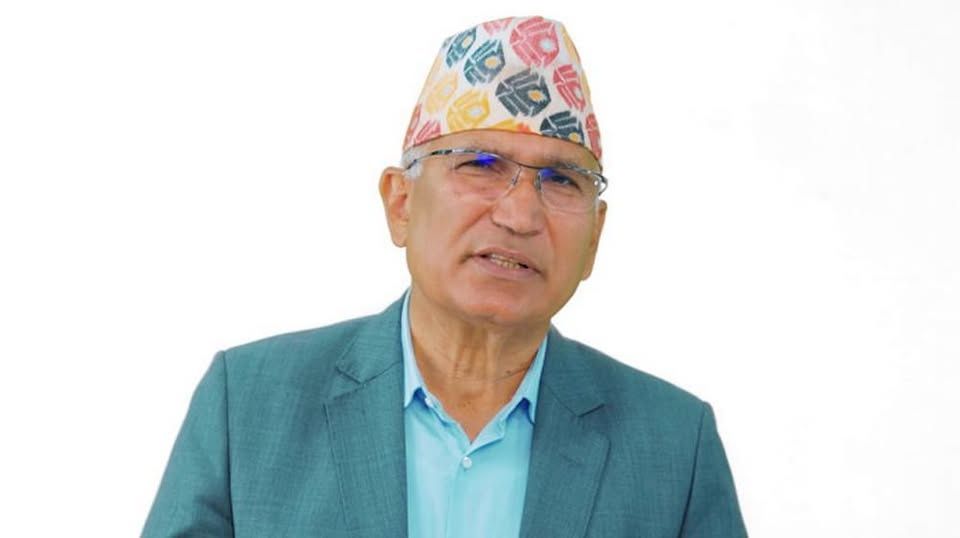
Nepal's anti-corruption drive has claimed another prominent scalp with the arrest of Bishnu Paudel, a former finance minister and senior figure in the opposition Communist CPN-UML party. The detention, confirmed by authorities on Tuesday, signals the continuing fallout from last year's major political upheaval that saw mass protests trigger the collapse of the previous government and bring in a new leadership committed to tackling endemic graft.
Paudel, who also serves as vice-chair of the CPN-UML under former prime minister KP Sharma Oli, was taken into custody on Monday as part of an investigation into alleged money-laundering activities. Nepal Police spokesman Abhi Narayan Kafle indicated that investigators plan to examine Paudel's involvement in illicit financial flows, though specific details about the charges remain limited. The case reflects a broader pattern of legal action against officials from the Oli administration, which was swept from power during the September uprising that demanded accountability for corruption and misgovernance.
The political context surrounding Paudel's arrest cannot be overlooked. Current Prime Minister Balendra Shah, an unconventional figure in Nepal's political establishment who transitioned from a career in entertainment to governance, was elected in March with an explicit mandate to root out corruption. His administration has moved swiftly against figures associated with the previous regime, presenting itself as committed to institutional reform. However, this aggressive approach has drawn criticism from opposition quarters, who question whether the investigations are genuinely impartial or represent a form of political retribution disguised as justice.
Oli, the former prime minister who lost his parliamentary seat to Shah, wasted little time in denouncing Paudel's arrest as a "political stunt" orchestrated by his successor's government. The complaint echoes longstanding tensions in Nepali politics, where accusations of weaponising anti-corruption measures against political opponents have periodically surfaced. Oli's allegations of authoritarian behaviour suggest that despite the laudable goal of tackling graft, concerns exist about whether the current administration is pursuing corruption cases with sufficient independence and fairness.
The CPN-UML's official response, delivered through party publicity head Niraj Acharya, attempted to strike a balance between respecting legal processes and maintaining party solidarity. Acharya indicated the party's willingness to cooperate with investigations while simultaneously accusing the government of selective enforcement—suggesting that anti-corruption efforts are being applied asymmetrically against opposition members rather than across the political spectrum. This dynamic reflects a common challenge in post-conflict and post-upheaval societies where institutional legitimacy remains fragile and political actors question whether reform efforts serve genuine accountability or narrow partisan interests.
Paudel's arrest follows a similar pattern established earlier in 2024 when Oli and former interior minister Ramesh Lekhak were detained in March, just one day after Shah assumed office. The two men faced questioning regarding their alleged involvement in a deadly government crackdown on protesters in 2025, an operation that resulted in at least 76 deaths and more than 2,500 injuries. Despite weeks of detention and interrogation, neither faced formal charges, and both denied responsibility for the violence. Their eventual release without prosecution raised questions about the strength of evidence and the sustainability of investigations that began with such dramatic arrests.
The 2025 protests that triggered this cascade of political change originated as demonstrations against a social media ban but rapidly evolved into broader expressions of public discontent. Citizens channelled accumulated frustrations about pervasive corruption and economic stagnation into sustained pressure for governmental change. The violent response to these protests, which lasted two days and claimed dozens of lives, became a symbolic moment that delegitimised the previous administration and created political space for Shah's election on a reform platform. Understanding this context is essential for evaluating whether current anti-corruption efforts genuinely serve accountability or constitute selective punishment.
Beyond Paudel's case, Nepal's anti-corruption infrastructure has expanded its reach. The Commission for Investigation of Abuse of Authority, the nation's primary anti-graft watchdog, has filed charges against 16 individuals in connection with an alleged $66 million procurement scam centred on e-passport production. This parallel investigation, according to commission spokesman Suresh Neupane, concerns systematic embezzlement within the passport procurement process—a demonstration that corruption extends across multiple bureaucratic sectors and involves officials at various hierarchical levels.
For Southeast Asian observers, Nepal's anti-corruption trajectory offers instructive lessons about the complexities of institutional reform following political crises. While public pressure for accountability remains essential, the transition from justified anger to functional justice systems demands careful institutional design. The challenge facing Nepal involves pursuing genuine corruption cases while maintaining sufficient political neutrality to preserve public confidence in the legal system itself. If investigations are perceived as tools of partisan advantage, even legitimate prosecutions of corrupt officials risk undermining institutional legitimacy and perpetuating cycles of mutual recrimination that characterise weak governance.
The coming months will test whether Nepal's new leadership can sustain its anti-corruption commitments while developing prosecution strategies perceived as impartial and consistent. Success requires not merely arresting officials from the previous government but also demonstrating equal vigour in pursuing corruption within the current administration itself. As Nepal navigates this delicate balance between accountability and fairness, the international community and regional neighbours will monitor whether the nation's institutions are genuinely strengthening or merely being recalibrated to serve new power holders.

