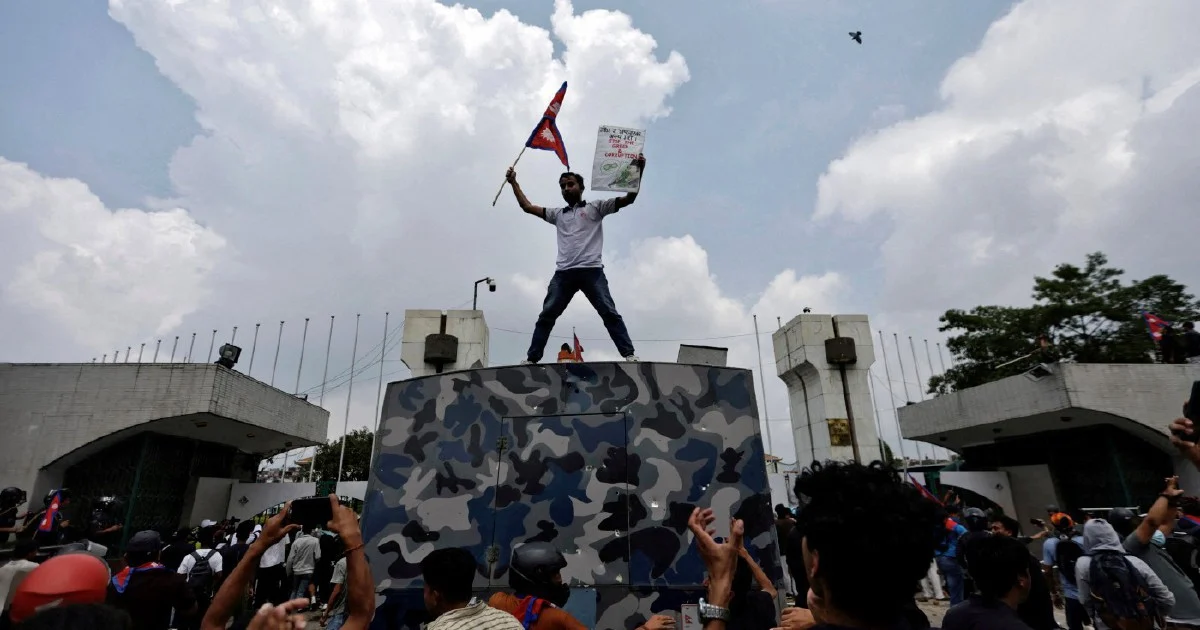
Kathmandu police arrested Bishnu Prasad Paudel, who previously served as Nepal's finance minister, on Monday evening following allegations that he engaged in money laundering. The arrest represents a notable escalation in the government's broader campaign to investigate and prosecute corruption linked to earlier administrations, signalling a shift in how the country's emerging Gen Z-led political establishment intends to handle financial misconduct at the highest levels of state apparatus.
The apprehension of Paudel underscores a turning point in Nepal's governance landscape. For years, allegations of systematic corruption within previous governments went largely unaddressed, with observers citing political entanglement and weak institutional enforcement as primary obstacles. The current administration, increasingly influenced by younger lawmakers and civil servants, appears determined to reverse this pattern by pursuing former officials regardless of their stature or previous connections within established power structures.
Money laundering charges carry significant weight in Nepal's legal framework, particularly when levelled at individuals who held key positions overseeing national finances. Such allegations typically involve the concealment of illicit funds derived from various sources, with perpetrators moving money through legitimate banking channels or business transactions to obscure its origins. For a former finance minister, the charges raise questions about whether oversight mechanisms within the treasury functioned adequately during his tenure, and whether institutional safeguards proved sufficient to prevent misconduct.
Paudel's arrest follows a pattern of increased scrutiny directed at officials from preceding governments. Multiple high-ranking figures have faced investigation in recent months as the administration demonstrates political will to address past financial irregularities. This shift reflects both domestic pressure for accountability and international pressure to strengthen anti-corruption measures, particularly as Nepal seeks to improve its standing within frameworks addressing financial transparency and cross-border money movement.
The timing of the arrest carries political significance within Nepal's broader context. The country's Gen Z-influenced leadership seeks to distinguish itself from previous administrations by championing reform and transparent governance. By pursuing corruption cases against former officials, the government consolidates support among younger voters who increasingly view accountability as a prerequisite for legitimate political authority. The strategy, however, also invites scrutiny regarding selective prosecution and whether investigations remain impartial or serve partisan interests.
International observers watching Nepal's anti-corruption drive will likely assess whether legal proceedings remain independent from political influence. The International Monetary Fund and World Bank have long identified institutional weakness and corruption as impediments to Nepal's economic development. A credible crackdown could potentially improve Nepal's position regarding international investment and development financing, though this depends entirely on whether prosecutions reflect genuine legal merit rather than political calculation.
For Malaysia and other Southeast Asian nations, Nepal's experience offers instructive lessons regarding the challenges of addressing entrenched corruption. Like several regional economies, Nepal grapples with establishing institutional independence while pursuing accountability for past misconduct. The case demonstrates both the necessity and difficulty of holding powerful former officials accountable, particularly when doing so requires overcoming institutional resistance and political complexity.
The arrest also highlights how generational transitions in political leadership can affect governance priorities. Younger officials often bring distinct perspectives on corruption and accountability, sometimes proving more willing than their predecessors to challenge established networks. However, this generational shift requires corresponding institutional strengthening to ensure that investigations and prosecutions proceed through legitimate legal channels rather than becoming instruments of political advantage.
Paudel's detention initiates what will likely become a prolonged legal process. The specific allegations underlying the money laundering charges remain under investigation, and the former minister will presumably have opportunity to respond to formal accusations and mount a legal defence. The case's trajectory will substantially influence perceptions regarding whether Nepal's anti-corruption campaign represents genuine institutional reform or temporary political theatre.
Nepal's finance sector has faced repeated criticism for inadequate anti-money laundering compliance and weak know-your-customer protocols. Allegations against a former minister heading this sector suggest systemic vulnerabilities that extended beyond individual misconduct. Meaningful reform would require not only prosecuting individual officials but also strengthening financial regulatory institutions, improving inter-agency cooperation, and establishing robust mechanisms for preventing future violations.
The broader implications extend beyond Nepal's borders, as neighbouring countries and international partners assess whether South Asia's smaller economies can credibly address financial crime. Nepal's success or failure in pursuing this corruption case may influence investment decisions and regional perceptions of financial sector reliability. For Malaysian stakeholders with exposure to Nepali business or finance sectors, the investigation serves as a reminder that institutional reform across the region remains incomplete and ongoing vigilance remains necessary.

