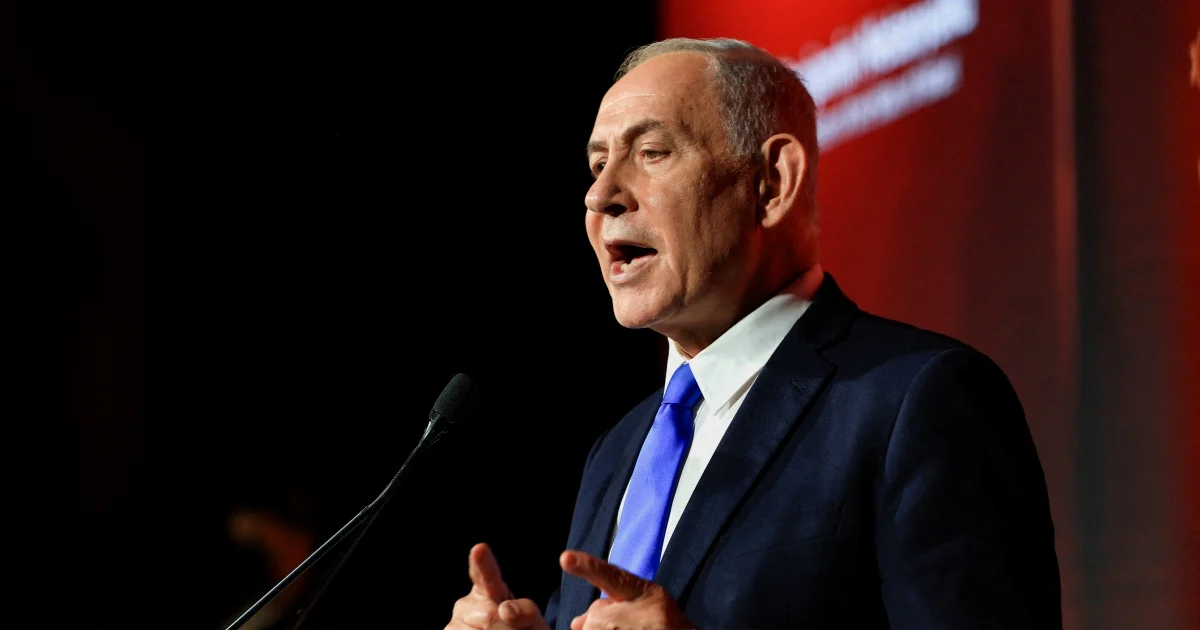
Israeli Prime Minister Benjamin Netanyahu announced on Sunday that military forces would establish an open-ended presence in southern Lebanon, signalling a shift towards a longer-term deployment strategy rather than the initially suggested limited intervention. The statement comes amid ongoing regional tensions and reflects Jerusalem's determination to reshape the security dynamics along its northern frontier with Hezbollah still positioned there despite recent military operations.
Netanyahu's declaration represents a significant commitment of military resources to Lebanon's border region. The prime minister framed the deployment as necessary to ensure Israeli civilian communities in the north maintain adequate security protections against threats emanating from across the border. The lack of a specified exit timeline suggests Israeli leadership anticipates a prolonged military presence will be required to achieve its stated objectives in the region.
The decision carries substantial implications for Lebanon itself, a country already grappling with economic collapse, political paralysis, and humanitarian challenges. An extended Israeli military footprint in the south complicates Lebanon's already fragile path towards reconstruction and stability. The country's government, already weakened and struggling to exert control over its territory, faces additional pressure to manage the presence of foreign military forces within its borders.
Regionally, the commitment signals Israel's intent to maintain unilateral security dominance in the area regardless of potential diplomatic initiatives. For Southeast Asian observers and Malaysia's strategic community, this demonstrates how major powers navigate protracted security challenges when they perceive existential threats. The approach reflects a calculation that military presence can function as both deterrent and enforcement mechanism across an extended timeframe.
Netanyahu simultaneously renewed Israel's commitment to preventing Iran from acquiring nuclear weapons capabilities, connecting the two security concerns as part of a broader regional strategy. This dual-focus approach suggests Israeli leadership views southern Lebanon deployment and nuclear containment as interconnected elements of the same security architecture. Iran's influence through proxies like Hezbollah in Lebanon and its nuclear programme are being treated as complementary challenges requiring coordinated responses.
The prime minister's statement arrives as regional powers navigate shifting alliances and military capabilities. For Malaysia and other Southeast Asian nations observing Middle Eastern developments, the statement underscores how persistent security concerns can override political or diplomatic pressures for withdrawal. It also illustrates the limited leverage outsiders possess in compelling military withdrawals when defending nations feel genuinely threatened.
Israeli military operations in southern Lebanon represent one of several interconnected conflicts reshaping the Middle Eastern landscape. The commitment to indefinite deployment suggests Israel is preparing for a scenario where traditional diplomatic or ceasefire mechanisms fail to produce lasting solutions. This approach may reflect lessons drawn from previous engagements where premature withdrawals were perceived to have emboldened adversaries.
The economic cost of sustaining this deployment deserves consideration. Maintaining significant military forces in a foreign territory requires substantial resource allocation, logistics infrastructure, and personnel rotation schedules. Israeli leadership's willingness to commit to these costs without a timeline indicates the strategic priority assigned to this particular theatre and the perceived importance of preventing hostile capability development in the south.
Hezbollah's continued presence in southern Lebanon despite military operations creates a complex dynamic that may necessitate the extended Israeli deployment Netanyahu described. Rather than eliminate the militant organization entirely, military campaigns appear designed to establish a sustainable balance where Hezbollah's capacity to threaten Israeli civilians is degraded sufficiently to restore relative calm to the northern border region. This equilibrium, however, requires constant military oversight.
For diplomatic observers, Netanyahu's statement suggests minimal openness to negotiated withdrawal timelines or international peacekeeping arrangements that might replace direct Israeli military presence. The unbounded commitment indicates Israeli planners lack confidence in alternative security arrangements and believe only sustained military surveillance and response capability can adequately protect Israeli citizens.
The implications extend beyond Israel and Lebanon to encompass broader questions about regional stability and the sustainability of security arrangements imposed through military presence. Malaysia and other nations with stakes in international law and sovereignty principles must consider how such extended deployments affect precedents for territorial occupation and the sanctity of borders in their own regions.
Netanyahu's statements also reflect ongoing tensions with Iran over nuclear matters, suggesting these security challenges will remain central to Israeli strategic planning regardless of developments on the Lebanese border. The interconnection between these concerns indicates Israel perceives a comprehensive regional threat structure requiring multifaceted military and diplomatic responses across multiple theatres and timeframes.

