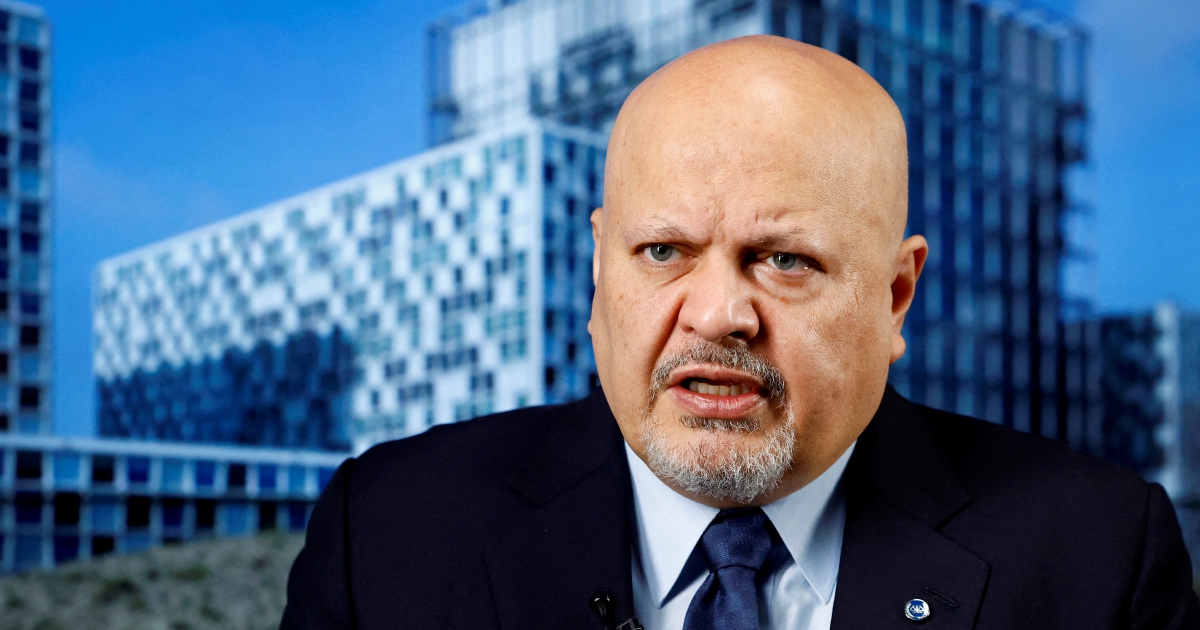
Benjamin Netanyahu wasted little time in voicing his disdain for the international criminal justice system's latest upheaval. The Israeli Prime Minister seized on the forced resignation of International Criminal Court prosecutor Karim Khan, characterizing him as fundamentally deceptive in his approach to his official duties. Netanyahu's sharp rebuke came in the wake of Khan's departure following serious allegations of sexual misconduct that ultimately proved incompatible with his continued service at the global court.
Khan's sudden exit from the ICC marks a seismic moment in ongoing debates about the institution's credibility and the impartiality of its leadership. The prosecutor had been instrumental in the issuance of arrest warrants targeting Netanyahu and Defence Minister Yoav Gallant, actions that sparked fury among Israeli officials and their supporters who viewed the proceedings as politically motivated. For Netanyahu's government, Khan's removal represents validation of long-standing criticism that the ICC prosecutor had overstepped appropriate boundaries and allowed ideological considerations to guide prosecutorial decisions.
The allegations that led to Khan's downfall centre on personal misconduct rather than his professional judgment or legal reasoning. Sexual misconduct claims represent a grave breach of the ethical standards expected from someone occupying one of international law's most prominent positions. The revelation that such behaviour had occurred undercut whatever authority Khan might have wielded as he pursued investigations into Israeli military operations and government policies in Gaza and the Palestinian territories.
For Netanyahu and the Israeli government, the prosecutor's fall provides an opportunity to challenge the legitimacy of ongoing ICC inquiries. The administration's strategy has consistently emphasized that the court lacks the necessary impartiality to conduct fair investigations into Israeli conduct, and Khan's personal failings offer fresh ammunition for that argument. Netanyahu's characterization as a "con job" suggests the Prime Minister views the prosecutor's entire tenure as tainted by either incompetence or deliberate misrepresentation of facts and legal positions.
The timing of Khan's departure carries significant implications for Israeli interests at the ICC. With the prosecutor's position now vacant, uncertainty surrounds how successor leadership might approach existing investigations. This transitional period may offer the Israeli government a window to challenge the validity of Khan's work and petition for reviews of any decisions made during his tenure. The replacement prosecutor will inherit not only ongoing cases but also damaged institutional credibility that could affect how witnesses, evidence, and legal arguments are received.
For Malaysia and other Southeast Asian nations monitoring international justice mechanisms, Khan's downfall presents troubling questions about institutional resilience. The ICC has long positioned itself as a court of last resort for cases that national systems cannot or will not address, particularly regarding serious crimes. However, when senior officials engage in misconduct, the entire apparatus loses moral authority. Countries skeptical of international institutions will point to this episode as evidence that global governance structures lack the rigorous oversight and ethical frameworks they publicly claim to maintain.
The Khan scandal also complicates efforts to enforce international humanitarian law in conflicts beyond the Israeli-Palestinian dispute. Numerous situations across Africa, Asia, and Europe fall under ICC jurisdiction or scrutiny. If the prosecutor's office is perceived as compromised by personal failings at the leadership level, states may feel emboldened to resist cooperation, refuse extradition requests, or withdraw participation from the institution altogether. This erosion of institutional credibility could have cascading effects across multiple ongoing investigations and cases.
Netanyahu's public celebration of Khan's exit, however justified by the latter's personal misconduct, reflects the broader polarization surrounding the ICC's work on Middle Eastern matters. The Prime Minister's government has consistently rejected the court's jurisdiction and authority, viewing its investigations as inherently biased against Israeli interests. Khan's forced resignation, while stemming from personal ethical failures, will almost certainly be weaponized in ongoing political arguments about whether the ICC can function as a neutral arbiter rather than a tool of selective justice against Western nations and their allies.
The removal of Khan opens a critical moment for the ICC to demonstrate institutional learning and reform. The next prosecutor will need to rebuild trust not only among the court's member states but also among governments like Israel that have fundamentally questioned its legitimacy. That individual will inherit cases shaped by Khan's decisions and must navigate the minefield of international opinion now sharply divided over whether the court serves justice or political agendas. The stakes extend far beyond the Israeli-Palestinian conflict to encompass the institution's long-term viability as a forum for addressing atrocities worldwide.

