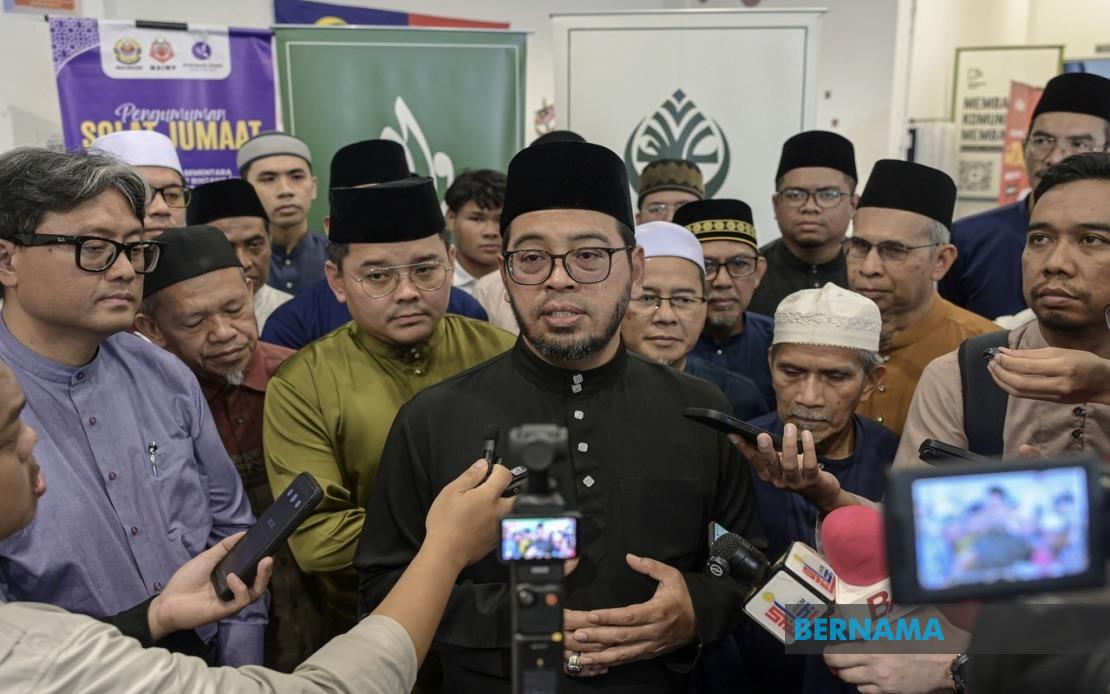
A new mosque designed to serve more than 1,500 congregants will rise in Bukit Bintang, with completion targeted for the opening months of next year, according to Minister in the Prime Minister's Department (Religious Affairs) Dr Zulkifli Hasan. The development marks a significant expansion of prayer facilities in one of Kuala Lumpur's busiest commercial and entertainment districts, where the growing Muslim population has created demand for dedicated worship spaces.
The project will see the replacement of the temporary arrangement currently hosted at the Outreach Oasis Bukit Bintang (OOBB) community centre, which has served as an interim Friday prayer surau since receiving approval from the Federal Territories Syariah Law Consultative Committee during a special session on June 8. This transition from temporary to permanent infrastructure reflects the religious affairs ministry's commitment to establishing proper facilities within the capital's rapidly evolving urban landscape.
Dr Zulkifli disclosed these developments while addressing media representatives after leading Friday prayers at the OOBB venue. He emphasised that once the new mosque becomes operational, the entire congregation will consolidate at the dedicated facility, allowing the community centre to refocus its efforts on dakwah activities—religious outreach and education programmes that form a cornerstone of Islamic community engagement.
The architectural and structural groundwork has already been completed, with detailed designs and construction blueprints finalised and ready for implementation. This preparatory phase demonstrates the systematic approach being taken to ensure the mosque meets contemporary standards while accommodating the substantial worshipper volume projected for the site. The minister indicated that construction activity would commence in the near term, suggesting momentum is building behind the initiative.
The undertaking exemplifies collaborative governance in Malaysia's religious infrastructure development. The Federal Territories Islamic Religious Department (JAWI) and the Federal Territories Islamic Religious Council (MAIWP) are coordinating the effort alongside contributions from multiple non-governmental organisations. This multi-stakeholder approach distributes responsibility and expertise across institutions with established track records in religious facility management and community services.
For Kuala Lumpur's religious landscape, the Bukit Bintang mosque represents an important addition to prayer infrastructure in an area historically characterised by commercial concentration. The district's demographic composition has evolved substantially, with office workers, residents in residential towers, and tourists converging daily. A 1,500-capacity facility addresses practical gaps in current provision, particularly for the Friday congregational prayer that Islamic tradition emphasises as a community obligation.
The project also carries implications for how Malaysia's federal territories approach religious pluralism and urban planning. By investing in dedicated worship spaces rather than relying on makeshift arrangements, authorities signal recognition that religious observance and community cohesion merit the same infrastructure planning afforded to commerce and transport. This formalisation of religious facilities within bustling urban centres represents a deliberate policy choice with broader developmental significance.
From a regional perspective, Malaysia's continued investment in Islamic infrastructure demonstrates how Southeast Asian nations integrate religious identity with modernisation. The Bukit Bintang mosque exemplifies this balance—purpose-built for contemporary city dwellers while maintaining doctrinal standards. Such projects attract attention across the Islamic world as models of how faith-based community needs integrate into dynamic metropolitan environments.
The timeline of early next year provides a reasonable completion window given that planning and design phases are concluded. Construction efficiency in Malaysian religious projects has improved significantly, aided by established supply chains, skilled labour availability, and regulatory frameworks that streamline approvals for faith-based infrastructure. Monitoring progress over the coming months will reveal whether the ambitious schedule is maintained.
For worshippers currently using the OOBB surau, the transition promises expanded capacity, improved facilities, and a permanent home for one of Kuala Lumpur's significant Muslim populations. The allocation of the community centre to exclusively dakwah programming also enriches the ecosystem of religious education and outreach in the federal territories, suggesting the overall initiative produces gains beyond the mosque itself.
Dr Zulkifli's public announcement serves broader stakeholder groups—communicating to the Muslim community that their infrastructure needs receive government attention, signalling to NGOs and religious councils that collaborative models will be supported, and assuring the commercial district that religious and commercial activities coexist productively. This communications dimension, alongside the physical development, strengthens social cohesion around shared urban space.

