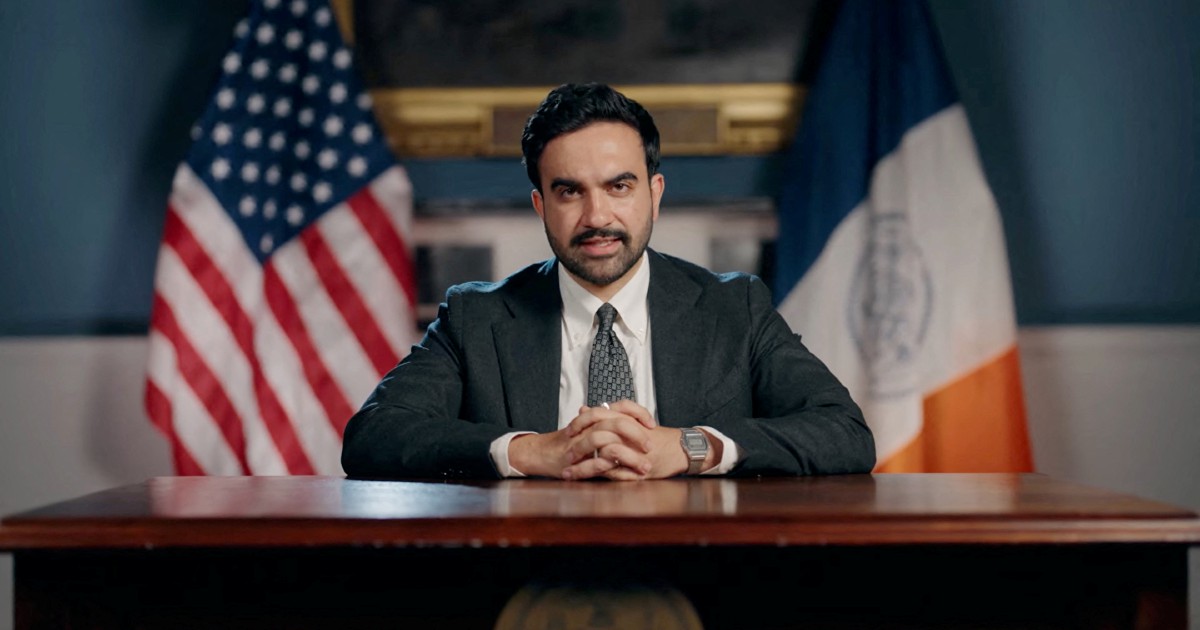
New York Mayor Zohran Mamdani has stepped back from a potentially explosive diplomatic situation, declaring on Tuesday that New York City's municipal government lacks the jurisdictional authority to enforce the International Criminal Court's arrest warrant issued against Israeli Prime Minister Benjamin Netanyahu. The clarification represents an attempt to navigate the fraught intersection of international law and city governance, while deferring responsibility to US federal authorities, who alone possess the constitutional power to decide whether to honour or resist the ICC's directive.
The statement reflects the deeply complex position that cities find themselves in when international criminal justice mechanisms intersect with national foreign policy. New York City, as the global host of the United Nations headquarters, occupies a unique diplomatic status, yet municipal authorities operate within constrained legal boundaries. Mamdani's announcement signals that the city will not unilaterally enforce the ICC warrant, a position that avoids creating an international incident at the municipal level while also protecting New York from potential legal and political blowback.
The ICC warrant for Netanyahu centres on allegations of crimes against humanity and war crimes in relation to Israel's military operations in Gaza. The court, established through the Rome Statute, has jurisdiction over states that are signatories to the agreement, though the United States is notably not among them. This non-membership status complicates any enforcement mechanism, as US law does not automatically recognise ICC warrants, and American courts have historically protected US citizens and allies from international prosecution.
Mamdani's decision to publicly clarify the city's position may stem from mounting international pressure and domestic activism demanding accountability. Advocacy groups and human rights organisations have argued that any world leader visiting New York should face potential legal consequences if they are subject to ICC warrants. The mayor's statement essentially acknowledges this moral argument while simultaneously insisting that the machinery to act upon it does not rest with city authorities.
By directing the matter to federal officials, Mamdani places the ball squarely in the court of the US State Department and Department of Justice. These agencies will ultimately determine whether the United States recognises the warrant's validity and whether it will cooperate with the ICC, or whether it will continue its traditional stance of protecting Israeli leadership from international prosecution. This approach allows the city to maintain its commitment to international law while avoiding the appearance of unilateral action against a key US ally.
The jurisdictional distinction drawn by the mayor underscores a broader tension in how international law operates in practice. The ICC, despite its status as a permanent international institution, depends on nation-states to enforce its warrants. When a nation is unwilling or resistant to cooperating with the court, enforcement becomes nearly impossible. In cases involving the United States, Israel, or other countries outside the ICC framework, the court's power is substantially diminished, relegating warrants to symbolic declarations of accountability rather than mechanisms of actual justice.
For Southeast Asian readers observing this situation, the precedent carries particular relevance. Many regional nations are ICC signatories, and the court has opened investigations into potential crimes in Myanmar, the Philippines, and Palestine. The outcome of how the US and its allies approach the Netanyahu warrant will set expectations for whether the ICC can effectively prosecute leaders of non-member states or close allies of powerful nations. If enforcement remains selective or politically influenced, the court's credibility and utility in the region will be further questioned.
The mayor's clarification also reflects domestic American political realities. The relationship between the United States and Israel remains central to US Middle East policy, and any municipal action against Netanyahu could provoke significant domestic political fallout. By deferring to federal authorities, Mamdani avoids placing New York at the centre of a contentious debate about America's relationship with Israel, even as the city grapples with its identity as a hub of international governance and justice.
Furthermore, the practical logistics of arresting Netanyahu would present substantial security and diplomatic challenges. As a sitting head of state visiting New York, Netanyahu benefits from certain protocols and protections that are typically extended to world leaders. A municipal arrest would require coordination across multiple law enforcement agencies and would almost certainly invite strong diplomatic protests from Israel and potential intervention by federal authorities.
Moving forward, the question of whether federal officials will take any action on the ICC warrant remains open. The State Department has historically used its discretion to shield Israeli officials from international prosecution, and there is little indication that policy will shift significantly. Mamdani's statement, therefore, may serve as a preliminary deflection of a matter that federal authorities are equally reluctant to address directly, effectively placing the responsibility into a kind of legal and diplomatic limbo.
The mayor's position illustrates how international accountability mechanisms face fundamental limitations when confronted with geopolitical power dynamics. While the ICC serves an important symbolic function in establishing norms around crimes against humanity and war crimes, its actual enforcement depends heavily on political will and national interest calculations. For observers worldwide, including in Southeast Asia, the Netanyahu warrant episode demonstrates that international law operates within a hierarchy of power, and that protection from prosecution often correlates more closely with political alignment than with the severity of allegations.

