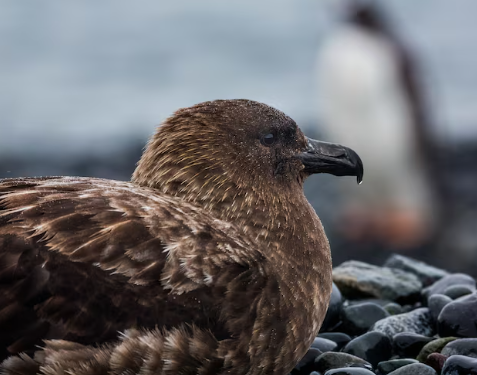
New Zealand has joined the growing list of nations grappling with H5N1 bird flu after biosecurity officials confirmed the detection of the virus in a brown skua seabird discovered on a Wellington beach. Biosecurity Minister Andrew Hoggard announced the discovery on Wednesday, marking a significant milestone in the global spread of the highly pathogenic strain that has ravaged bird populations and farming operations across multiple continents over the past three years.
The arrival of H5N1 in New Zealand comes roughly a month after the virus was identified in neighbouring Australia, making Oceania the final continent to detect the pathogen. The discovery underscores how the disease continues its relentless advance through wild bird populations worldwide, having caused catastrophic mortality events among wildlife and devastating outbreaks across commercial poultry and dairy operations since 2021. In addition to the millions of wild birds killed, the virus has breached agricultural biosecurity to infect poultry flocks and dairy cattle herds, while also sickening multiple farmworkers in various countries.
Despite the confirmed detection, New Zealand's biosecurity establishment has not yet identified evidence of widespread mortality among wild birds or transmission chains between native species. Crucially, no infected poultry has been discovered, suggesting that the virus has not yet penetrated commercial farming operations. These early indicators provide some reassurance that the outbreak remains in its nascent stages, though officials acknowledge the volatile nature of the pathogen and its capacity to spread rapidly under favourable conditions.
The New Zealand case mirrors the pattern developing across the Tasman Sea, where Australia has recorded fourteen confirmed or presumed positive detections of H5 bird flu as of mid-July. This convergence with Australia's experience offers a template for how the disease may evolve within New Zealand's ecosystem, informing response strategies and resource allocation. The proximity of the two countries and their shared migratory bird populations underscore the transnational character of zoonotic threats in the Pacific region, a dynamic relevant to Southeast Asian governments increasingly concerned about their own exposure to emerging diseases.
New Zealand's biosecurity apparatus has invested considerable effort in advance preparation, collaborating with the poultry sector to establish comprehensive contingency plans and strengthen defences against agricultural incursion. However, the nation's ecological vulnerability extends far beyond commercial farming. New Zealand's avifauna represents one of the world's most extraordinary evolutionary laboratories, with native birds having adapted over millions of years to an environment devoid of native mammalian predators. This isolation produced remarkable species—flightless, ground-nesting, and seemingly defenceless against conventional threats—but created profound ecological fragility when novel dangers arrive.
The introduction of invasive predators such as stoats, rats, and feral cats has already pushed numerous native species to the brink of extinction, with conservation efforts consuming enormous resources and yielding incremental gains. Many of New Zealand's endemic birds exist today in perilously small numbers, their survival dependent on intensive management and habitat protection. The arrival of H5N1 introduces a pathogenic threat against which traditional conservation strategies offer limited protection, forcing authorities to pursue novel interventions.
In response to this existential threat, New Zealand's health and conservation officials have launched an emergency vaccination programme targeting three hundred core breeding birds drawn from five critically endangered species. The programme focuses on species such as the flightless takahe and kakapo, iconic representatives of New Zealand's irreplaceable natural heritage. These vaccinations represent a last-resort measure, reflecting the desperation inherent in protecting species whose populations can be counted in the hundreds or low thousands.
Brett Gartrell, a wildlife health specialist at Massey University, articulated the profound anxiety gripping conservation circles. Gartrell's assessment that some critically endangered species could face extinction should H5N1 spread rapidly through New Zealand's wild bird populations highlights the catastrophic stakes underlying current events. The professor's concern that rapid viral spread could outpace the immunity conferred by vaccination programmes reveals a fundamental mismatch between the pace of epidemiological processes and the capacity of emergency interventions to contain them.
New Zealand's situation illuminates a broader vulnerability affecting island ecosystems throughout the Asia-Pacific region. Southeast Asian nations with endemic bird species face comparable risks should H5N1 establish itself in their wild bird populations. The Malayan peninsula, Indonesian archipelago, and Philippine islands all harbour species of high conservation value, many of which have already been diminished by habitat loss and poaching. The arrival of an efficient wildlife pathogen could compound existing pressures on these species with devastating consequences.
The policy implications extend beyond conservation biology into pandemic preparedness more broadly. The emergence of H5N1 in wildlife populations complicates efforts to contain the virus and raises the possibility of reintroduction into agricultural systems even after initial outbreaks are controlled. New Zealand's experience will furnish critical data on wildlife vaccination efficacy, pathogen persistence in natural ecosystems, and the interaction between ecological factors and disease transmission—insights directly relevant to Southeast Asian governments developing their own pandemic response frameworks.
The detection in New Zealand also signals the unpredictability inherent in monitoring zoonotic disease emergence. The brown skua, a migratory species, may have contracted the virus during its travels and carried it southward, demonstrating how mobile wildlife vectors can transport pathogens across vast oceanic distances. This dynamic complicates efforts to establish clean zones or disease-free regions, since migratory corridors create inherent transmission pathways that respect no geographical boundaries.
As New Zealand implements its vaccination strategy and monitors for further detections, regional observers across Southeast Asia will scrutinize outcomes closely. The success or failure of efforts to contain H5N1 and protect endangered species will inform regional disease surveillance protocols and conservation strategies. The case exemplifies how climate change, ecological disruption, and global interconnection have created conditions favouring the emergence and spread of novel pathogens, requiring integrated approaches spanning biosecurity, conservation, and public health.

