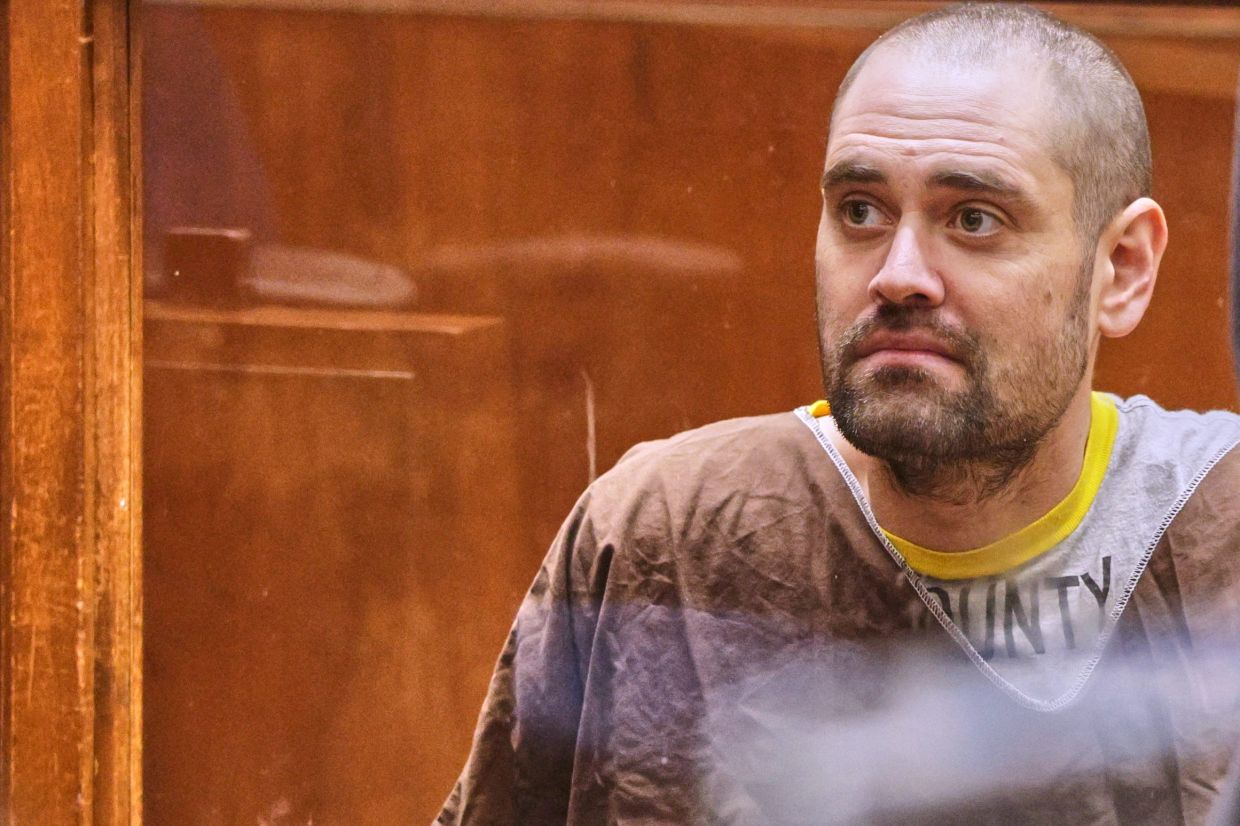
The 32-year-old son of acclaimed Hollywood director Rob Reiner has turned to the courts in his effort to unlock inheritance funds held in trust, claiming he requires the money to pay for legal representation as he faces murder charges in connection with his parents' deaths. Nick Reiner filed a petition through his civil attorneys in Los Angeles County court on Monday, asserting that trustees have wrongfully withheld the funds despite clear instructions in the original trust documentation that the money should have been released to him years earlier.
The case centres on what appears to be a straightforward contractual disagreement over financial entitlements, though it arises from one of Los Angeles's most shocking recent crimes. Rob Reiner, the renowned director whose prolific career produced some of Hollywood's most iconic films, and his wife Michele Singer Reiner, a photographer and producer, were fatally stabbed in their Brentwood home on December 14. Nick Reiner was arrested within hours of the killings and subsequently entered a not guilty plea to two counts of murder. He currently faces potential capital punishment, as the District Attorney's office has not yet announced whether it will pursue the death penalty.
The petition's language reflects a delicate legal position, carefully separating the civil trust matter from the criminal proceedings. His attorneys emphasize that while Nick Reiner grieves his parents' deaths deeply, the factual questions surrounding their demise remain separate from the question of whether he has legitimate access to his own funds. The argument rests on a basic legal principle: that anyone facing criminal charges retains the fundamental right to mount a robust defence using their own lawfully held resources. This framing attempts to insulate the trust dispute from the gravity of the murder allegations.
The underlying trust structure appears straightforward on its face. Rob and Michele Reiner created individual trusts for each of their three children—Nick, Jake, and Romy—distinct from the larger family trust. Nick's trust, established in 1993, contained explicit instructions that he receive half the remaining assets upon turning 30 and the remainder at age 35. According to the petition, Nick never received the funds owed at 30, and now at 32, he has received nothing. The trust currently holds at least $1.5 million in assets, though the exact amount remains undisclosed by the trustee.
The complication arose when attorney Paul R. Kanin assumed control of the trust in February and began denying distributions. His reasons, the petition claims, have shifted repeatedly and lack legal merit. While the trustee has raised concerns about Nick Reiner's competence and fitness, these concerns cannot justify withholding mandatory distributions that were explicitly mandated by the trust's original terms. The distinction matters significantly in trust law: discretionary distributions can be withheld for various reasons, but mandatory payouts according to specific conditions cannot be arbitrarily delayed. The filing suggests Kanin has confused his authority, creating barriers to payments that should flow automatically.
The financial stakes of this dispute extend beyond the trust itself to Nick Reiner's ability to secure capable legal representation. Initially, he retained Alan Jackson, a prominent private attorney with a strong reputation in high-profile cases. However, Jackson withdrew from the case within weeks, citing reasons he declined to publicly disclose. The petition's filing reveals that Nick's siblings, Jake and Romy, had initially agreed to fund Jackson's representation but subsequently reversed their decision. This withdrawal of family financial support appears to have been catastrophic for Nick's legal position, leaving him without resources to maintain sophisticated counsel during the critical early phases of a capital murder prosecution.
In a declaration supporting the petition, Jackson indicated that his firm would resume representation immediately if the trust funds became available, signalling that the financial barrier, rather than any professional judgment about the case, caused his departure. This positioning is significant because it demonstrates that capable counsel views the trust funds dispute as the primary obstacle to continued representation. For someone facing murder charges that could result in execution, the ability to maintain experienced legal counsel is not merely important—it is essential to the justice system's functioning.
The pretrial schedule offers some breathing room, with proceedings not resuming until September, but the delay does not reduce the urgency of securing legal resources. The case itself remains remarkably opaque to public scrutiny. Authorities have disclosed nothing about possible motives, and both prosecution and defence have adhered to strict confidentiality regarding case details. Court orders have sealed most autopsy information, leaving fundamental questions about how and why the killings occurred unanswered. This information vacuum may work to Nick Reiner's advantage in some respects, as sensational media coverage remains limited compared to what such a case might otherwise generate.
The emotional toll of the situation extends throughout the Reiner family. In April, Nick's brother Jake provided a rare public statement describing the experience as "a living nightmare" that is "too devastating to comprehend," capturing the profound personal devastation that accompanies not only the loss of parents to homicide but also the criminal accusation against a sibling. This family rupture—evident in the siblings' withdrawal of financial support for Nick's defence—underscores how thoroughly such accusations fracture family bonds, regardless of guilt or innocence.
From a broader perspective, the case illustrates tensions within the American legal system regarding resources and criminal defence. Presumption of innocence remains meaningless without the financial capacity to mount a genuine defence, particularly in cases involving serious felony charges. Yet many defendants, lacking family wealth, proceed through the system with public defenders typically carrying overwhelming caseloads. Nick Reiner's situation is atypical precisely because inherited wealth exists to support his defence, yet that wealth remains locked behind contractual arrangements that the trustees refuse to honour. The court's resolution of this dispute will determine whether legal formalism—the trustees' interpretation of their discretionary authority—will override the statutory right to legal representation in a capital case.