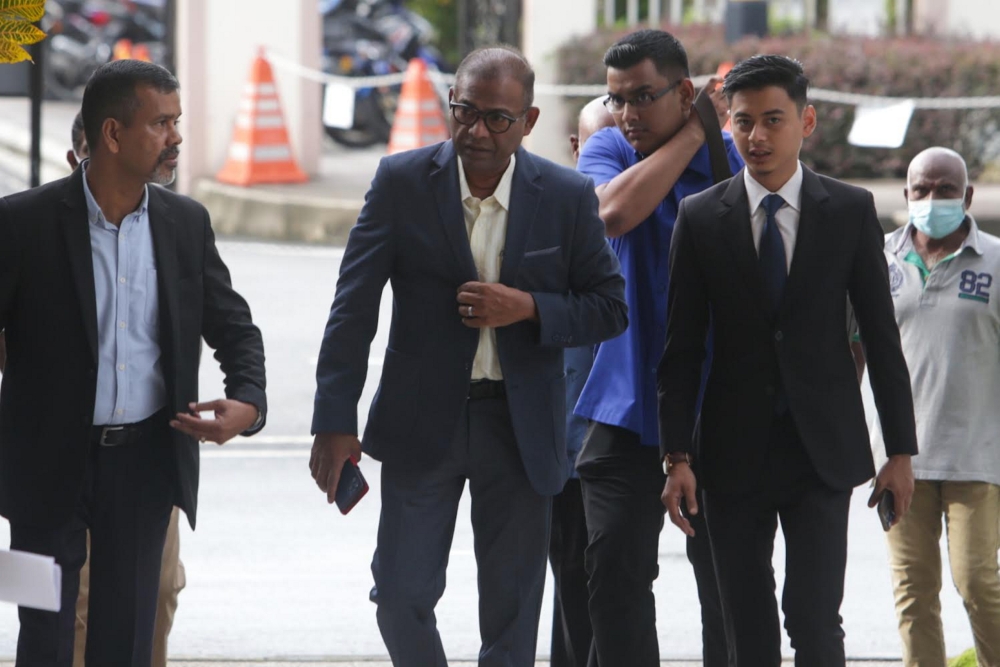
Speculation coursing through social media regarding the former Baling Member of Parliament has been firmly denied by his family, who characterise recent online claims as baseless gossip rather than substantiated reporting. Datuk Seri Abdul Azeez Abdul Rahim's son moved to publicly counter narratives suggesting involvement of the Malaysian Anti-Corruption Commission, asserting that no formal action or detention has taken place against his father.
The rumours surfaced amid heightened public scrutiny of the Tabung Haji scandal, which has prompted intense scrutiny of political figures with connections to the pilgrimage fund. Malaysia's pilgrimage institution has been at the centre of investigations following revelations of significant mismanagement and financial irregularities. The establishment of a Royal Commission of Inquiry specifically charged with examining the fund's operations reflects the seriousness with which authorities are treating the matter, and the breadth of the probe has inevitably drawn speculation about numerous individuals previously associated with the organisation.
A Royal Commission of Inquiry operates as a formal investigative mechanism distinct from typical criminal proceedings, conducting comprehensive examinations into matters of public importance. In this instance, the RCI mandate encompasses reviewing governance failures, administrative lapses, and potentially unlawful conduct within Tabung Haji's institutional structure. Such probes frequently generate considerable public interest and conjecture, particularly when prominent political personalities feature within the scope of examination.
The distinction between being subject to RCI scrutiny and facing actual MACC enforcement action represents a meaningful threshold that frequently becomes blurred in public discourse. Individuals may be questioned or provide statements to a commission without this constituting formal arrest, charges, or investigations by anti-corruption authorities. The online environment, however, often collapses these distinctions, transforming preliminary inquiries into sensationalised allegations of wrongdoing.
For Malaysian readers following developments within both anti-corruption and pilgrimage management spheres, the clarification carries particular weight. The integrity of Tabung Haji remains significant to millions of Malaysians planning the Hajj pilgrimage, making financial governance and accountability central civic concerns. Investigations into the fund's administration therefore attract sustained public attention, sometimes at the expense of precision regarding which officials face what level of scrutiny.
The timing of such denials reflects broader patterns in Malaysian political culture where reputational management and media narrative control have become integral to political strategy. Social media platforms enable rapid dissemination of unverified claims that can significantly damage public standing before substantiation occurs. Political families increasingly find themselves obliged to issue prompt corrections to counteract false narratives, though such responses themselves often generate further speculation.
Abdul Azeez's political career, representing the Baling constituency, positioned him within parliamentary structures during periods of significant institutional and governance developments. His legislative tenure may have intersected with Tabung Haji policy or oversight mechanisms, potentially explaining why his name features in broader discussions of the pilgrim fund's stewardship. However, tangential involvement in legislative processes differs substantially from direct culpability for administrative failures or financial misconduct.
The Royal Commission's investigative scope remains extensive and ongoing, with authorities likely to interview numerous figures spanning political, bureaucratic, and corporate domains. The commission's work will eventually produce detailed findings regarding accountability and remedial measures required within the institution. Until such formal conclusions emerge, distinguishing between individuals under investigation and those facing enforcement action remains essential for accurate public understanding.
Regional perspectives on Malaysia's anti-corruption mechanisms and institutional accountability have importance beyond domestic political considerations. Southeast Asian governments face persistent challenges balancing effective institutional oversight with political stability, and how Malaysian authorities manage high-profile investigations signals regional commitment to governance standards. The handling of Tabung Haji issues therefore carries implications extending across ASEAN economies where similar pilgrimage funds and religious financial institutions operate.
Social media's role in amplifying unverified claims about political figures represents an evolving challenge for Malaysian information ecosystems. The speed with which allegations circulate, combined with limited mechanisms for immediate correction, creates persistent difficulties for individuals defending their reputations against online speculation. This dynamic increasingly pressures political families toward preemptive public statements addressing every rumour, a burden that itself warrants examination.
Going forward, the Royal Commission's formal proceedings and eventual report will provide authoritative clarity regarding which individuals warrant investigation and what findings emerge concerning culpability. Until that official process concludes, distinguishing between rumour and verified fact becomes essential for Malaysian readers engaging with complex institutional scandals. The case underscores persistent challenges navigating political accountability within environments where information verification remains challenging and reputational stakes remain extraordinarily high.

