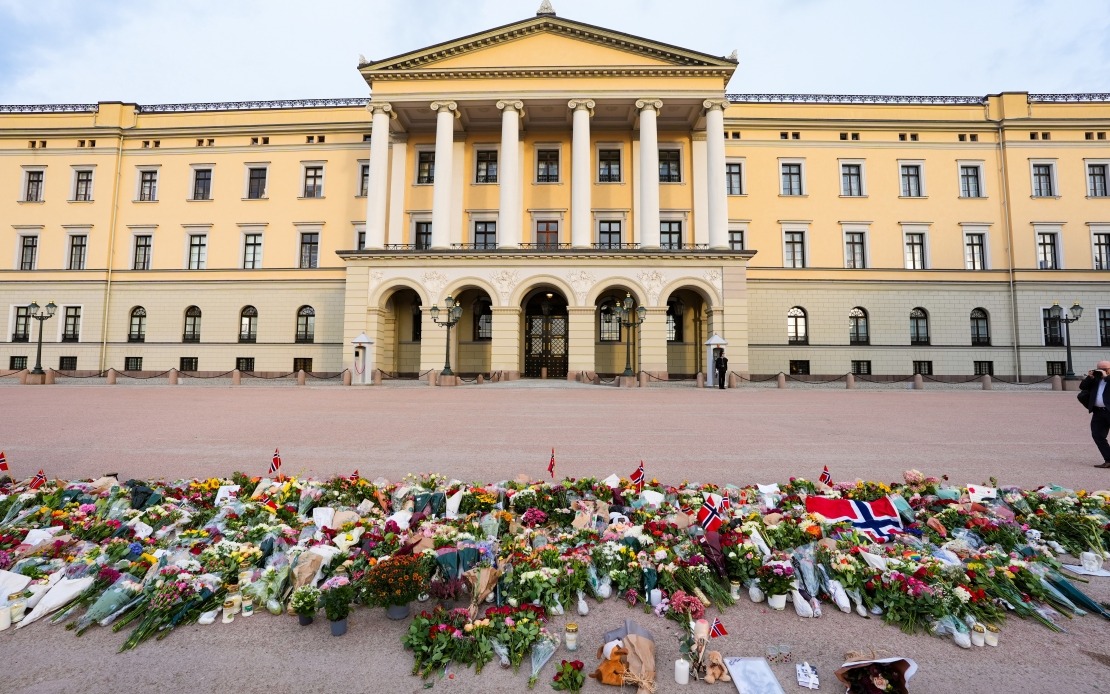
King Harald V of Norway, who held the distinction of being Europe's longest-serving reigning monarch at the time of his death, passed away peacefully on Friday at Oslo's National Hospital. The 89-year-old monarch's death marks the end of a remarkable reign spanning more than three and a half decades, during which he witnessed profound transformations in European politics, economics, and society. His passing represents a significant moment not only for Norway but for the broader European monarchy, as the Scandinavian nation navigates a generational transition in its head of state.
The Royal Palace confirmed that Harald breathed his last at 6.35 am local time, following a period of hospitalisation that began on August 17 when he underwent routine medical examinations. The announcement prompted Norwegian flags across the nation to be lowered to half-staff in a solemn tribute to the departed sovereign. His death came after a relatively brief but serious health decline, underscoring how quickly medical circumstances can change even for long-lived individuals in their ninth decade.
During his hospital stay, medical authorities disclosed that Harald had been receiving cortisone treatment for hemolytic anemia, a condition affecting red blood cells that caused fluid accumulation throughout his body. This diagnosis, while serious, initially seemed manageable through pharmaceutical intervention. However, his condition deteriorated substantially when he contracted a bacterial infection in his bloodstream, Norwegian public broadcaster NRK reported. The combination of underlying blood disorder and secondary infection proved challenging for medical teams, ultimately leading to his passing.
The succession followed Norway's established constitutional framework with seamless efficiency. Crown Prince Haakon, Harald's only son, assumed the Norwegian throne immediately following his father's death, becoming King Haakon VII according to Norway's succession laws. The transition reflects decades of preparation and the principled nature of Scandinavian constitutional monarchies, where clear rules of succession prevent political uncertainty during moments of dynastic change. Norwegian government officials are scheduled to meet the new sovereign during an extraordinary Council of State gathering at the Royal Palace, during which his official regnal name will be formally announced to the nation.
Unlike many European monarchies that maintain centuries-old coronation traditions, Norway dispenses with such ceremonial pageantry. Instead, the constitutional requirements focus on the sovereign taking an oath before parliament, a more austere and democratic approach reflecting the nation's egalitarian political culture. This streamlined process demonstrates how Scandinavian constitutional monarchies have evolved to emphasise parliamentary sovereignty and democratic principles over elaborate court rituals. The absence of coronation ceremonies does not diminish the significance of the succession but rather reflects Norway's commitment to balancing royal tradition with modern democratic values.
Harald's accession to the throne on January 17, 1991, followed the death of his father, King Olav V, and launched what would become one of Europe's longest modern reigns. For Malaysian readers and Southeast Asian observers, Harald's 35-year tenure offers perspective on the stability that constitutional monarchy can provide within mature democracies. His reign witnessed the consolidation of Norway's position as one of the world's wealthiest nations, built substantially on North Sea oil reserves that transformed the country's economic trajectory. Throughout this period, Harald maintained the institution of monarchy as a symbol of national continuity and unity.
The timing of Harald's death carries particular significance for European governance discussions. At 89, he had surpassed most of his contemporary monarchs and reigning heads of state in terms of longevity and years of service. His death reflects broader demographic shifts affecting not only royal families but political establishments across Europe and globally. The succession by Crown Prince Haakon, who is considerably younger, represents the kind of generational handover that many European nations are experiencing across their leadership structures.
For regional observers in Southeast Asia, Norway's monarchy offers relevant lessons about institutional continuity and the capacity of traditional institutions to adapt to modern governance expectations. Unlike some monarchies facing legitimacy questions, the Norwegian monarchy has maintained strong public support and has successfully navigated changing social values regarding democracy and equality. The forthcoming reign of King Haakon VII will test whether this legacy of popular endorsement continues and whether the new sovereign can maintain the symbolic unity his father provided across 35 years of social and economic transformation.
Harald's passing also marks a moment of reflection on the evolving role of European monarchies in contemporary political systems. As nations worldwide grapple with questions about institutional relevance and democratic representation, Norway's experience demonstrates that constitutional monarchy can endure and remain valued when properly calibrated to contemporary expectations. The new reign presents an opportunity to examine whether younger leadership within traditional institutions can refresh their relevance while maintaining the continuity these institutions are designed to provide, a question with implications extending well beyond Scandinavia.

