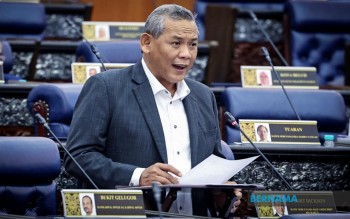
The distinction between genuine investment risk and institutional malfeasance at Tabung Haji must form the foundation of any meaningful reform discussion, according to Port Dickson Member of Parliament Datuk Seri Aminuddin Harun. Speaking during parliamentary debate on the Royal Commission of Inquiry report released in July, the former Negeri Sembilan menteri besar argued that fair assessment of the pilgrim fund's performance requires separating losses attributable to normal market fluctuations from those stemming from negligence, conflicts of interest, or systemic governance breakdowns. This nuanced position reflects growing recognition that blanket condemnation of investment decisions risks obscuring the actual institutional weaknesses that the RCI uncovered during its examination of the period from 2014 to 2020.
The RCI's 211-page report, made public on July 29 following its submission to the Yang di-Pertuan Agong in August 2022, identified significant management and operational deficiencies within the institution. Among its 25 recommendations, the commission specifically suggested forensic audits of 14 investments that experienced substantial declines. Tabung Haji has already implemented 75 per cent of the recommendations as of July 30, demonstrating responsiveness to the inquiry's findings. However, Aminuddin's emphasis on distinguishing between types of losses highlights an important analytical gap: understanding which losses were inevitable consequences of market exposure and which resulted from poor decision-making or institutional failures remains crucial for preventing recurrence.
Central to Aminuddin's intervention is a fundamental critique of how Tabung Haji's leadership has historically been appointed. He contended that positions within the institution have frequently been treated as political rewards rather than professional appointments requiring specific expertise. The culture of selecting board members and senior management based on political connections rather than investment acumen has, he suggested, undermined the institution's capacity to navigate complex financial markets. This observation carries particular significance given Tabung Haji's stewardship of billions of ringgit in pilgrim savings—funds entrusted by millions of Malaysian Muslims preparing for one of Islam's five pillars.
Aminuddin proposed that future board appointments incorporate substantially more rigorous screening criteria than those currently in place. Prospective directors should be evaluated on multiple dimensions, including integrity, investment experience, Islamic finance expertise, risk management competency, accounting and auditing knowledge, legal acumen, corporate governance understanding, and hajj management familiarity. This comprehensive competency matrix would represent a significant departure from past practices and would align Tabung Haji's governance standards with those of leading institutional investors globally. He emphasized that conflicts of interest must be formally declared and managed, creating transparency mechanisms that have sometimes been conspicuously absent from the institution's operations.
The RCI itself recommended prohibiting active politicians from serving as chairman or board members at Tabung Haji or its subsidiaries. This recommendation directly addresses a structural vulnerability that has permitted political considerations to influence investment strategies and management decisions. Aminuddin endorsed this suggestion while going further, proposing that the screening framework extend beyond conflict-of-interest declarations to encompass professional qualifications that genuinely match the complexity of the institution's investment portfolio. Such measures would effectively professionalize Tabung Haji's governance in ways that might have prevented some of the investment missteps documented in the RCI report.
Parallel concerns about the RCI's temporal scope emerged from Datuk Mohd Isam Mohd Isa, the Tampin-BN Member of Parliament and Public Accounts Committee member. Mohd Isam argued that the inquiry's focus on the 2014–2020 period inadvertently created a blind spot regarding subsequent developments. Significant events affecting Tabung Haji's management and performance occurred after 2020, yet remained outside the RCI's investigative remit. This temporal limitation means that governance weaknesses emerging or persisting beyond 2020 have not been subjected to the same level of independent scrutiny, potentially leaving unresolved institutional vulnerabilities in place.
Mohd Isam proposed establishing a new RCI specifically examining the 2021–2025 period to identify ongoing management and operational weaknesses. He additionally suggested that the Public Accounts Committee assume responsibility for detailed examination of Tabung Haji's management and governance spanning 2022 to 2026. These proposals reflect dissatisfaction with the existing inquiry's scope and a recognition that institutional problems may persist beyond those documented in the completed RCI report. The PAC, as a parliamentary oversight body with investigative powers, could potentially provide more continuous monitoring than a time-limited commission of inquiry.
The establishment of the RCI itself represents a belated institutional response to longstanding concerns about Tabung Haji's performance and governance. The government announced the commission in 2021, appointed its members in January 2022, and received its report in August 2022—a compressed timeline that Mohd Isam's interventions suggest may have been insufficient for comprehensive investigation. The commission's relatively quick completion, while demonstrating governmental commitment to addressing the issue, may have constrained its ability to examine the full spectrum of problematic decisions and investments that contributed to significant losses in recent years.
For Malaysian readers and observers of institutional governance more broadly, the Tabung Haji situation illuminates the broader tension between political patronage and professional competence in managing strategic institutions. The institution manages funds that millions of Malaysians depend upon for their religious obligations and retirement security. Its investment losses—whether attributable to market conditions or poor governance—directly affect the financial security of these contributors. Reforms emphasizing merit-based appointments, professional competency requirements, and structural separation from political influence represent essential steps toward rebuilding confidence in the institution's stewardship.
The implementation timeline for the RCI's recommendations and the parliament's appetite for additional scrutiny will determine whether these governance concerns receive sustained attention or gradually fade from the political agenda. Aminuddin's articulation of distinctions between market-driven losses and misconduct-based failures, combined with Mohd Isam's call for extended temporal scrutiny, suggests parliamentary recognition that institutional reform requires both accurate diagnosis of past failures and sustained monitoring of future performance. How effectively these recommendations translate into implemented change will substantially influence whether Tabung Haji can restore the institutional credibility essential for managing pilgrim finances in the years ahead.

