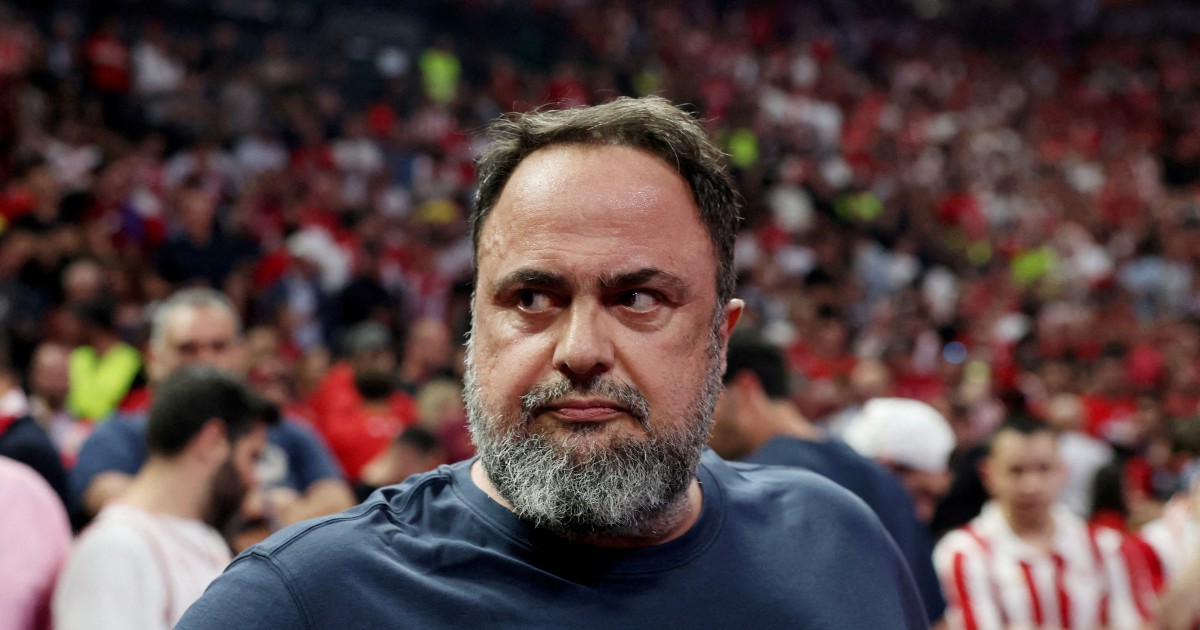
Nottingham Forest's controlling shareholder Evangelos Marinakis initiated legal proceedings against fellow Premier League club Crystal Palace on Monday, launching a high-profile libel case through London's High Court. The Greek-born businessman's decision to pursue formal litigation marks an escalation in tensions between the two football institutions, according to media coverage surrounding the filing.
While official statements have not comprehensively detailed the specific allegations underpinning the lawsuit, multiple news outlets have reported that Marinakis's legal action centres on inflammatory messaging contained in a banner that was unfurled by Crystal Palace supporters during a match held in the previous season. The precise wording and claims within the banner remain subject to interpretation, but the incident appears significant enough to warrant court intervention.
This litigation reflects the increasingly contentious atmosphere within English football's top flight, where wealthy club owners have become more willing to pursue legal remedies against perceived slights or damaging claims. The decision by Marinakis to utilise the courts signals both the seriousness with which he views the allegations and his financial resources to mount a formal legal challenge. Such cases have become more common as prominent figures associated with elite sports franchises seek to protect their reputations against criticism and accusation.
Marinakis has held controlling interest in Nottingham Forest since acquiring the club in 2017, and his tenure has been marked by significant investment aimed at restoring the East Midlands institution to former prominence. His background in shipping and business has given him the means to invest heavily in player acquisitions and infrastructure improvements. The owner's willingness to pursue aggressive legal strategies mirrors similar approaches taken by wealthy proprietors elsewhere in European football.
For Southeast Asian readers following English football, this dispute underscores how club rivalries and ownership disputes in the Premier League increasingly spill into courtrooms rather than remaining confined to the pitch. The legal mechanism represents a layer of complexity in modern sports governance that extends beyond athletic competition. Marinakis's action against Crystal Palace demonstrates how sensitive issues of reputation and public statements have become among the sport's most powerful figures.
Crystal Palace, located in south London, occupies a different position within the Premier League hierarchy compared to Marinakis's Nottingham Forest. The palace-based club has maintained its status as a mid-table competitor under owner Steve Parish. The relationship between the two clubs and their respective fan bases had apparently not been particularly fraught before this incident, making the escalation to High Court proceedings noteworthy within football circles.
The banner incident appears to have touched upon sensitivities that Marinakis takes seriously regarding his personal character or business dealings. Without access to the precise allegations contained in the banner, observers can only surmise that the messaging went beyond typical sporting banter to venture into territory the Forest owner deemed damaging to his reputation. This distinction between permissible sports rivalry and legally actionable defamation forms the crux of the High Court's eventual determination.
The Premier League itself maintains a delicate balance between fostering competitive intensity among clubs while discouraging conduct that crosses established boundaries. When disputes between clubs and their supporters escalate to litigation, the league faces indirect pressure to address underlying tensions. Regulatory bodies within English football have sought to manage fan behaviour through various sanctions and protocols, though the enforcement mechanisms remain imperfect.
Crystal Palace's response to the lawsuit will likely involve either defending the content of the banner as truthful comment or arguing that supporter actions fall outside the club's direct responsibility. English law on libel and defamation has evolved significantly, with courts generally granting protections for honest opinion and matters of public interest. The outcome will depend substantially on the specific nature of the allegations contained in the banner and whether they constitute factual assertions capable of being proven false.
This legal showdown carries implications for how football clubs manage their supporter communities. If successful, Marinakis's case could embolden other club owners to pursue similar litigation against perceived criticism. Conversely, should Crystal Palace successfully defend the action, it might establish broader protection for supporter expression within stadium environments. The ruling will thus establish precedent affecting the boundaries of permissible speech within English football's most prominent competition.
For Malaysian football enthusiasts who follow the Premier League through various broadcasting platforms and digital media, this episode illustrates how contemporary professional football operates across multiple dimensions simultaneously. While matches continue on the field according to traditional sporting rules, the commercial and legal infrastructure surrounding elite clubs has grown exponentially more complex. Marinakis's lawsuit represents the intersection of wealth, reputation management, and sports culture that characterises modern elite football.
The timing of the lawsuit, coming during what appears to be an off-season or early administrative period, suggests Marinakis believes sufficient time has elapsed to allow measured legal assessment rather than reactive emotion. His legal team would have conducted preliminary evaluation to determine the viability of prosecution before initiating court proceedings. The case now enters discovery phases where both parties will be obliged to produce relevant documentation and evidence to support their respective positions.

