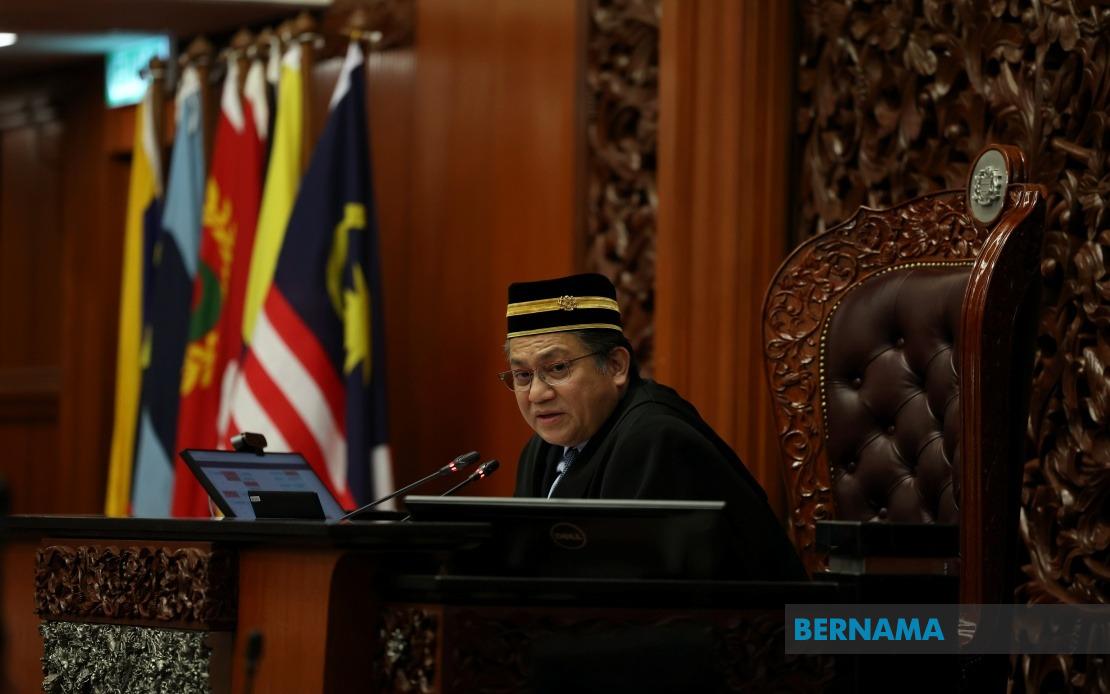
Senator Datuk Nur Jazlan Mohamed has been reappointed to serve as Deputy Speaker of the Dewan Negara for a consecutive second term, in a move that underscores the governing coalition's confidence in the UMNO stalwart's stewardship of Malaysia's upper chamber. The nomination, presented solely by Higher Education Minister Datuk Seri Zambry Abd Kadir acting under the authority of Prime Minister Datuk Seri Anwar Ibrahim, was formally tabled during parliamentary proceedings on July 20 before the legislative schedule commenced with the question and answer segment.
Nur Jazlan's continued tenure at the helm of the Senate's deputy leadership reflects a broader pattern of institutional stability within Parliament. His reappointment by His Majesty the Yang di-Pertuan Agong extends his mandate for three years, commencing June 15 2026 and concluding June 14 2029. This appointment consolidates continuity in the chamber's administrative operations, particularly as Malaysia navigates ongoing legislative priorities and parliamentary reform initiatives that have characterised the current administration's parliamentary engagement strategy.
The 60-year-old politician has established considerable gravitas within UMNO's institutional framework, holding positions as both a member of the party's Supreme Council and chief of the Pulai Division. His legislative experience spans nearly two decades in elected office, having represented the Pulai constituency in the Dewan Rakyat from 2004 until his transition to the Senate in 2018. Between 2015 and 2018, Nur Jazlan served as Deputy Home Minister, contributing to national security and governance matters during a distinct phase of Malaysia's political trajectory.
The Deputy Speaker role that Nur Jazlan now continues had been occupied since June 2023, during which period he has overseen procedural matters, moderated debates, and facilitated legislative discourse within the 338-member upper chamber. The Senate, composed of appointed members representing states and national constituencies, functions as a consultative and revisionary body that examines legislation already approved by the lower house. Nur Jazlan's steady hand in managing parliamentary procedure has reportedly maintained institutional decorum whilst enabling robust debate on matters ranging from constitutional amendments to policy oversight.
Simultaneously on the same parliamentary sitting day, Senator Mussodak Ahmad was also sworn in for a second senatorial term, appointed through mechanisms distinct from Nur Jazlan's path. Mussodak's reappointment by the Kedah State Legislative Assembly carries a parallel three-year duration from March 20 2026 to March 19 2029. As the Kedah PAS secretary, Mussodak represents the Islamic party's representation within the Senate, reflecting the multi-party composition that characterises Malaysia's parliamentary upper chamber under the current coalition arrangement. Mussodak had contested state-level positions for the Bayu and Guar Chempedak seats, demonstrating active engagement in electoral politics prior to his initial Senate appointment in March 2023.
These reappointments occur against the backdrop of Malaysia's Fifth Term Parliament, which has proceeded through various legislative cycles addressing contemporary governance challenges. The parliamentary calendar confirms that the Senate's proceedings for its Second Meeting under the Fifth Term commenced on July 20 and continued through August 4, spanning a full ten-day legislative sitting. During such extended sessions, the Deputy Speaker's role becomes particularly demanding, requiring consistent presence and the capacity to navigate complex parliamentary procedure without favouritism or procedural misstep.
For Malaysian observers of parliamentary affairs, these developments carry significance beyond mere administrative succession. The Senate functions as an institutional check on executive overreach and provides a secondary deliberative forum for complex legislative matters. Nur Jazlan's retention in the Deputy Speaker position suggests that the government values both stability within parliamentary institutions and the maintenance of professional standards in legislative procedure. His continued presence also reinforces UMNO's institutional weight within the broader coalition framework, ensuring that the party maintains influence over parliamentary operations.
The reappointment framework itself merits consideration within Malaysia's constitutional architecture. Unlike elected positions in the Dewan Rakyat, senatorial appointments involve either the Agong's direct selection, state assembly nominations, or constituency-based selection mechanisms. This distinction creates a Senate composition that differs fundamentally from lower-house representation, theoretically enabling senators to transcend electoral pressures and focus upon legislative merit and institutional effectiveness. Nur Jazlan's track record under these conditions appears to have satisfied both executive and parliamentary evaluation criteria that guide such reappointments.
Looking toward the implications for Southeast Asia's parliamentary landscape, Malaysia's Senate structure represents a distinct approach to bicameral governance that distinguishes it from purely elected chambers elsewhere in the region. The continued institutional focus on maintaining experienced parliamentary hands within these roles reflects broader regional patterns wherein institutional continuity is perceived as valuable for navigating complex legislative agendas. Nur Jazlan's reappointment thus positions Malaysia as a nation where accumulated parliamentary experience receives institutional recognition, potentially contrasting with electoral volatility that characterises other democracies in the region.
The legislative agenda ahead during the Second Meeting, Fifth Term will likely test the Deputy Speaker's capacity to manage parliamentary operations effectively. Issues spanning constitutional matters, fiscal policies, and social legislation typically occupy Senate proceedings, requiring procedural expertise and diplomatic judgment. Nur Jazlan's familiarity with these rhythms, derived from his previous tenure since June 2023, should facilitate smoother handling of parliamentary business and potentially reduce procedural delays that might otherwise consume legislative time.

