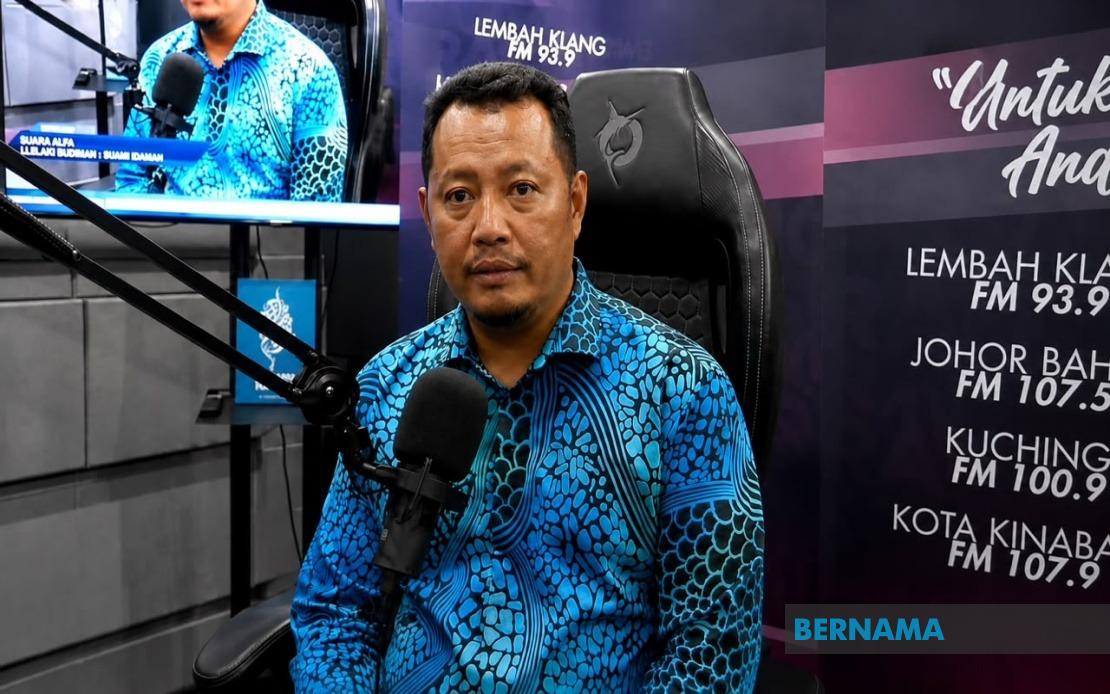
The foundation for developing responsible and virtuous men must be laid during childhood and the formative adolescent years, according to the National Population and Family Development Board (LPPKN). This emphasis on early character development underscores a growing institutional focus on redefining masculinity within Malaysian society, moving beyond superficial notions of gentlemanly conduct toward deeper qualities of integrity and familial commitment. Speaking on Bernama Radio's Suara Alfa programme titled "Lelaki Budiman: Suami Idaman", Md Noh Saiman, chief assistant director of LPPKN's Counselling and Intervention Unit, highlighted that the journey toward becoming an exemplary man is fundamentally rooted in how parents guide their children through critical developmental phases.
The moulding of character, Md Noh explained, relies heavily on the parenting methodologies employed within households and the living models that mothers and fathers provide throughout their children's upbringing. What young people absorb through observation and experience within their family environment becomes embedded in their psychological frameworks, shaping their understanding of what it means to be a man. This internalization process is not passive; rather, children actively process the behaviours, attitudes, and values they witness in their immediate caregivers. The implication is clear: transforming Malaysian society's conception of masculinity requires transforming how parents themselves approach child-rearing, suggesting that any meaningful reform must begin with adult education and family-level interventions.
Md Noh expanded the definition of a gentleman beyond conventional markers such as politeness or romantic gestures. True gentlemanly character, he articulated, encompasses moral qualities like sincerity and honesty, coupled with a readiness to assume family responsibilities without expectations of recognition or gratification. This reframing is significant for Malaysian discourse, as it challenges materialistic or performative understandings of masculinity prevalent in popular culture and social media. Instead, it privileges the unglamorous work of emotional labour, household management, and sustained commitment to one's family unit. Such a definition aligns with contemporary discussions about gender equity and shared domestic responsibilities, positioning the "ideal man" not as a distant romantic figure but as a genuine partner in the management of household affairs.
Particularly noteworthy is Md Noh's assertion that husbands engaging meaningfully in household duties—from childcare to addressing family needs—serve not merely as helpers but as active enablers of their spouses' potential. When women receive substantial support from their partners in managing domestic responsibilities, they gain psychological and practical freedom to pursue career advancement and personal development with greater confidence and effectiveness. This perspective recognises that gender equality within families is not a zero-sum competition but a collaborative arrangement that can elevate the capabilities of both partners. For Malaysia, where women constitute an increasingly significant portion of the workforce, this framing offers institutional validation for a more equitable domestic arrangement that benefits economic productivity and family stability simultaneously.
The LPPKN's Lelaki Idaman (Ideal Men) Programme serves a dual purpose in this broader mission. Rather than merely celebrating men who already embody these characteristics, the initiative functions as a reformation platform for those recognising deficiencies in their conduct and seeking genuine personal transformation. This approach reflects a nuanced understanding that change is possible at any life stage, provided individuals remain receptive to constructive feedback. Md Noh emphasised that maturity manifests in one's willingness to receive criticism without defensiveness and to view such input as an opportunity for self-improvement rather than personal attack. This counsel extends beyond romantic relationships to encompass professional and civic spheres, where the ability to accept critique facilitates continuous development.
Contemporary challenges to character development stem significantly from the pervasive influence of digital platforms and social media, which have become primary shapers of public consciousness regarding gender ideals. Both men and women now navigate a complex mediascape presenting multiple, often contradictory visions of what constitutes an ideal gentleman. Social media algorithms amplify certain narratives while suppressing others, creating distorted representations that may emphasise superficial attributes or toxic behaviours. This information environment complicates LPPKN's mission, as institutional messaging about responsibility and emotional maturity must compete with viral content celebrating alternative models of masculinity. The board's recognition of this challenge suggests that effective programmes must now incorporate digital literacy and critical consumption skills alongside traditional values education.
The strengthening of family institutions emerges as intimately connected to the broader project of developing responsible men. When husbands and fathers actively support their partners and demonstrate commitment to family wellbeing, the ripple effects extend beyond individual households. Such men contribute to the creation of more harmonious family units characterised by mutual respect and shared purpose, which in turn produces children better equipped to perpetuate these values. This intergenerational transmission creates a cumulative effect where one generation's investment in responsible masculinity yields dividends across multiple subsequent generations. For Malaysia, a society grappling with diverse family structures and evolving gender roles, this institutional emphasis on family stability through reformed masculinity offers a potential pathway toward social cohesion without requiring families to retreat into rigid traditional moulds.
The timing and scope of LPPKN's emphasis on early upbringing reflects broader developmental psychology research demonstrating that personality traits and relational patterns established in childhood prove remarkably persistent into adulthood. Early intervention is therefore more cost-effective and humane than attempting to reform adult men entrenched in unhelpful patterns. However, this does not absolve older individuals of responsibility for change; rather, it prioritises prevention while maintaining pathways for reformation. The board's approach thus combines preventative education targeting young people with adult engagement programmes, recognising that sustainable social transformation requires intervention at multiple life stages. This comprehensive strategy acknowledges that Malaysian society cannot simply wait for the current generation of children to mature, but must simultaneously work with existing adults to model and reinforce desired behaviours.
Ultimately, LPPKN's framework repositions masculinity not as an innate quality but as a learned and cultivated set of competencies requiring ongoing development. This demystification of gentlemanly character has profound implications for Malaysian society, suggesting that men dissatisfied with their relational patterns or personal conduct need not accept these as immutable. Instead, they possess the capacity to examine their origins in childhood experiences and parental modelling, understand how these have shaped them, and consciously choose alternative paths. For policymakers and family advocates, this message offers hope that targeted interventions can reshape social expectations and produce tangible improvements in family dynamics and gender relations across the nation.

