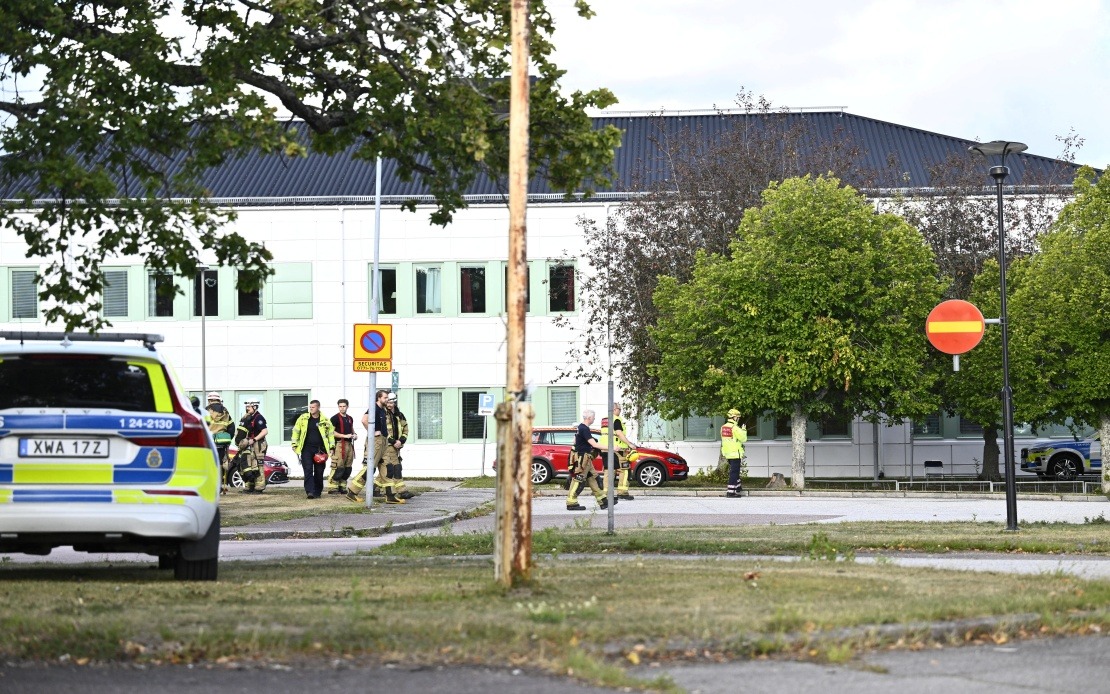
A deadly sword attack at a school in central Sweden has left one person dead and multiple others wounded, prompting authorities to lock down several facilities across the town and renewing concerns about school safety in the Nordic region. The incident unfolded at Brinell School in Fagersta when an armed individual entered the premises and launched an assault on August 22, with emergency services responding to the scene at 2.06 pm local time.
Police and emergency responders arrived quickly after the Fagersta Municipality received the alert, but the damage had already been done. In addition to the fatality, two boys under the age of 18 sustained serious injuries and remain hospitalised in stable condition. A third person was also hurt but suffered only minor wounds, according to reports from Swedish public broadcaster SVT.
Investigators have identified the assailant as an 18-year-old who is believed to be a former student of Brinell School. According to SVT, the suspect can be linked to two separate addresses within Fagersta and remains in police custody as authorities piece together the circumstances surrounding the attack. The motive for the violence remains under investigation, though Swedish law enforcement is treating the matter with considerable urgency.
The shock of the incident prompted immediate precautionary measures across Fagersta. Seven separate schools and public facilities were placed under lockdown protocols as a safety measure, including Olympen, Fagerstahallen, Risbroskolan, Skogsglantan, Bjorksta, Prastkragen, and Norrbybacken. Parents rushed to collect their children, and the lockdown procedures remained in effect until authorities determined the threat had been fully contained.
Justice Minister Gunnar Strommer moved swiftly to address the crisis, underscoring the government's commitment to managing the situation. "We have been informed of a serious incident in Fagersta. The police are on site and are working very intensively on the incident. The government is in close contact with the police and is monitoring developments on an ongoing basis," Strommer stated, signalling high-level political engagement with the response.
This incident reflects a troubling pattern of school violence that periodically affects even the most developed and stable democracies. While Sweden has generally maintained a reputation for safety and social cohesion, such attacks highlight vulnerabilities that extend beyond socioeconomic circumstances. The involvement of a teenager raises questions about warning signs that may have been missed and the psychological factors that can trigger such violent outbursts among youth.
For Malaysian observers, the incident serves as a sobering reminder that school security remains a global concern. While Malaysia has its own distinct challenges regarding campus safety, the Swedish case demonstrates that no nation is entirely immune to such tragedies, regardless of wealth or development status. The rapid response by Swedish authorities and the government's transparent communication stand in contrast to some less coordinated responses witnessed elsewhere.
The use of a sword as the weapon of choice is notable, as it differs from firearms-based attacks more commonly reported in other Western nations. Sweden maintains strict gun control regulations, yet this attack demonstrates that determined individuals can employ alternative means to inflict mass harm. This raises ongoing debates about whether comprehensive weapon restrictions—even those excluding firearms—can adequately prevent determined attackers from carrying out violence.
Swedish police and prosecutors will now focus on establishing the precise sequence of events and determining whether the suspect acted alone or had accomplices. Understanding the attacker's background, any previous concerning behaviour, and access to support systems will be crucial for both the immediate investigation and for developing preventive strategies. Schools across Sweden will likely review their safety protocols in response to the incident.
The Fagersta community faces a difficult period of recovery and reflection. The loss of life and the traumatisation of young survivors will leave lasting impacts on families and the school community. Counselling services and support networks will become essential as students, staff, and families process the tragedy. The fact that two young people remain hospitalised adds to the ongoing uncertainty and concern among local residents.
As details continue to emerge, this incident will prompt renewed discussions across the Nordic region about youth mental health interventions, school security measures, and early warning systems for troubled individuals. While Sweden's comprehensive social safety net typically provides support structures designed to prevent such tragedies, this case demonstrates that identifying and helping individuals in crisis remains an imperfect science.
For regional observers, the Swedish response offers lessons in crisis management transparency and governmental coordination. The quick lockdown of multiple facilities prevented further potential casualties, and official communication from Justice Minister Gunnar Strommer helped maintain public confidence during the emergency. As global patterns of violence evolve, understanding how different societies prepare for, respond to, and recover from such incidents becomes increasingly important for developing comprehensive prevention strategies.

