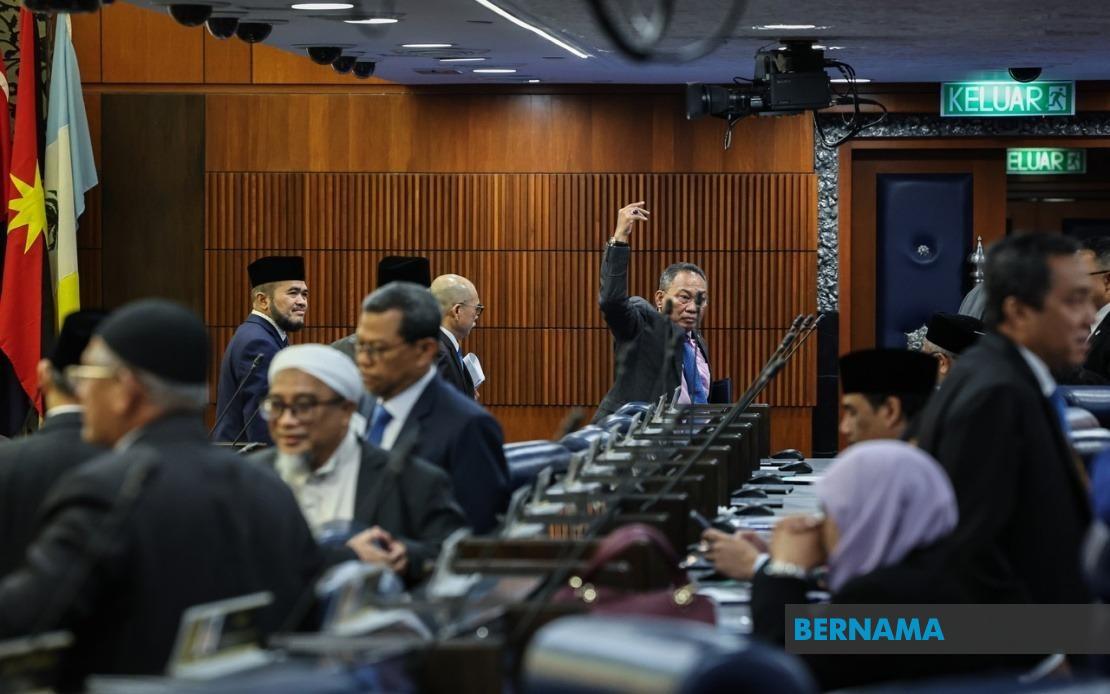
Opposition lawmakers' decision to boycott yesterday's Dewan Rakyat debate on the Royal Commission of Inquiry report concerning Tabung Haji has drawn sharp criticism from political analysts, who argue the move fundamentally undermines parliament's check-and-balance function at a critical moment for the institution's 10 million depositors. Perikatan Nasional MPs, led by Opposition Leader Datuk Seri Hamzah Zainuddin, walked out of the chamber ahead of the ministerial briefing by the Minister in the Prime Minister's Department (Religious Affairs) Dr Zulkifli Hasan, triggering debate about whether such tactics serve the broader public interest or merely advance partisan political positioning.
The opposition's primary grievance centred on the absence of Prime Minister Datuk Seri Anwar Ibrahim and Deputy Prime Minister Datuk Seri Fadillah Yusof, both undergoing medical treatment. Perikatan Nasional Chief Whip Datuk Seri Takiyuddin Hassan initially proposed postponing the special sitting on these grounds, but when the government proceeded, opposition members withdrew. This scenario raises fundamental questions about how Malaysia's parliament functions when senior government figures are unavailable due to legitimate health circumstances, and whether boycotts represent a constructive response to such situations.
Associate Professor Dr Mazlan Ali of Universiti Teknologi Malaysia contends that opposition lawmakers forfeited a crucial opportunity to champion depositors' interests through direct parliamentary engagement. Rather than absenting themselves, the opposition could have remained in the chamber to listen to the minister's presentation, pose detailed questions, initiate substantive debate, and create an official parliamentary record of their concerns regarding the RCI's findings. This approach would have positioned the opposition as genuinely committed to protecting vulnerable Tabung Haji members, whose accumulated savings represent significant personal financial stakes tied to religious obligations and life planning.
The Tabung Haji RCI report itself details substantial management and operational weaknesses spanning 2014 to 2020, making the parliamentary debate particularly consequential. The special sitting was specifically convened to allow Dr Zulkifli to outline the government's response and remedial measures designed to restore the institution's financial health. Without opposition scrutiny and questioning, the public record lacks the adversarial testing of government claims that characterizes effective parliamentary oversight. The debate becomes a one-sided government presentation rather than an interrogation of institutional failures and proposed solutions.
Dr Mazlan emphasizes that the absence of the Prime Minister should not have been the determinative factor in the opposition's decision-making. The Minister in the Prime Minister's Department (Religious Affairs) holds the portfolio directly responsible for Tabung Haji matters and possesses both the authority and technical competence to address parliamentary inquiries within his remit. While Prime Minister participation might carry symbolic weight, ministerial-level explanations carry sufficient weight to merit serious engagement. Moreover, Dr Mazlan notes, the Prime Minister's current hospitalization warrants compassion and recovery time rather than being weaponized as a parliamentary grievance.
The political costs of the boycott extend beyond immediate procedural matters. Dr Nazreena Mohammed Yasin of Universiti Tun Hussein Onn observes that opposition walkouts risk creating public perception that the opposition prioritizes partisan confrontation over substantive protection of depositors' welfare. For an institution serving Malaysia's Muslim community through savings schemes tied to pilgrimage preparation and religious observance, consistent parliamentary scrutiny matters enormously. The withdrawal undermines the opposition's credibility as guardian of public interest in institutional accountability and financial governance.
Active parliamentary participation by opposition MPs represents the most institutionally robust mechanism for ensuring check-and-balance functions work effectively. Through debate and questioning, elected representatives can scrutinize RCI findings in public, raise substantive questions about governance failures, and compel government ministers to articulate the rationale behind proposed remedial measures. This process strengthens governmental accountability to parliament and, through parliament, to the broader citizenry. The parliamentary record itself becomes a document of public accountability, protecting both depositors and officials by creating transparent documentation of decision-making.
Dr Nazreena further emphasizes that ministerial accountability operates independently of Prime Minister attendance. Government ministers carry direct responsibility for answering parliamentary questions within their portfolios; this obligation does not evaporate when the Prime Minister is medically unavailable. The convention that any relevant minister can answer for government matters on the parliamentary record represents a core parliamentary principle. Dismissing ministerial responses as insufficient without the Prime Minister present effectively elevates one individual above the institutional structures designed to distribute governmental accountability.
The debate's significance extends to follow-up implementation of any RCI recommendations. Government actions flowing from the RCI report require continued parliamentary scrutiny to ensure that promised improvements to Tabung Haji's governance, operations, and financial position actually materialize. Without opposition participation in this scrutiny process, the parliament lacks adversarial challenge to government performance claims. Implementation gaps, delayed reforms, or inadequate remedial measures might escape scrutiny absent committed opposition engagement in subsequent parliamentary sessions.
For Malaysian depositors and the broader public invested in Tabung Haji's stability, the opposition's absence signals diminished parliamentary capacity to protect institutional integrity. Ten million individuals have entrusted their savings to an organization that experienced significant management difficulties; their interests require sustained, rigorous oversight regardless of political tensions between government and opposition. The parliamentary debate represented a rare institutional opportunity to place those interests squarely at the centre of public accountability, with questioning and responses recorded permanently for public record.
The boycott also reflects broader tensions within Malaysia's parliamentary culture regarding how opposition parties should exercise their constitutional functions when government circumstances create procedural complications. Democratic systems depend on opposition parties engaging seriously with parliamentary business, even when circumstances prove inconvenient or politically disadvantageous. Withdrawal signals that opposition actors prioritize headline-making confrontation over substantive institutional participation, potentially eroding public confidence in parliament's effectiveness as a check on executive power.
Moving forward, the RCI report's recommendations and government implementation efforts will proceed with diminished parliamentary scrutiny. Future sittings addressing Tabung Haji matters will require renewed opposition participation to compensate for yesterday's absence. The institution's thousands of vulnerable depositors—particularly migrant workers, retirees, and modest-income individuals for whom Tabung Haji savings represent crucial financial security—require consistent parliamentary vigilance. Whether opposition lawmakers can recover credibility on these issues through future engagement or whether yesterday's absence has permanently damaged their standing as depositors' advocates remains an open question for Malaysia's evolving parliamentary democracy.

