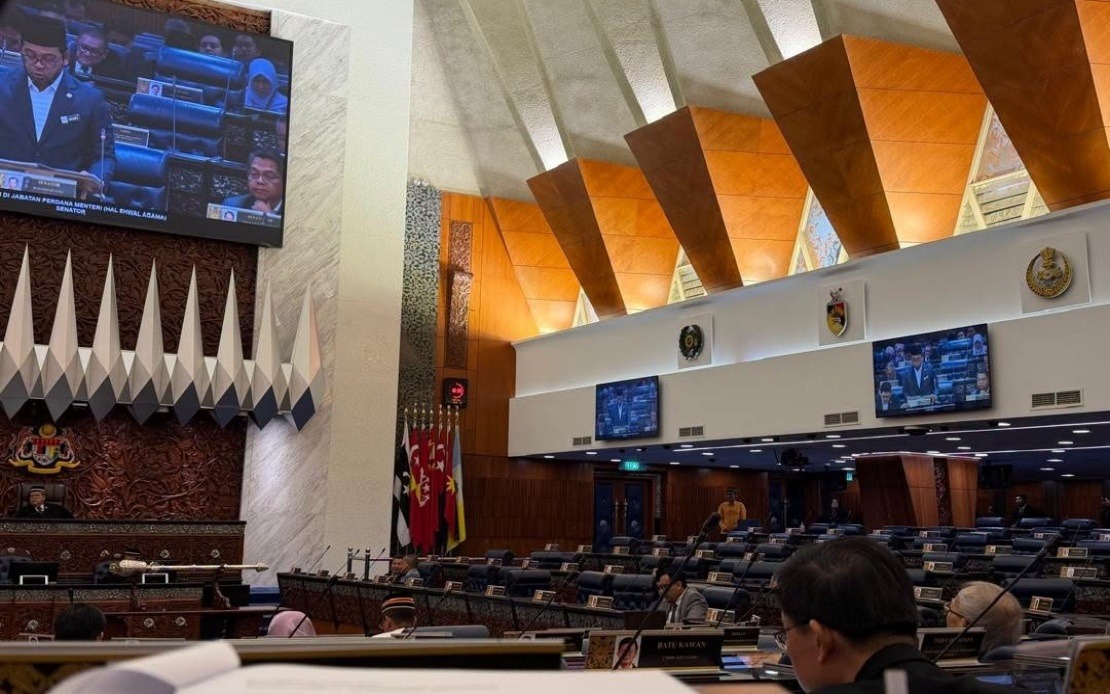
Parliament descended into procedural discord on August 11 when opposition lawmakers staged a coordinated walkout from a special sitting convened to discuss findings from the Royal Commission of Inquiry into Tabung Haji, Malaysia's pilgrimage savings institution serving millions of Muslim depositors. The exit, orchestrated before Religious Affairs Minister Dr Zulkifli Hasan could deliver his briefing on the RCI report, has triggered fierce criticism from government coalition ranks, with MADANI Government Backbenchers Club chairman Datuk Seri Dr Zaliha Mustafa suggesting the opposition's action revealed a fundamental lack of commitment to parliamentary accountability.
The withdrawal was precipitated by Speaker Tan Sri Johari Abdul's decision to proceed with the sitting despite the absence of Prime Minister Datuk Seri Anwar Ibrahim and Deputy Prime Minister Datuk Seri Fadillah Yusof, both undergoing medical treatment. Perikatan Nasional chief whip Datuk Seri Takiyuddin Hassan had formally proposed postponement, arguing that the magnitude of the Tabung Haji issue merited the presence of the nation's top leadership. When the Speaker overruled this motion and the government indicated its intention to proceed, opposition MPs collectively vacated the chamber, declining to participate in what they evidently viewed as an incomplete and procedurally compromised legislative process.
Dr Zaliha's response to the walkout, articulated through a Facebook post, framed the opposition's departure as a betrayal of their self-proclaimed advocacy for Islamic values and Muslim welfare. She pointed to what she characterised as a stark contradiction: the opposition regularly positions itself as the guardian of Muslim interests and religious principles outside Parliament, yet when granted the parliamentary platform to scrutinise, challenge, and debate the RCI's findings directly, they chose absence over engagement. This framing transforms the procedural dispute into a question of political credibility and sincerity, challenging the opposition to explain their priorities.
The Tabung Haji context is particularly significant for understanding the stakes involved. The institution manages billions of ringgit in savings accumulated by millions of Malaysian Muslims preparing for the Hajj pilgrimage—arguably the most important religious obligation in Islam. Any mismanagement, governance lapses, or stewardship failures strike at the heart of Muslim trust in state-administered religious institutions. The RCI was established precisely to examine whether institutional management lived up to the fiduciary responsibilities it owes its depositors. From this perspective, the debate transcends routine parliamentary theatre; it concerns the financial security of a religiously significant savings scheme affecting ordinary Muslim Malaysians.
Dr Zaliha's argument hinges on accessibility and opportunity. She contends that opposition MPs possessed a rare legislative opening to contest any RCI findings they deemed questionable, to marshal counter-evidence, to defend any party whose conduct the inquiry examined, and to articulate an alternative analysis of Tabung Haji's institutional performance. Rather than capitalising on this opportunity to build a public record of their concerns, they forfeited the moment. The government backbencher suggests this forfeiture invites legitimate public scepticism about what the opposition genuinely seeks—are they interested in accountable governance of Muslim financial assets, or are they exploiting the controversy for political advantage?
The walkout also reflects deeper parliamentary tensions within Malaysia's current political configuration. The coalition government under Datuk Seri Anwar Ibrahim commands a complex majority dependent on support from various component parties and independent lawmakers. Opposition formations, particularly Perikatan Nasional, remain numerically significant but face structural disadvantages in legislative procedures and agenda-setting. The procedural dispute over Prime Minister attendance may have represented a genuine objection to parliamentary legitimacy, or alternatively, a tactical opportunity to avoid engaging substantively with findings the opposition feared would prove politically inconvenient.
For Malaysian readers and Southeast Asian observers monitoring parliamentary governance standards, this incident raises important questions about legislative accountability and opposition responsibility. Mature parliamentary democracies function through robust debate in which minority voices challenge government policy and institutional decisions. When opposition parties strategically withdraw from these debates, they arguably undermine the very democratic mechanisms they ostensibly champion. The electorate loses the opportunity to hear competing perspectives on significant policy matters tested against scrutiny and counter-argument.
The timing of the dispute—with senior government figures absent due to medical reasons—introduces a complicating factor. Opposition objections to the Prime Minister's absence may reflect legitimate parliamentary convention; major policy announcements involving sensitive institutional reviews arguably warrant executive leadership. However, proceeding with the briefing despite these absences represents a procedural choice reflecting confidence in ministerial capacity to respond to parliamentary questions. The Speaker's ruling reflected this confidence; the opposition's response indicated they viewed the procedure as fundamentally compromised.
Dr Zaliha's rhetorical challenge—"who really does not want the Tabung Haji issue debated?"—inverts typical opposition framing. Government supporters argue they demonstrated commitment to transparency and accountability by convening the special sitting and making the RCI findings subject to parliamentary debate. Opposition withdrawal, from this perspective, becomes evidence of evasion rather than principled dissent. The government narrative suggests opposition MPs feared public exposure of positions they preferred to articulate only outside Parliament, where fewer voters would scrutinise their arguments against the RCI's findings.
The Tabung Haji Royal Commission represented a significant institutional inquiry into governance of an organisation serving millions of Malaysian Muslims. The findings presumably identify systemic issues, individual accountability questions, and perhaps policy recommendations affecting future institutional management. Parliamentary debate of these findings theoretically benefits from vigorous opposition participation that tests government responses, exposes weaknesses in institutional oversight, and ensures multiple perspectives enter the public record. From this standpoint, the opposition's absence represents a lost opportunity for legislative scrutiny that ultimately disadvantages Muslim depositors whose interests both government and opposition claim to champion.
Moving forward, the incident highlights the importance of parliamentary convention and institutional health amid Malaysia's currently fragmented political landscape. Both government and opposition bear responsibility for maintaining legislative standards that enable meaningful debate on matters affecting ordinary Malaysians' welfare. While procedural objections may have merit, the choice to withdraw rather than engage raises legitimate questions about political commitment to accountability versus partisan advantage-seeking. The Tabung Haji beneficiaries—millions of Malaysian Muslims—deserve comprehensive public debate of institutional governance issues, regardless of political considerations.
The opposition's strategic calculations may shift as public reaction crystallises. If citizens view the walkout as abandoning responsibility for institutional oversight, opposition credibility may suffer. Conversely, if the opposition frames their withdrawal as principled objection to procedurally improper proceedings lacking prime ministerial oversight, they may mobilise their political base. Either way, the incident underscores how parliamentary procedure, political positioning, and public trust interconnect in Malaysia's contemporary democracy. For regional observers, it demonstrates how institutional scrutiny of governance can become entangled with partisan conflict, potentially disadvantaging citizens seeking transparent examination of how their financial assets are managed.

