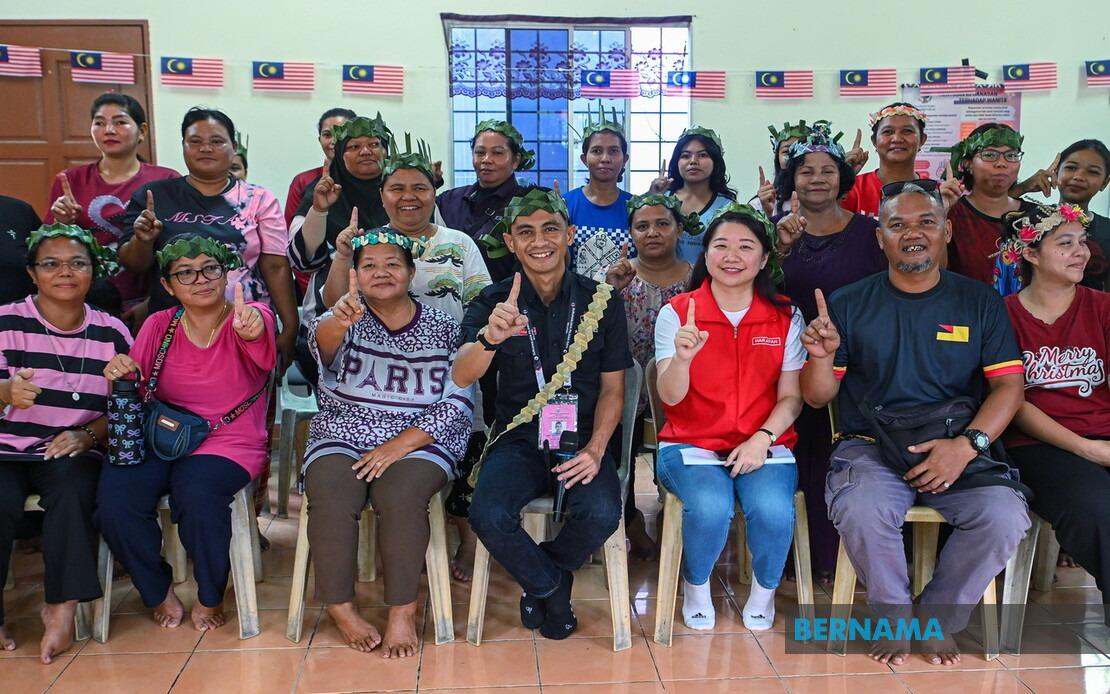
Pakatan Harapan's Datuk Ahmad Faez Abdul Razak is positioning indigenous community development as a cornerstone of his campaign for the Labu state seat in the forthcoming Negeri Sembilan state election, marking a strategic focus on long-neglected constituencies as the coalition seeks to reclaim ground in the peninsula's central states. Speaking after attending an Orang Asli Women Empowerment programme at Kampung Orang Asli Tekir here, the first-time contestant outlined an ambitious development agenda centred on tangible improvements to living standards for the indigenous population, reflecting broader recognition among Malaysian politicians that marginalised communities represent both an electoral opportunity and a governance imperative.
At the heart of Ahmad Faez's platform lies the commitment to elevate the contentious question of customary land ownership within Kampung Orang Asli Tekir to the State Legislative Assembly, a move that acknowledges the deep historical grievances surrounding land dispossession that have plagued Orang Asli communities across Malaysia. This particular issue resonates far beyond the village itself, as questions of indigenous territorial rights have become increasingly prominent in Malaysian political discourse, particularly following heightened activism and advocacy by civil society organisations. By pledging to formally table the matter in the state assembly, Ahmad Faez appears to recognise that symbolic gestures paired with institutional action can meaningfully shift the political dynamic in constituencies where Orang Asli voters have traditionally felt marginalised by mainstream political parties.
The infrastructure component of his development blueprint addresses persistent gaps that characterise many Orang Asli settlements across the nation. Road connectivity, internet access, and basic amenities represent foundational requirements for economic participation and social integration, yet many communities remain substantially underserved. Ahmad Faez's emphasis on upgrading these systems reflects an understanding that without such baseline infrastructure, other development initiatives struggle to gain traction. The timing of these pledges carries significance given that Kampung Orang Asli Tekir comprises approximately 796 residents whose economic prospects remain severely circumscribed by geographic isolation and limited connectivity to broader markets and services.
Economic empowerment through handicraft production emerges as a secondary pillar of the campaign, with Ahmad Faez proposing expanded marketing channels to elevate local artisanal output beyond traditional village-level sales. This approach taps into existing community skills while seeking to create sustainable income streams through improved market access—a model that has shown promise in selected Orang Asli communities where production quality and branding have been enhanced. The emphasis on handicrafts particularly targets women, whose economic participation and household income contributions remain disproportionately low across indigenous populations throughout Malaysia and the region.
Agricultural modernisation represents a third economic dimension, with Ahmad Faez advocating for the introduction of fertigation systems and contemporary farming methodologies to boost yields and create more reliable income sources for agricultural communities. This technical intervention acknowledges that traditional farming practices often fail to generate sufficient surplus for meaningful wealth accumulation, yet modern techniques require capital investment and knowledge transfer that individual farmers cannot typically access independently. By proposing systemic agricultural upgrading, the candidate addresses structural constraints that have historically kept Orang Asli farming communities trapped in subsistence-level production despite access to arable land.
Education and youth development feature prominently in the platform, with Ahmad Faez recognising that human capital investment remains essential for long-term community advancement. Young people from Orang Asli backgrounds frequently encounter systemic barriers to quality education and skills training, limiting their access to higher-income employment opportunities and perpetuating intergenerational poverty cycles. By positioning youth as possessing untapped potential requiring structured support, the candidate frames education not merely as a welfare concern but as an economic development priority with multiplier effects across the community.
The candidate's emphasis on continuous constituency engagement represents an attempt to differentiate his political approach from competitors, with Ahmad Faez maintaining that his involvement in Labu predates the election campaign by approximately two years. This narrative directly challenges the perception that politicians invest concentrated effort only during electoral contests, a sentiment widely prevalent among rural and indigenous constituencies that have experienced cyclical patterns of attention and abandonment. By establishing a record of prior engagement, Ahmad Faez seeks to build credibility with voters sceptical of campaign promises.
Village chief Nasir Musil's endorsement of the candidate, coupled with his acknowledgment of Ahmad Faez's consistent presence in the community, lends grassroots legitimacy to these assertions. Notably, Nasir identified stray cattle as an unresolved long-standing problem affecting community safety, demonstrating that even in high-profile campaigns, local voters prioritise practical resolution of everyday grievances over grand development visions. This grounding in concrete concerns suggests that Ahmad Faez's platform may have been shaped through genuine community consultation rather than merely imposed from party headquarters.
The three-cornered contest between Ahmad Faez, incumbent Mohamad Hanifah Abu Baker of Parti Pribumi Bersatu Malaysia (Bersatu), and Barisan Nasional representative Siti Nur Umaira Hasim reflects broader fragmentation within Malaysia's centre-right political space that has benefited opposition coalitions in certain states. Ahmad Faez's positioning as a first-time candidate potentially carries both disadvantages in terms of administrative inexperience and advantages in terms of freedom from incumbent baggage. The Labu constituency appears to present a genuine competitive opportunity for Pakatan Harapan, particularly if the Orang Asli-focused development agenda resonates sufficiently to overcome traditional voting patterns in the seat.
Regionally, the campaign's emphasis on indigenous development reflects a broader Southeast Asian recognition that marginalised communities represent crucial constituencies for sustainable political coalitions. Countries including Thailand, the Philippines, and Indonesia have witnessed intensified political competition for indigenous votes, particularly as urbanisation and modernisation have altered traditional demographic patterns. Malaysia's experience in Negeri Sembilan thus carries implications extending beyond state-level politics, potentially influencing how national parties calibrate outreach to Orang Asli populations across multiple states and federal territories ahead of eventual general elections.
The Election Commission's schedule—with early voting on July 28 and polling on August 1—provides a compressed timeframe for campaign messaging to take root. For Ahmad Faez and Pakatan Harapan, the challenge involves translating development promises and community engagement narratives into sufficient voter support to overcome incumbent advantages and fragmented opposition votes. The outcome in Labu will offer instructive signals regarding whether systematic attention to Orang Asli concerns represents a viable political strategy for the coalition, or whether such constituencies remain insulated from electoral persuasion by deeper structural and historical factors.

