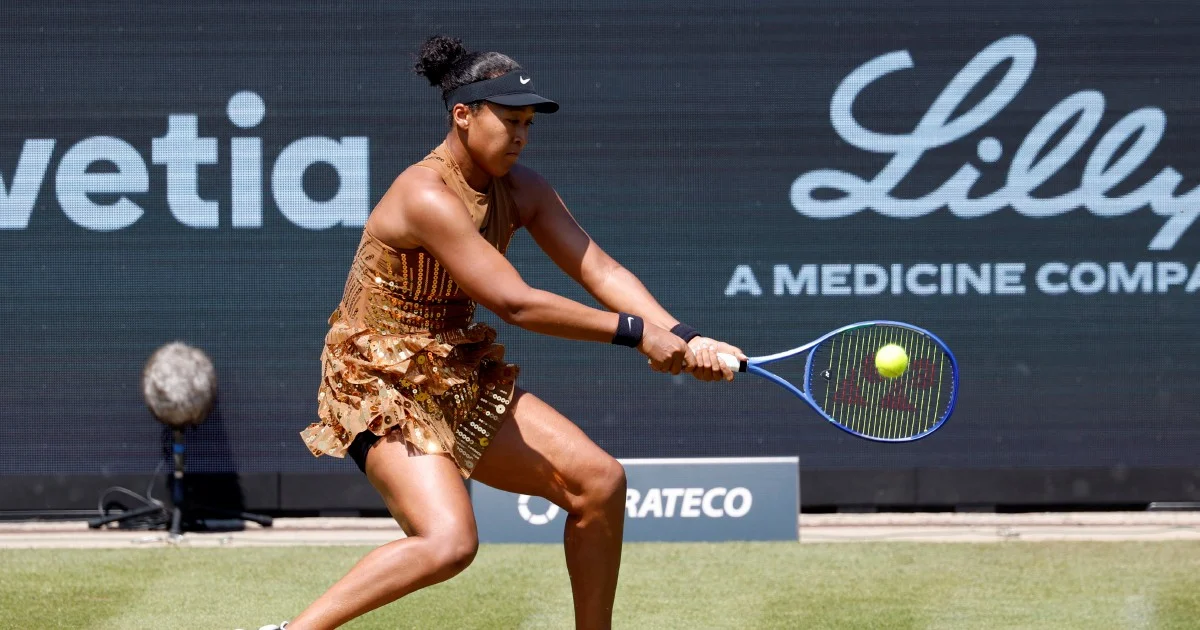
Naomi Osaka has achieved a significant milestone in her professional tennis career by reaching her first grass court final. The four-time Grand Slam champion defeated China's Wang Xinyu at Bad Homburg in Germany, securing a commanding victory that marks a notable breakthrough on the surface.
Osaka's progression to the final represents a turning point in her engagement with grass court tennis, a surface that has historically presented distinct tactical demands that differ from the hard courts where she has built her major championship credentials. Her dominance against Wang underscores her growing comfort and confidence on faster surfaces heading into the grass court season, which culminates with Wimbledon and holds considerable significance in the professional calendar.
The Japanese star's breakthrough on grass comes after years of prioritising hard court competition, where her powerful baseline game and athletic movement have yielded four major titles. The transition to grass, which rewards aggressive net play and reduced rally length, requires strategic adjustments that elite players must perfect through tournament experience and dedicated preparation. Osaka's performance at Bad Homburg demonstrates that she has successfully implemented these necessary modifications to her game.
Wang Xinyu, the Chinese competitor, presented a competitive challenge that required Osaka to demonstrate both technical skill and tactical awareness. The manner in which Osaka dismantled her opponent speaks to the quality of her current form and mental preparation, particularly in a tournament that ranks among Europe's more prestigious warm-up events before the Grand Slam grass court campaigns commence.
For Malaysian and regional tennis fans, Osaka's advancement carries broader implications for Asian representation in major finals. The visibility of Asian players competing for titles on grass courts, traditionally dominated by European and Australian competitors, helps elevate the sport's profile across Southeast Asia and demonstrates the capacity of Asian athletes to succeed across all surface types and conditions.
Osaka's journey to the final also reflects her sustained recovery and return to competitive excellence following personal challenges that had disrupted her career trajectory in recent seasons. This grass court final represents validation of her commitment to re-establishing herself among tennis's elite performers and regaining consistency at the highest level of competition.
The Bad Homburg tournament, officially recognised as one of the WTA's premier grass court events, provides valuable preparation for players targeting strong performances at Wimbledon. Osaka's presence in the final ensures that she will gain additional match play on the surface before facing the unique demands of the All England Club, where the court conditions and grass characteristics differ from those found at other venues.
Looking ahead to her final match at Bad Homburg, Osaka will face an opponent who has also demonstrated their capability on grass. The final will offer further evidence of whether her grass court development has progressed sufficiently to compete against other elite players who have dedicated more sustained attention to mastering this specialised surface.
The significance of this achievement extends beyond the immediate tournament context. Osaka's advancement suggests that elite hard court specialists can successfully transition to grass when provided with appropriate opportunity and preparation. This crossover capability remains relatively uncommon among contemporary tour professionals, making her progress particularly noteworthy for observers tracking the evolution of modern tennis.
For Asian tennis development programmes, Osaka's grass court trajectory offers valuable lessons about the importance of international tournament exposure and tactical flexibility. Her willingness to compete seriously on surfaces where she lacks extensive experience, combined with the technical adjustments required, provides a model that emerging Asian players might emulate as they seek to become comprehensive international competitors.
Osaka's record on grass prior to Bad Homburg had been modest, with limited opportunities to develop specialised grass court technique. Her progress through the tournament draws attention to how even established players can enhance their capabilities through focused effort and quality tournament experience, reinforcing that versatility remains crucial for long-term sustainability at the elite level.

