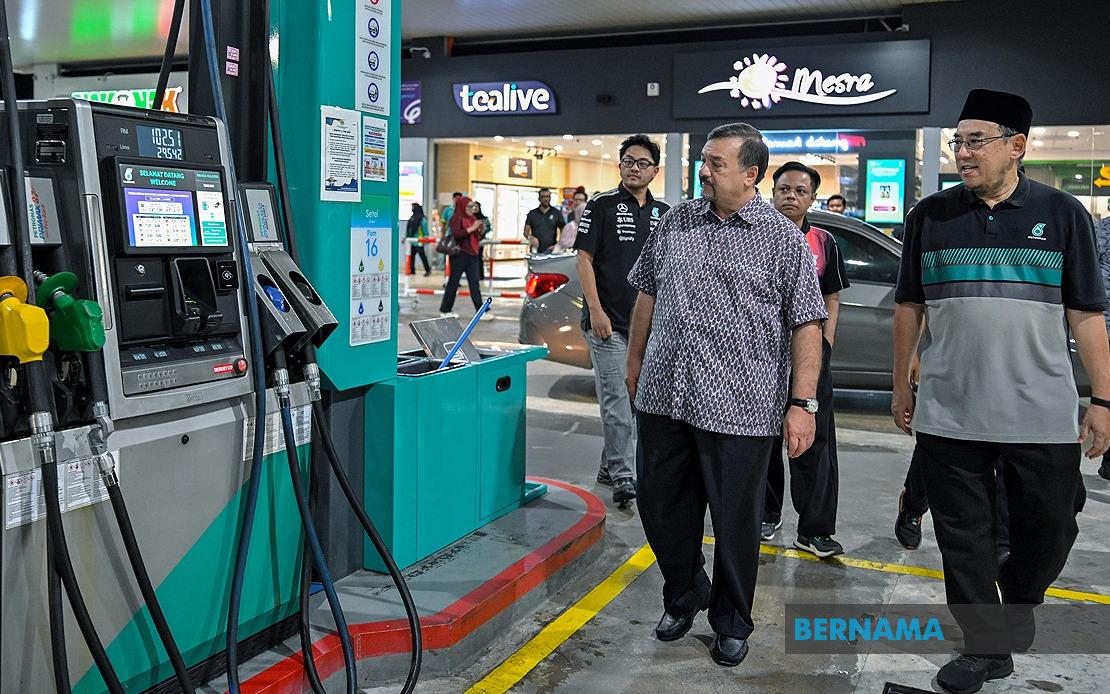
The government's newly launched BUDI Diesel subsidy scheme is off to a strong start, having received more than 18,000 applications from diesel vehicle owners seeking an extra 100 litres of subsidised fuel monthly, according to Second Finance Minister Datuk Seri Amir Hamzah Azizan. The programme, which began its early implementation phase in Peninsular Malaysia just yesterday, has already processed over 40,000 transactions as eligible owners of diesel-powered pickup trucks and sports utility vehicles rush to register for the benefit. The minister's announcement at a petrol station inspection along the North-South Expressway near Damansara suggests the rollout is proceeding without the technical hiccups that often plague large-scale digital government initiatives in Malaysia.
The BUDI Diesel programme represents a targeted approach to fuel subsidies, moving away from blanket price controls towards a more precise mechanism that directs benefits to specific vehicle categories. Currently, participating users can purchase diesel at RM2.15 per litre, with the price set to drop further to RM2.10 per litre from Wednesday onwards. The flexible quota structure allows eligible owners to claim up to 200 litres of subsidised fuel, with an additional 100 litres available through the online application portal operated by the BUDI MADANI system. This tiered approach offers some cushion for commercial users and those with legitimate high-consumption needs while maintaining cost control for the government.
The accessibility of the application process appears to have contributed to the programme's rapid uptake. Citizens can submit their requests through the official BUDI MADANI portal online, but the government has also established multiple offline channels to accommodate those less comfortable with digital platforms. Inland Revenue Board offices, Urban Transformation Centres, and service counters at participating oil company outlets all stand ready to assist applicants, reflecting a deliberate effort to ensure no eligible user is locked out by technological barriers. This multi-channel approach is particularly important in Malaysia's diverse landscape, where digital literacy and internet access vary significantly across urban and rural populations.
A particularly innovative feature introduced is the quota transfer mechanism, designed to address situations where registered vehicle owners are not the actual operators. Under this system, documented users can formally transfer their fuel quota to another individual through the same online portal. Once approved, the transfer links the quota to the user's identity card number rather than solely to the vehicle, with the petrol station's point-of-sale system recognising the transferred entitlement at the pump. This flexibility acknowledges the Malaysian business reality where commercial vehicles are often registered to one party but operated by drivers employed by another, a common arrangement in logistics, agriculture, and small transportation enterprises.
The verification mechanism protecting against quota abuse relies on integrating identity card numbers with the vehicle registration and fuel quota systems. When a transfer takes effect, the quota becomes tagged to the new user's IC number, allowing petrol station operators to confirm eligibility through automated verification at the point of transaction. While the quota allocation remains anchored to the specific vehicle, only the designated individual can utilise it, creating a balance between flexibility for legitimate users and safeguards against exploitation. This technical architecture represents a step forward in Malaysia's efforts to build integrated digital identity and entitlement systems, lessons that could inform other subsidy and assistance programmes.
Second Finance Minister Amir Hamzah's account indicates the infrastructure supporting BUDI Diesel is performing reliably, with no reported glitches from either the digital systems or participating petrol station operators. This contrasts with the frequently problematic launches of government IT initiatives in Malaysia, where rushed deployments have sometimes created confusion among users and retailers alike. The statement that operations proceeded smoothly across the first two days, despite handling tens of thousands of transactions, suggests adequate system capacity and potentially valuable lessons learned from earlier subsidy scheme implementations.
The timing of the BUDI Diesel expansion is significant given Malaysia's ongoing efforts to manage subsidy expenditures while supporting cost-of-living pressures on households and businesses. Diesel price fluctuations directly impact the operational costs of transportation, agriculture, and construction sectors, which employ large segments of Malaysia's workforce. By calibrating subsidies to specific vehicle categories rather than broadly subsidising all fuel, the government aims to balance fiscal responsibility with targeted support for industries and users facing genuine affordability challenges. The focus on pickup trucks and SUVs suggests an attempt to aid small business owners and rural users for whom such vehicles are essential rather than discretionary purchases.
The programme's reception among eligible vehicle owners demonstrates sustained demand for fuel subsidies, even as global energy markets have stabilised from the extreme volatility of recent years. The 18,000 applications in two days extrapolate to potentially hundreds of thousands across Malaysia's full implementation timeline, implying substantial budgetary commitments. Whether this demand validates the programme's targeting logic or indicates that the eligibility criteria remain too broad for optimal cost management will emerge as the scheme matures and usage patterns become clearer. The government's stated focus on ensuring smooth operation through July 1 suggests an awareness that the initial launch phase is critical for establishing user confidence and operational stability.
For Malaysian businesses and individuals in fuel-intensive sectors, the BUDI Diesel programme represents a tangible policy response to competitive pressures and margin compression. Commercial vehicle operators, farmers, and small transport entrepreneurs who qualify stand to benefit from the price differential between subsidised and market rates, potentially improving their viability. However, the scheme's long-term sustainability depends on government commitment to funding and on the successful prevention of leakage, where ineligible users or vehicles somehow access the subsidised quota. The integration of identity verification and quota tracking aims to minimise such losses, though enforcement effectiveness will determine whether the programme delivers its intended fiscal and distributional outcomes.
The government's provision of assistance through multiple channels reflects acknowledgement that digital-first service delivery, while efficient, cannot be the sole pathway in a country with Malaysia's demographic and economic diversity. The availability of in-person support at LHDN offices and UTCs ensures that elderly vehicle owners, those in underserved areas, or people simply preferring face-to-face interaction can still access the programme without disadvantage. This inclusive approach to implementation, combined with the flexible quota transfer rules and reasonable pricing structure, positions BUDI Diesel as a more thoughtfully designed subsidy initiative than some predecessors. As the scheme progresses toward full nationwide operation, monitoring its uptake, impact on beneficiary finances, and fiscal costs will provide valuable data for evaluating Malaysia's subsidy policy architecture going forward.

