Singapore's latest community funding initiative is attracting significant interest from grassroots organisers and social entrepreneurs. The SG Partnerships Fund, a S$50 million scheme unveiled in Prime Minister Lawrence Wong's February 2026 Budget speech, has already processed applications from more than 200 projects seeking to address various social needs across the island. The fund represents a strategic pivot towards empowering citizens to identify and tackle community challenges from the ground up, rather than relying solely on top-down government interventions.
Announced officially in April 2026, the fund was highlighted at the Singapore Government Partnerships Office's inaugural community exchange event on July 4, where Senior Minister of State for Culture, Community and Youth Low Yen Ling outlined the scheme's tiered approach. The structure is designed to accommodate initiatives at different stages of development, from early-stage ideas to established organisations seeking broader sector impact. This flexible framework reflects policymakers' understanding that social innovation flourishes at multiple scales, and that supporting smaller pilots can often yield insights that inform larger systemic changes.
The fund operates across four distinct tiers, each catering to different organisational capacities and ambitions. At the entry level, the seed tier provides grants of up to S$5,000 for individuals, unregistered ground-up groups, and newly registered Singapore-based organisations piloting fresh concepts in their communities. This tier has proven unexpectedly popular among applicants, according to SGPO director Hasliza Ahmad, who noted that the appeal stems from its accessibility and the modest financial barrier to entry. Hasliza emphasised that the intention is to encourage citizens to initiate action without requiring them to undertake ambitious projects initially, recognising that meaningful social change often begins with small, intentional steps within neighbourhoods and networks.
The sprout tier, which awards up to S$50,000, targets established organisations pursuing sector-wide initiatives with proven track records and organisational infrastructure. The newly launched scale tier, introduced in July 2026, serves larger, more mature organisations seeking to achieve substantial sectoral impact, offering grants of up to S$1 million. This graduated architecture ensures that funding allocation aligns with organisational maturity and project scope, reducing the risk of misaligned expectations while maximising the likelihood of effective fund deployment.
Beyond financial support, the SGPO provides comprehensive accompaniment throughout the grant cycle. Recipients gain access to networks, mentorship, and guidance on fund utilisation, reflecting a commitment to capacity-building alongside capital injection. This holistic support model acknowledges that many community leaders and social entrepreneurs, particularly those from non-traditional backgrounds, may lack institutional experience or formal sector networks. By coupling funding with relationship-building and knowledge transfer, the scheme aims to strengthen the broader ecosystem of community-led problem-solving rather than simply distributing capital.
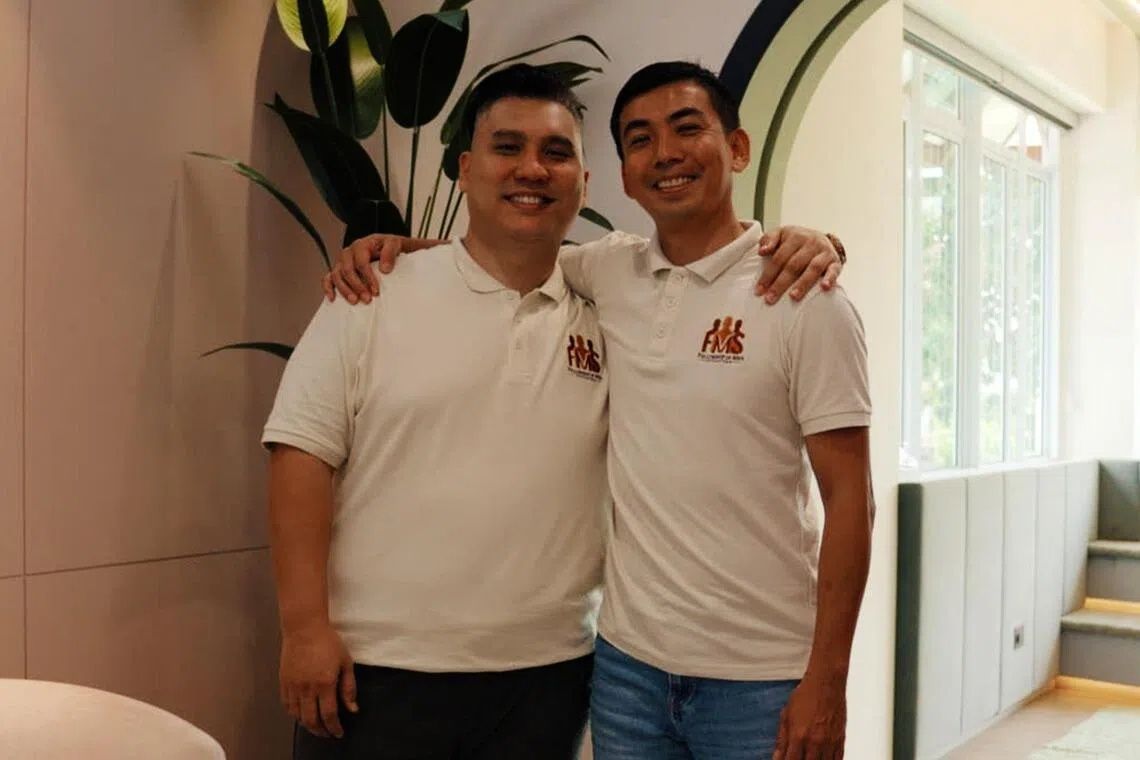
Fellowship of Men Singapore exemplifies how the seed tier catalyses initiatives addressing sensitive social issues. Co-founded by Ben Ang, 45, and Ismail Didih Ibrahim, 41, the non-profit emerged from their experience at a family service centre where they encountered men struggling with violence and aggression. Rather than accepting this reality as inevitable, the pair recognised an opportunity to shift emphasis from crisis intervention to prevention. Ang, formerly the centre's director, and Didih, who operated food stalls while volunteering, made the counter-intuitive decision to leave stable employment and launch their initiative formally in January 2026. Their reasoning reflected mature strategic thinking: supporting men in addressing emotional challenges before crises materialise could reduce downstream social costs and suffering.
The organisation's programming combines practical, engaging activities with guided conversations addressing masculinity, self-care, relationships, and help-seeking behaviours. Ang articulated their underlying philosophy: expanding public understanding of manhood beyond narrow provider and protector roles to encompass emotional literacy and psychological vulnerability. With their S$5,000 seed grant, Ang and Didih conducted an intensive three-hour workshop at a professional kitchen in Geylang, bringing together 24 men, wives, and children for simultaneous cooking and dialogue. This initiative would have been prohibitively expensive to execute through personal resources or Ang's home kitchen, demonstrating how even modest grants unlock opportunities for meaningful community engagement.
Another compelling example emerges from Loke Wai Yee, a 21-year-old LASALLE College of the Arts student who observed gaps in Singapore's existing charitable infrastructure. During the seasonal angel tree initiative, whereby disadvantaged children post gift wishlists in shopping mall installations, Loke recognised two structural limitations: geographical coverage was uneven, and the concentrate of expensive gifts excluded younger and budget-conscious donors. Her response was Little Wishes, an online platform developed with 12 peers that democratises giving by presenting curated gift options across price points and algorithmically matching donor preferences with beneficiary needs. The seed grant enabled Little Wishes to engage professional web development services, transforming what would otherwise have been an amateur website into a polished, user-friendly interface launching in August 2026.
Loke's experience underscores how seed funding operates as a catalytic intervention in early-stage projects. The team could theoretically have built the website themselves, but professional development substantially improved user experience and credibility, factors likely to enhance donor participation and beneficiary outcomes. Moreover, the SGPO's role extended beyond financial support: the office facilitated connections with social service agencies, signposted complementary funding opportunities, and provided ongoing mentorship. Little Wishes is on track to support 80 beneficiaries in its initial phase, validating Loke's observation that significant unmet demand exists when barriers to participation are lowered.
These case studies illustrate a broader policy insight: citizen-led initiatives often identify gaps and devise solutions that government actors, despite resources and goodwill, might overlook. Ang and Didih's focus on prevention-oriented engagement with men addresses a demographic historically resistant to formal mental health support. Loke's platform recognises that charitable giving, like many activities, involves transaction costs and friction that exclude potential participants. Both initiatives emerged organically from lived experience rather than departmental strategic planning. By provisioning small grants and supporting infrastructure, the SG Partnerships Fund positions itself as an enabler of this distributed intelligence rather than a prescriber of solutions.
The scheme also carries implications for Southeast Asian governance more broadly. As urbanisation intensifies across the region and traditional community structures evolve, governments face the challenge of maintaining social cohesion and addressing emerging issues. Singapore's approach—channelling resources through grassroots actors while providing guidance and network access—offers a model balancing citizen agency with institutional support. For Malaysian observers, the fund's structure and uptake merit attention as policymakers consider how to strengthen community-led problem-solving within existing governance frameworks. The emphasis on starting small and scaling strategically could inform approaches to social innovation funding in other contexts.
The substantial response to the SG Partnerships Fund—exceeding 200 applications within months of launch—suggests strong latent demand for accessible funding mechanisms that support citizen initiative. This enthusiasm indicates that many Singaporeans possess ideas and commitment for community benefit but lack capital and institutional legitimacy to realise them at scale. By systematically reducing these barriers, the fund may unlock significant social value while simultaneously strengthening the connective tissue between government agencies and civil society. As applications continue processing, the outcomes will reveal whether this distributed model of community investment generates the transformative impact policymakers anticipate.

