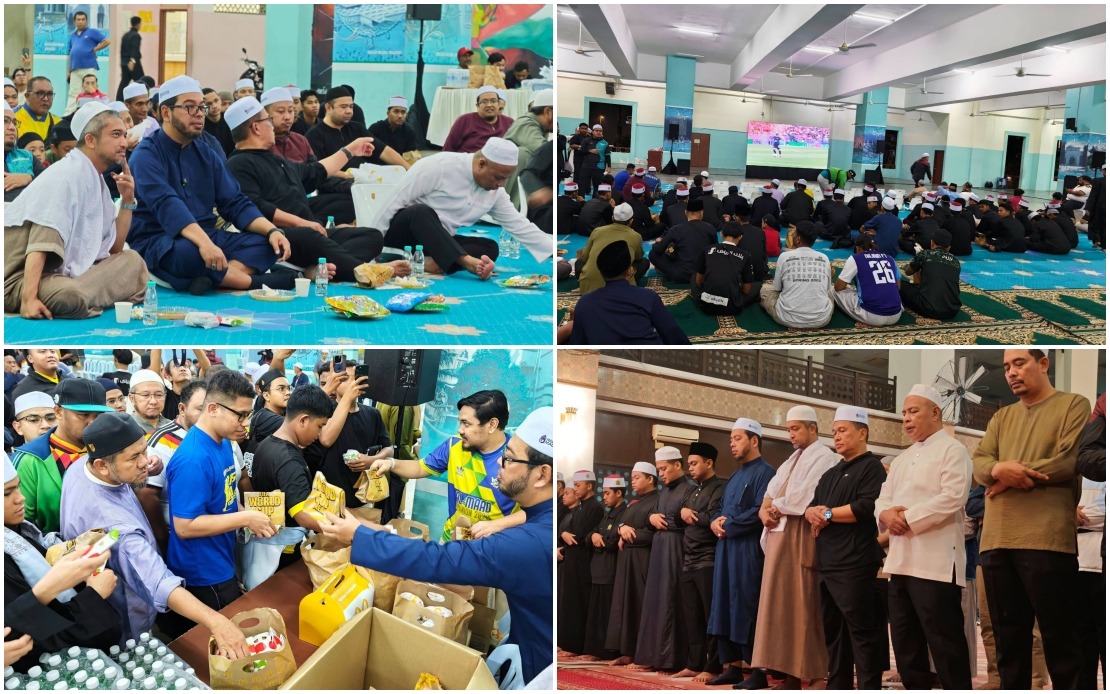
A Malaysian religious institution has demonstrated an innovative approach to youth engagement by successfully merging traditional Islamic worship with contemporary sporting interests. Masjid Usamah bin Zaid in Wangsa Maju hosted over 300 young worshippers on June 21 who arrived as early as 4am to participate in Qiyamullail, the voluntary pre-dawn prayer vigil observed during Ramadan, before gathering to watch a 2026 World Cup group match. The integrated event reflects a deliberate strategy to channel youthful enthusiasm towards meaningful spiritual experiences rather than viewing religious observance and recreational interests as mutually exclusive domains.
The programme gained official endorsement from Minister in the Prime Minister's Department (Religious Affairs) Dr Zulkifli Hassan, who emphasised that the gathering exemplified a pragmatic approach to contemporary dakwah, or Islamic outreach. His observation that young people's passion for football could effectively complement spiritual development signals a shift in how Malaysian religious authorities conceptualise engagement with a demographic often perceived as difficult to reach through traditional methods. This approach acknowledges that compartmentalising religious life from daily interests may prove counterproductive when seeking to foster lasting connections between youth and faith-based activities.
The screening itself featured the Group E encounter between Germany and Ivory Coast from the upcoming 2026 World Cup tournament, with Germany ultimately securing a 2-1 victory. The choice of this particular match proved strategically sound, as it provided a competitive and entertaining backdrop while allowing the event organisers to maintain the participatory focus rather than overshadowing the spiritual component with marquee fixtures. The match served as a vehicle for broader engagement rather than the primary attraction.
Distinguished sports personalities added substantial credibility and analytical depth to the viewing experience. Football legend Shahril Arsat and former Selangor FA player Khushairi Aizad utilised the half-time interval to provide expert commentary on tactical approaches and playing styles exhibited by both teams. This contribution transformed a passive viewing experience into an educational opportunity where participants could appreciate the technical and strategic dimensions of the sport while surrounded by their community and spiritual guides.
The event's logistics reflected significant institutional commitment, with senior government and religious officials personally participating in practical preparations. Datuk Nizam Yahya, chief executive officer of the Federal Territories Islamic Religious Council (MAIWP), Datuk Ajib Ismail, deputy director-general of the Malaysian Islamic Development Department (JAKIM), Dr Zulkifli Hassan, and the Federal Territories Mufti jointly prepared roti canai as breakfast for attendees. This direct involvement of high-ranking officials in food preparation demonstrated respect for participants and embodied the Islamic principle of service within community settings.
The collaborative framework underlying this initiative proves equally significant to the event itself. Organising bodies included the Federal Territories Mufti Department, JAKIM, MAIWP, the Federal Territories Islamic Religious Department (JAWI), the Malaysian Islamic Dakwah Foundation (YADIM), the Malaysian Islamic Economic Development Foundation (YAPEIM), mosque management, the Muslim Youth Movement of Malaysia (ABIM), and the Sporting Firearms Association (PMA), alongside commercial sponsors providing food. This broad coalition demonstrates how dispersed institutional resources can converge around shared objectives of youth engagement and community development.
The initiative carries particular relevance for Malaysian religious leadership as the nation navigates demographic and cultural shifts. With younger generations integrating digital culture, international sporting events, and entertainment into their daily lives, conventional religious institutions must adapt their engagement strategies without compromising theological principles. The Wangsa Maju event suggests that such adaptation remains feasible through creative programme design that acknowledges contemporary youth interests as legitimate components of holistic community life rather than distractions from spiritual duty.
From a Southeast Asian perspective, this Malaysian model offers a potential template for other predominantly Muslim nations grappling with similar youth engagement challenges. Countries throughout the region experience comparable dynamics where young people navigate between traditional religious expectations and globalised consumer culture, particularly surrounding major sporting events. The success of combining nocturnal prayer observances with international football viewing suggests that religious institutions need not resist popular culture but can strategically frame secular activities within larger frameworks of community, discipline, and spiritual growth.
The breakfast preparation and communal meal component further reinforces the integrative philosophy underpinning the event. Food sharing carries profound significance within Islamic tradition and creates informal spaces for intergenerational connection beyond formal instruction. By positioning sustenance as preparation for both spiritual exertion and recreational viewing, the organisers reinforced the notion that daily activities, properly contextualised, support rather than undermine religious commitment.
Looking forward, the success of this particular gathering may influence how Malaysian mosque management and religious authorities conceptualise youth programming. Rather than viewing football enthusiasm or entertainment preferences as obstacles to faith engagement, the Wangsa Maju experience demonstrates that these interests can serve as legitimate entry points for establishing meaningful spiritual connections. Whether such initiatives expand to other mosques and communities will likely depend on institutional willingness to embrace innovation and on the continued availability of resources and leadership commitment observed in this instance.

