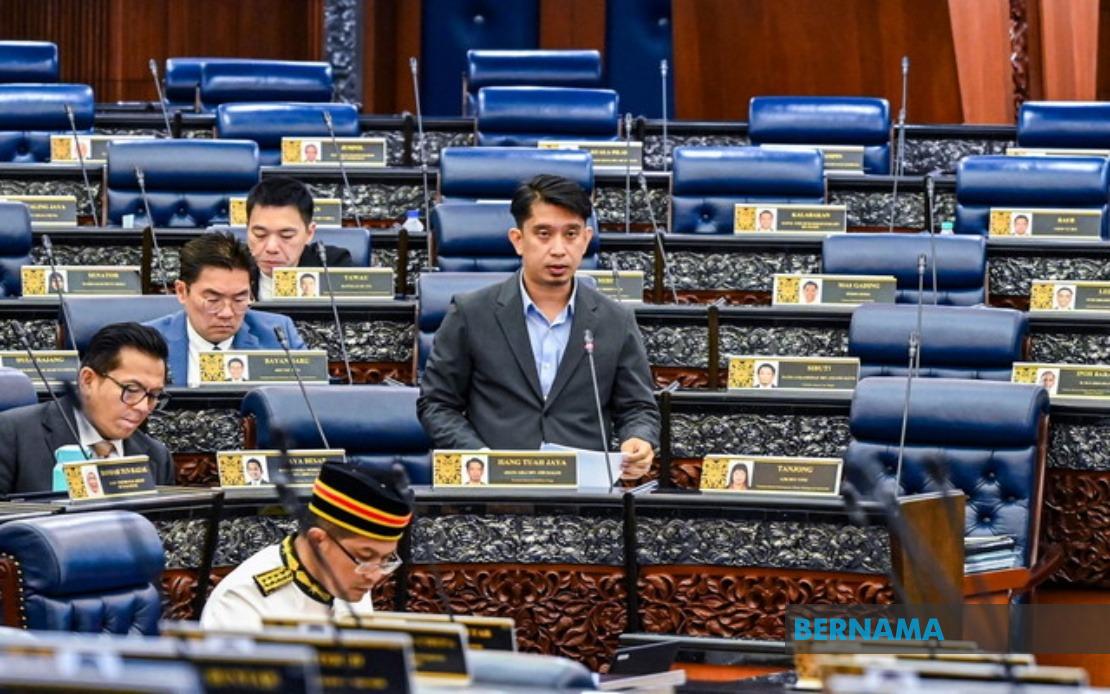
The Malaysian government is maintaining substantial investment in science and technology education, with data revealing that over half of all diploma and degree students in public universities are pursuing STEM disciplines. Deputy Minister of Higher Education Adam Adli Abd Halim disclosed that 326,419 out of 556,556 students admitted to public institutions of higher learning (IPTA) between 2023 and March 2026 enrolled in Science, Technology, Engineering and Mathematics fields, leaving 230,137 students in non-STEM programmes. These figures underscore a deliberate policy shift to prioritise technical and scientific expertise as Malaysia positions itself within increasingly competitive regional and global technology markets.
The concentration of enrolment in STEM reflects broader governmental strategy tied to emerging industries and economic transformation. Malaysia has identified artificial intelligence, semiconductor manufacturing, automation, digitalisation and green technology as critical sectors for future growth, particularly as regional competition intensifies. By channelling more than 58 per cent of incoming university cohorts toward STEM disciplines, policymakers aim to cultivate domestic capacity in these high-value sectors rather than remaining dependent on foreign expertise. This approach recognises that technological advancement and innovation cannot be imported wholesale, but must be rooted in local talent development and institutional capability.
The National Science, Technology and Innovation Policy (DSTIN) 2021–2030, administered by the Ministry of Science, Technology and Innovation, provides the strategic framework guiding these enrolment patterns. Rather than specifying rigid targets for particular engineering disciplines, the policy adopts a more flexible ecosystem-based approach centred on developing Researchers, Scientists, Engineers and Technologists (RSET) professionals broadly. This framework acknowledges that future skills requirements may shift unpredictably as technology evolves, necessitating a flexible talent pool rather than workforce planning locked into outdated projections.
Under the DSTIN framework, Malaysia has established a concrete human capital benchmark: achieving 200 RSET professionals per 10,000 workers by 2030. This ratio-based approach provides measurable targets while avoiding the rigidity of absolute numbers. Applying this benchmark to Malaysia's projected workforce of approximately 17.06 million people indicates the nation requires roughly 341,200 RSET professionals within four years. The current enrolment trajectory in IPTA institutions suggests progress toward this goal, though administrators must ensure graduates actually enter the workforce and apply their training in productive sectors rather than emigrating or underemploying.
For Malaysian readers and observers, these enrolment statistics carry significant implications beyond university corridors. The semiconductor and AI sectors, among Malaysia's identified growth priorities, face persistent skills shortages across Southeast Asia. Developing homegrown talent reduces vulnerability to international brain drain and positions Malaysia more competitively against regional neighbours pursuing similar strategies. Countries including Singapore, South Korea and Vietnam have invested heavily in technology education pipelines, and Malaysia must maintain comparable momentum to avoid falling further behind in attracting high-value manufacturing and research operations.
The concentration of STEM enrolment also reflects adjustments to previous imbalances in higher education. Malaysian universities historically produced substantial cohorts in humanities, social sciences and business studies, sometimes exceeding industry demand. The rebalancing toward STEM does not diminish humanities education's value but rather responds to identifiable skill gaps in technical sectors where Malaysia faces acute labour shortages. Employers in semiconductor assembly, industrial automation and digital services consistently report difficulty recruiting qualified local candidates, a challenge intensified by competition from higher-wage economies in the region.
However, the raw enrolment figures require contextualisation against programme quality and employment outcomes. Admitting 326,000 students to STEM programmes creates no tangible benefit if teaching quality lags, laboratory facilities remain inadequate, or curricula drift misaligned with industry requirements. Responding to supplementary questions regarding infrastructure, Adam Adli acknowledged that the Ministry of Higher Education currently concentrates enhancement efforts on four universities within the Malaysian Technical University Network (MTUN). This focused approach potentially allows deeper institutional development but raises concerns about capacity constraints elsewhere in the IPTA system.
The four MTUN institutions—universally technical universities specialising in engineering and applied sciences—represent Malaysia's flagship institutions for technology training. Strengthening these universities through increased funding for research laboratories, modern equipment and expert faculty makes strategic sense. Yet relying heavily on four institutions to produce the bulk of RSET graduates creates dependency risks and may inadequately service regional distribution needs. Students in less developed areas face reduced access to quality technical education, potentially perpetuating geographic disparities in opportunity and innovation capacity.
Experts in Malaysian higher education anticipate growing pressure on universities to enhance instructional quality as enrolment targets are met. Simply increasing student numbers without proportional investment in facilities and staff undermines educational outcomes. The ministry's stated commitment to aligning programme offerings with industry needs represents necessary policy language, but implementation remains challenging. Regular consultation between universities and employers, flexible curriculum design permitting rapid updates, and partnerships enabling students to gain industry experience all require coordinated effort and sustained funding.
The RSET ecosystem concept extends beyond universities to encompass community colleges, polytechnics and technical vocational institutions. While the parliamentary disclosure focused specifically on IPTA enrolment, Malaysia's complete technology talent pipeline includes students pursuing diplomas and certificates at sub-university level. Coordination across these educational tiers ensures progression pathways and prevents skill duplication or gaps between institutional levels. A seamlessly integrated technical education system serves industry more effectively than isolated university-centred initiatives.
Looking forward, Malaysia's trajectory in developing STEM talent will substantially influence its economic competitiveness. The targeted 341,200 RSET professionals by 2030 represents an ambitious goal requiring sustained enrolment at current or elevated levels, combined with high retention and employment rates. Regional competitors pursuing analogous strategies suggest that meeting numerical targets alone proves insufficient—talent quality, specialisation in high-demand subfields, and domestic retention of graduated professionals determine ultimate competitive advantage. Malaysia's strategy demonstrates recognition of these realities through ecosystem-based planning rather than narrow discipline targeting.

