The Federal Territories have embarked on a substantial flag distribution initiative ahead of the 2026 National Day and Malaysia Day (HKHM) celebrations, with more than 62,000 Jalur Gemilang flags already placed throughout Kuala Lumpur, Putrajaya and Labuan since the beginning of August. The large-scale deployment represents a coordinated effort to blanket protocol roads, government buildings, and residential neighbourhoods with Malaysia's iconic red-and-white banner, transforming public spaces into visible symbols of national pride and unity during the crucial commemoration period.
Hannah Yeoh, the Minister in the Prime Minister's Department overseeing the Federal Territories, spearheaded the distribution initiative and used the occasion to call upon all Malaysians to express their patriotism by prominently displaying the Jalur Gemilang both in physical spaces and across digital platforms. Her message extended beyond mere flag-waving, emphasizing the deeper obligation citizens hold to appreciate the freedoms and independence that Malaysia has secured since its founding. The minister's intervention signals the government's desire to reignite grassroots patriotic sentiment during a period when national commemorations hold particular significance for reflecting on the country's trajectory and achievements.
A critical dimension of the campaign centres on educating Malaysians about proper flag protocol, an aspect that Yeoh stressed repeatedly in her comments to the media following the Aspirasi Jalur Gemilang mural programme in Putrajaya. The minister acknowledged that many citizens harbour uncertainty about correct flag display procedures, fearing social disapproval or official sanctions if they inadvertently violate etiquette guidelines. Rather than allowing such apprehension to discourage patriotic expression, the government has responded by making comprehensive flag-flying instructions readily available online, complete with visual examples demonstrating acceptable display methods across different contexts and settings.
Yeoh's emphasis on removing barriers to flag display reveals an underlying concern that overly rigid or intimidating protocols may paradoxically suppress rather than encourage national sentiment among ordinary Malaysians. Her message that citizens should "feel encouraged to fly the Jalur Gemilang, not afraid to do so" acknowledges the psychological dimensions of patriotic expression, recognizing that excessive anxiety about technical compliance can undermine the very spirit officials seek to cultivate. This approach represents a subtle shift toward making nationalism more accessible and inclusive, particularly for younger generations whose relationship with national symbols may be shaped by early educational experiences and family practices.
Business establishments and commercial spaces have also been enlisted in the patriotic effort, with the minister advising proprietors to ensure that their staff members tasked with hoisting flags possess adequate knowledge of correct procedures. The guidance extends to managerial oversight, encouraging business leaders to implement quality checks that prevent missteps in flag display. This framework extends patriotic responsibility beyond individual citizens to institutional actors, recognizing that Malaysia's commercial landscape functions as a visible arena where national symbols are constantly on public display, and therefore requires coordinated attention to proper standards.
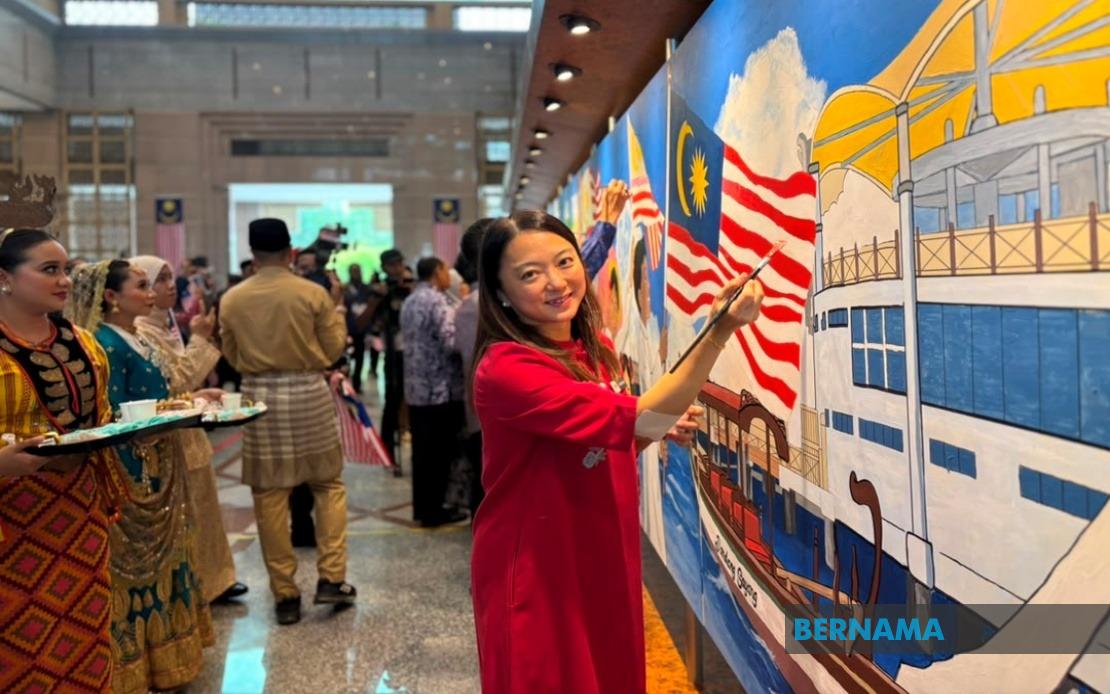
The campaign's symbolic centrepiece came through the completion of a 25.40-metre Independence Mural at Menara Seri Wilayah in Putrajaya, where Yeoh and Federal Territories Department personnel collectively painted a monumental artwork celebrating Malaysian sovereignty and territorial identity. The mural's design incorporates distinctive architectural and cultural landmarks representing each of the three Federal Territories, creating a composite visual narrative that acknowledges the unique character and significance of Kuala Lumpur, Putrajaya and Labuan within Malaysia's broader national framework. The Jalur Gemilang features prominently throughout the composition, anchoring the entire artwork to the nation's fundamental symbol of unity and independence.
The participation of key federal apparatus figures, including Federal Territories Department director-general Datuk Muhammad Azmi Mohd Zain and Putrajaya Corporation president Datuk Mohd Sakeri Abdul Kadir, underscores the multi-level government coordination required to execute such a widespread patriotic initiative. Their presence at the mural event signified institutional commitment to the HKHM 2026 campaign and demonstrated that flag distribution and patriotic messaging constitute official policy priorities extending across multiple government agencies and administrative levels.
For Malaysian readers, particularly those in the Federal Territories, this initiative carries immediate practical implications for the upcoming commemorations, as the widespread availability of flags removes logistical barriers to household and commercial participation in visible displays of national sentiment. The campaign's emphasis on accessible guidelines and encouragement rather than strict enforcement suggests a deliberate effort to shift national culture toward more spontaneous and organic patriotic expression among all social strata.
The broader regional context renders such initiatives noteworthy, as Southeast Asian nations grapple with questions about how to maintain cohesive national identity amid rapid modernization, migration, and social fragmentation. Malaysia's approach of combining widespread flag distribution with educational outreach on proper protocols and digital-age patriotic expression reflects a recognition that twenty-first-century nationalism requires multi-platform strategies that reach citizens across traditional and digital spaces simultaneously.
As Malaysia approaches its independence commemorations in 2026, the Federal Territories' flag distribution exercise signals official determination to make national symbols ubiquitous in public consciousness while removing psychological and informational obstacles that might otherwise inhibit citizen participation. The campaign demonstrates that government patriotic initiatives need not rely on coercion or intimidation to achieve their objectives, but can instead succeed through providing accessible tools, clear guidance, and affirmative encouragement that frame flag-flying as an inclusive rather than exclusionary civic practice open to all Malaysians regardless of background or prior experience with national protocols.

