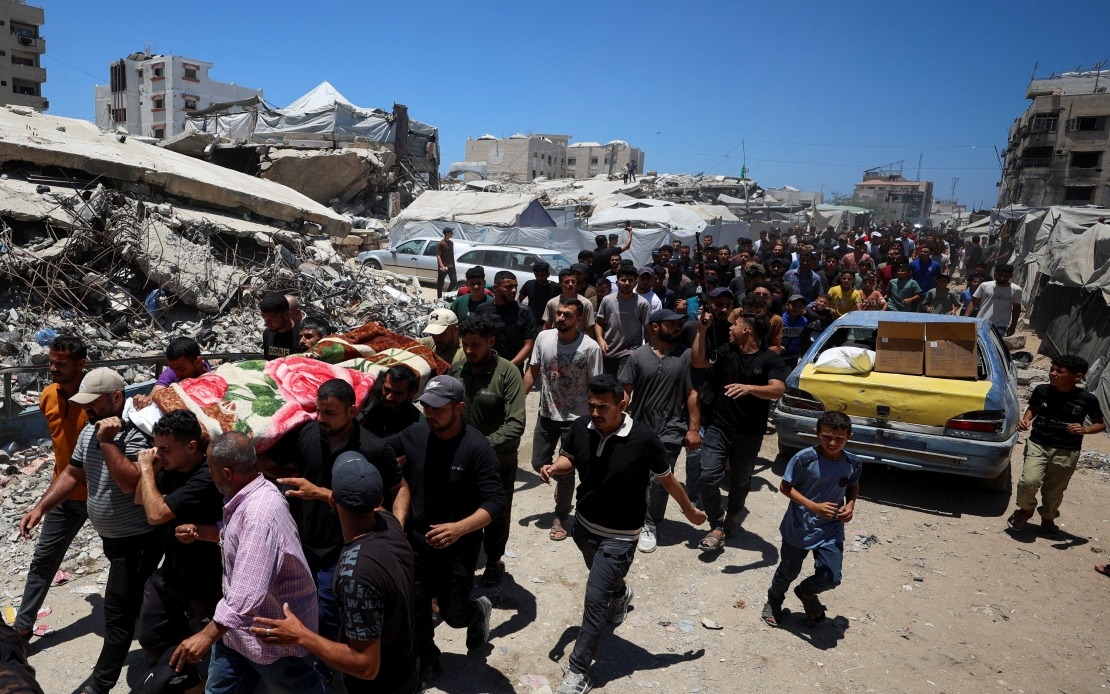
The Gaza humanitarian crisis has entered a new phase of suffering even after the commencement of ceasefire arrangements, with the Palestinian Prime Minister's Office documenting that continuing Israeli military operations have claimed 1,021 additional Palestinian lives. This brings the cumulative toll across the enclave to 73,032 deaths since the conflict's escalation in October 2023, according to an official situation report released Tuesday. The figures underscore how the cessation of major hostilities has failed to halt all forms of armed activity or prevent the loss of civilian life within the territory.
The strategic significance of these numbers extends beyond raw statistics—they reflect a humanitarian emergency of staggering proportions that demands regional and international attention. For Malaysian observers and policymakers, the scale of displacement and destruction mirrors some of the worst humanitarian catastrophes of recent decades. Nearly one million Palestinians are currently living in emergency tent settlements after Israeli military operations systematically destroyed or damaged approximately 76.6 percent of Gaza's residential infrastructure. This figure demonstrates the unprecedented extent of physical destruction concentrated in a relatively small geographic area, creating conditions where normal civilian life and economic recovery remain impossible.
Water scarcity represents one of the most pressing daily survival challenges facing Gaza's population. The Government Communication Centre reported that severe shortages of clean water have become so acute that the vast majority of residents depend entirely on restricted humanitarian supplies for drinking and sanitation. This degradation of basic utility systems compounds the public health crisis, as waterborne diseases become increasingly prevalent in densely packed displacement camps. For a region already experiencing widespread malnutrition and limited medical access, the absence of potable water creates a vicious cycle of disease and deteriorating health outcomes.
Childen have borne a disproportionate burden of the ongoing violence. According to UNICEF data, 265 Palestinian children have been killed since the ceasefire framework was announced, while over 400 others sustained injuries. These figures highlight how the suspension of major combat operations has not translated into meaningful protection for vulnerable populations. The psychological trauma affecting an entire generation of young Palestinians, combined with physical injuries and the loss of parents and siblings, will shape social dynamics and stability across Palestinian territories for decades.
International humanitarian organizations have raised alarm about the continued obstruction of aid delivery into Gaza. Oxfam's testimony before the United Nations Security Council detailed how Israeli restrictions continue to prevent the effective distribution of life-saving assistance across the enclave. These logistical barriers mean that even aid supplies that reach Gaza's borders frequently cannot reach populations most in need. The bureaucratic and physical obstacles to humanitarian access effectively amplify the crisis by reducing the practical benefit of international relief efforts.
Beyond Gaza, the occupied West Bank faces escalating instability driven by settler violence and Israeli security operations. The Office of the United Nations High Commissioner for Human Rights documented a sharp increase in forced displacement of Palestinians across the West Bank, including East Jerusalem, resulting from coordinated settler attacks, home demolitions, movement restrictions imposed by authorities, and forced evictions. This systematic pattern of displacement challenges the viability of Palestinian territorial continuity and undermines economic development across the West Bank.
Agricultural destruction has compounded economic hardship for Palestinian farming communities. The Palestinian Ministry of Agriculture documented the destruction of 7,258 trees, including 1,270 olive trees, representing losses exceeding US$5.17 million. These attacks target the livelihoods of rural Palestinians dependent on agricultural production, while olive cultivation carries deep cultural and historical significance within Palestinian society. Simultaneous arson attacks on mosques in the villages of Jiljilya and Mazra' al-Nubani reflect the broader pattern of targeting civilian and religious infrastructure.
Military operations concentrated in northern West Bank refugee camps have displaced over 33,000 Palestinians since January 2025 alone. The camps in Jenin, Tulkarem, and Nour Shams have become focal points of Israeli military activity, with consequences for civilian populations already living in densely overcrowded conditions. These displacement figures suggest an accelerating cycle of forced migration within Palestinian territories, with cascading effects on already-strained humanitarian resources in receiving areas.
The Israeli government's assertion of control over planning and construction authority at the Ibrahimi Mosque in Hebron has triggered international legal concerns. Palestinian authorities argue this unilateral action contravenes the 1997 Hebron Agreement, which established specific frameworks for governance and religious site management. The development signals a potential expansion of Israeli administrative authority over Palestinian religious spaces, raising questions about the implementation of existing bilateral arrangements and international law compliance.
Prisoner welfare has emerged as a secondary but significant humanitarian concern. Institutions monitoring Palestinian detainees in Israeli custody report deteriorating conditions characterized by severe overcrowding, inadequate sanitation, and disease outbreaks. These reports suggest that the prison system itself is becoming a site of humanitarian concern parallel to the broader conflicts in Gaza and the West Bank. For Malaysian policymakers and human rights advocates, the conditions in detention facilities represent another dimension of the humanitarian emergency requiring documentation and international attention.
Despite the security chaos, Palestinian educational institutions have demonstrated resilience by preparing nearly 91,000 students for General Secondary Education Examinations scheduled this year. Approximately 37,000 Gaza-based students are participating electronically for the third consecutive year, indicating how the education system has adapted to conflict conditions. This commitment to maintaining academic continuity reflects Palestinian determination to preserve institutional capacity even amid extraordinary adversity, though the long-term impact of educational disruption remains concerning.
The convergence of these crises—military operations despite ceasefire frameworks, humanitarian access restrictions, displacement, infrastructure destruction, and health emergencies—depicts a territory in advanced humanitarian deterioration. For Southeast Asian nations like Malaysia with significant Palestinian diaspora communities and growing regional influence, the escalating humanitarian emergency presents both moral imperatives and geopolitical implications. The situation demands sustained regional diplomatic engagement, coordination of humanitarian assistance, and support for international accountability mechanisms addressing the underlying conflict drivers.

