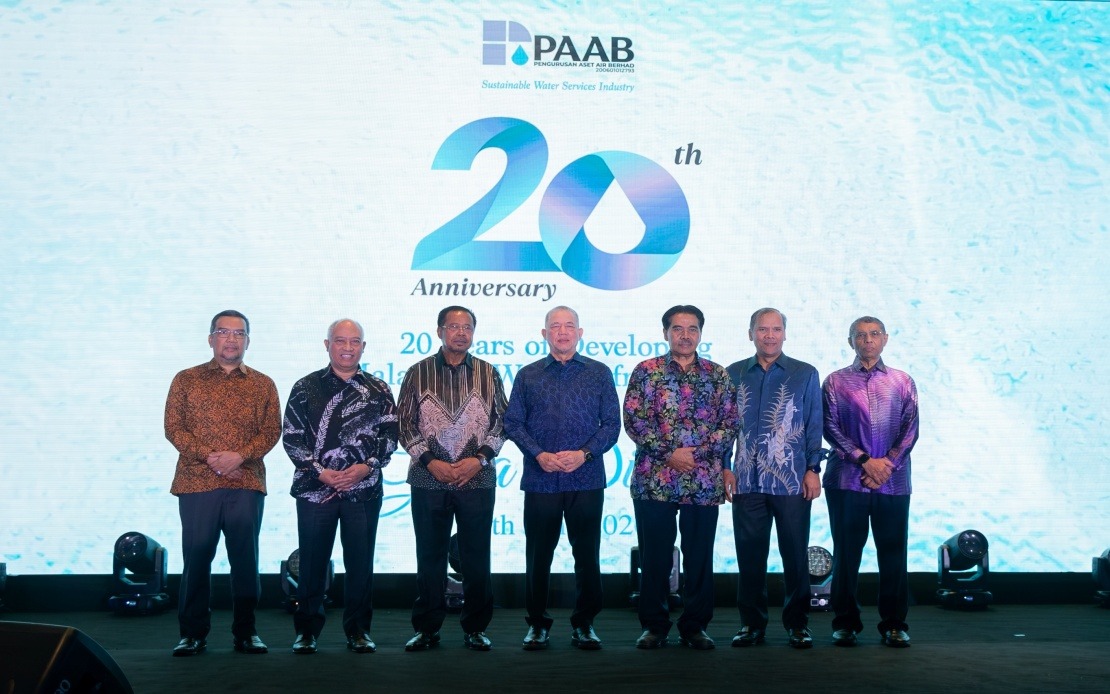
Pengurusan Aset Air Berhad (PAAB), the wholly government-owned water asset management firm, marked two decades of operations on June 26, reflecting a significant chapter in Malaysia's efforts to modernise its water infrastructure and secure supplies for the nation. Since its incorporation on May 5, 2006, the entity has emerged as a linchpin in the country's water services restructuring, channelling unprecedented capital into treatment facilities, storage systems, and distribution networks across multiple states.
The scale of PAAB's financial commitment underscores the ambition of Malaysia's water transformation agenda. The company has overseen RM23.04 billion in water industry loan takeovers and deployed RM23.84 billion in infrastructure capital expenditure, bringing total financing and investment to RM46.88 billion as of December 2025. This extraordinary sum positions water infrastructure among the nation's most capitalised public utility sectors, rivalling major initiatives in energy and transport. For Malaysian businesses and residents, these investments theoretically translate into more reliable water supplies and expanded treatment capacity to support both urban consumption and industrial demand.
Progress has been tangible in certain measurable dimensions. Across ten states that have signed onto the National Water Services Industry Restructuring Plan, PAAB and its partners have completed 21 water treatment plants with a combined daily capacity of 2,085 million litres. The program has also delivered 42 storage tanks holding 783 million litres and expanded or upgraded 3,263 kilometres of pipeline infrastructure nationwide. These figures demonstrate concrete asset creation, yet they mask a deeper structural challenge that officials can no longer sidestep.
Deputy Prime Minister Datuk Seri Fadillah Yusof, who also holds the Energy Transition and Water Transformation portfolio, used the anniversary celebration to pivot focus toward an uncomfortable reality: Malaysia is losing approximately 40 per cent of its treated water supply through non-revenue water (NRW) leakage, theft, and measurement errors. This figure, which has long troubled water planners, represents a staggering waste of both resource and capital investment. Fadillah stressed that addressing this crisis cannot wait for long-term roadmaps extending to 2050, signalling frustration within government that decades of incremental improvement have failed to arrest the problem adequately.
The urgency Fadillah articulated reflects Malaysia's emerging competitive disadvantage in attracting foreign investment in water-intensive sectors. Data centre operations, which represent a high-growth economic opportunity, require guaranteed supplies of both electricity and cooling water. If Malaysia cannot demonstrate water security and reliability, multinational technology firms may redirect capital to alternative regional hubs. This economic angle adds weight to the government's shift toward treating water loss as an urgent national priority rather than a technical matter to be resolved through phased implementation schedules.
Fadillah's comments revealed the tension between PAAB's long-term restructuring roadmap and political pressure for faster results. The organisation's mandate follows a phased timeline: Migration (2008–2020), Stabilisation (2021–2030), Consolidation (2031–2040), and Full Cost Recovery (2041–2050). This 40-year framework, while administratively coherent, has become politically untenable given the mounting evidence that water loss requires intensive, coordinated action now. The Deputy Prime Minister explicitly noted that ten years remains insufficient to resolve non-revenue water challenges, particularly when operators continue constructing new treatment plants that feed water into systems riddled with leaks.
Breakdown of PAAB's December 2025 capital expenditure reveals the challenge of turning investment into outcomes. Of the RM23.84 billion deployed, RM8.33 billion supported completed projects handed to operators, while RM1.84 billion funded projects under construction and RM13.67 billion remained in design and planning phases. This distribution indicates that roughly 58 per cent of budgeted capital has yet to be spent or completed, suggesting the current phase of restructuring still faces execution hurdles. For Malaysian water consumers, this means years of continued reliance on aging infrastructure in many regions, even as new assets are pledged.
The political composition of attendees at the anniversary dinner—including Deputy Minister Datuk Seri Abdul Rahman Mohamad, SPAN chairman Datuk Abdul Kadir Mohd Din, and PAAB chairman Datuk Seri Jaseni Maidinsa—underscored the high-level attention now paid to water matters. Jaseni reiterated PAAB's commitment to implementing the Full Cost Recovery Roadmap, which aims to ensure water utilities operate on sustainable financial footings by mid-century. However, this technical commitment, while necessary, does not address the immediate political and economic pressure to stem non-revenue water losses within the current decade.
For Malaysian businesses and households, PAAB's two decades of work have produced measurable infrastructure gains: more treatment capacity, expanded storage, and upgraded pipelines. Yet the persistent 40 per cent non-revenue water rate suggests that asset creation alone cannot solve systemic inefficiency. The real challenge lies in coordinating federal agencies, state governments, and local water operators to tackle endemic leakage, reduce theft, and improve measurement systems—a task requiring political will and sustained funding beyond traditional capital expenditure frameworks.
The Anniversary event effectively acknowledged that Malaysia stands at an inflection point in its water sector. Two decades of restructuring have built a foundation of modern infrastructure, but operational performance lags expectations. The emergence of water security as an explicit economic priority—tied to foreign investment attraction—creates an opportunity for renewed commitment to non-revenue water reduction. Whether PAAB and partner agencies can translate this political momentum into decisive action over the next decade, rather than another cycle of long-term planning, will determine whether Malaysia's water sector truly modernises or merely maintains its current trajectory of incremental improvement amid persistent waste.

