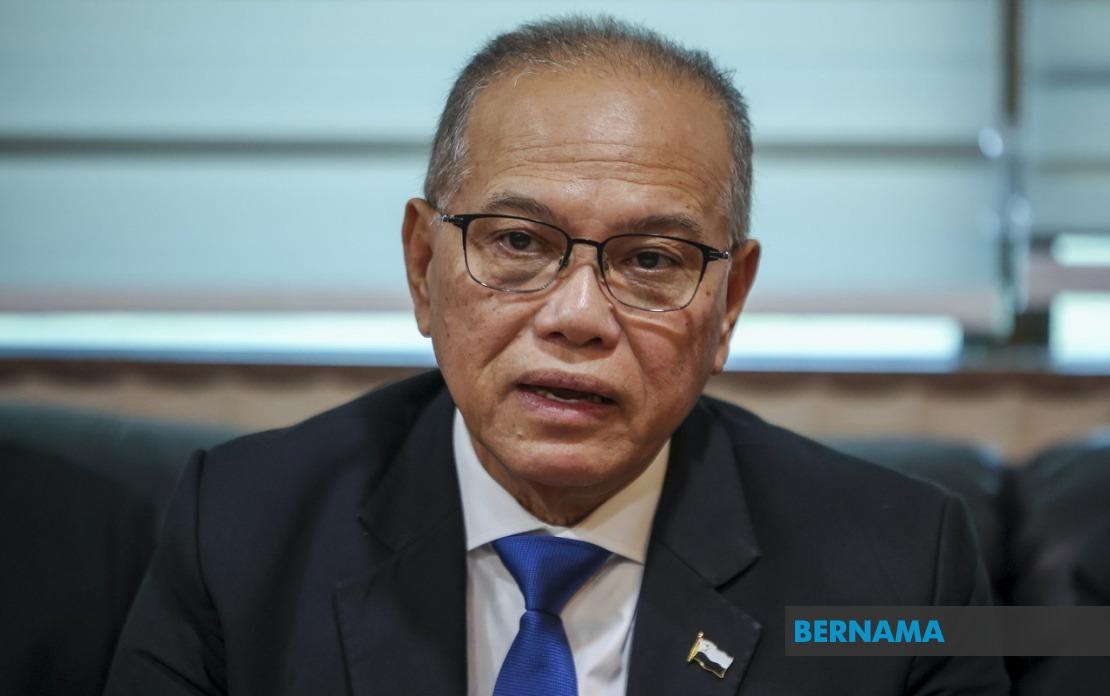
Pahang's financial machinery is operating in high gear, with the state government having accumulated RM921.72 million in revenue collections through August 26, according to Menteri Besar Datuk Seri Wan Rosdy Wan Ismail. The figure represents a substantial 72 per cent of the state's full-year revenue target of RM1.279 billion, suggesting the eastern Malaysian state is well positioned to surpass its fiscal goals before the year concludes. Wan Rosdy made the announcement during the Pahang State Legislative Assembly sitting at Wisma Sri Pahang, responding to a query from assemblyman Datuk Mohd Sharim Md Zain regarding the state administration's economic accomplishments in 2026.
The revenue performance reflects what Wan Rosdy characterised as a fundamentally sound fiscal position underpinned by sustained economic expansion across the state. This trajectory carries significance for Malaysia's broader economic narrative, as Pahang contributes substantially to the nation's resource extraction and manufacturing sectors. The menteri besar's emphasis on being "on the right track" suggests not merely meeting targets but maintaining momentum that could translate into additional resources for state development initiatives. For Malaysian investors and businesses monitoring regional performance, such fiscal stability signals continuity in government spending and infrastructure investment, factors that influence purchasing decisions and business expansion plans.
Pahang's economic expansion has gathered momentum in recent years, with the state's gross domestic product climbing to RM71 billion in 2025 from RM68.8 billion the previous year. This growth trajectory, though representing a modest percentage increase, demonstrates resilience in an economic environment where many Malaysian states face headwinds from global trade uncertainties and commodity price volatility. For context, Pahang's economy is heavily dependent on mining, palm oil production, and increasingly on manufacturing and tourism. The GDP expansion suggests diversification efforts are bearing fruit, or existing sectors are performing better than anticipated.
Investment flows into Pahang have accelerated under the current administration's push to attract both domestic and foreign capital. As of August 2026, the state recorded RM11.47 billion in committed investments, representing pledges from companies that have indicated intention to establish operations or expand existing facilities in Pahang. More tangibly, realised investments—actual capital deployment—had reached RM1.044 billion, indicating that investors are not merely making announcements but following through with concrete expenditure. This distinction between committed and realised investments matters significantly, as it demonstrates that business confidence in Pahang's investment climate is translating into actual economic activity rather than remaining aspirational.
The convergence of fiscal strength and economic expansion has enabled the state government to pursue social welfare initiatives with increased generosity. Wan Rosdy highlighted the Makmur Pahang Initiative, a programme designed to distribute direct benefits to residents. The initiative received a cumulative allocation of RM173.93 million across the 2024-to-2026 period, with funding accelerating notably over time. The 2024 allocation stood at RM38.8 million, rising to RM50.54 million in 2025 before jumping significantly to RM84.59 million in 2026. This escalating pattern suggests that as state revenues strengthen, the government is willing to commit proportionally greater sums to direct assistance programmes, a strategy that builds political support while theoretically addressing economic inequality.
The willingness to substantially increase allocations to welfare initiatives in 2026 compared to preceding years reflects confidence in revenue sustainability and fiscal management. Malaysian state governments operate under tighter budgetary constraints than the federal administration, making such commitments notable. The menteri besar's indication that allocations for the Makmur Pahang Initiative will increase further following the tabling of next year's state budget suggests this trajectory is expected to continue. For residents and business communities in Pahang, such spending patterns signal government prioritisation of constituency welfare and social safety net expansion.
The revenue collection performance, when viewed against the backdrop of economic growth and investment figures, presents a coherent picture of administrative effectiveness and favourable business conditions. State governments in Malaysia derive revenue from land taxes, licensing fees, royalties from resource extraction, and various service charges. Pahang's substantial revenue base reflects its position as a resource-rich state with significant economic activity. The 72 per cent collection rate achieved by late August suggests either that revenue streams are performing ahead of seasonal expectations, or that collection mechanisms have improved in efficiency, or both.
Wan Rosdy's framing of revenue performance as evidence of a "strong" financial position serves multiple audiences simultaneously. For Pahang residents, it communicates government capacity to fund public services and welfare programmes. For investors considering the state, it suggests fiscal stability and reduced likelihood of budgetary crises that might disrupt business operations. For the federal government, it demonstrates that state-level administration is functioning effectively and generating adequate resources. This multi-layered messaging reflects the political economy of state governance in Malaysia, where menteri besars operate as chief executives balancing development ambitions with fiscal constraints.
The economic indicators cited by Wan Rosdy accumulate to suggest Pahang has entered a virtuous cycle where economic expansion generates state revenue, which finances development projects and welfare initiatives, which in turn creates conditions favourable to further investment and growth. However, such cycles remain contingent on maintaining investor confidence, managing commodity price fluctuations—particularly relevant for a state dependent on resources—and ensuring that government spending translates into productive economic activity rather than mere consumption. The next critical test will be whether Pahang sustains these growth and revenue trajectories, particularly if regional or global economic conditions deteriorate.

