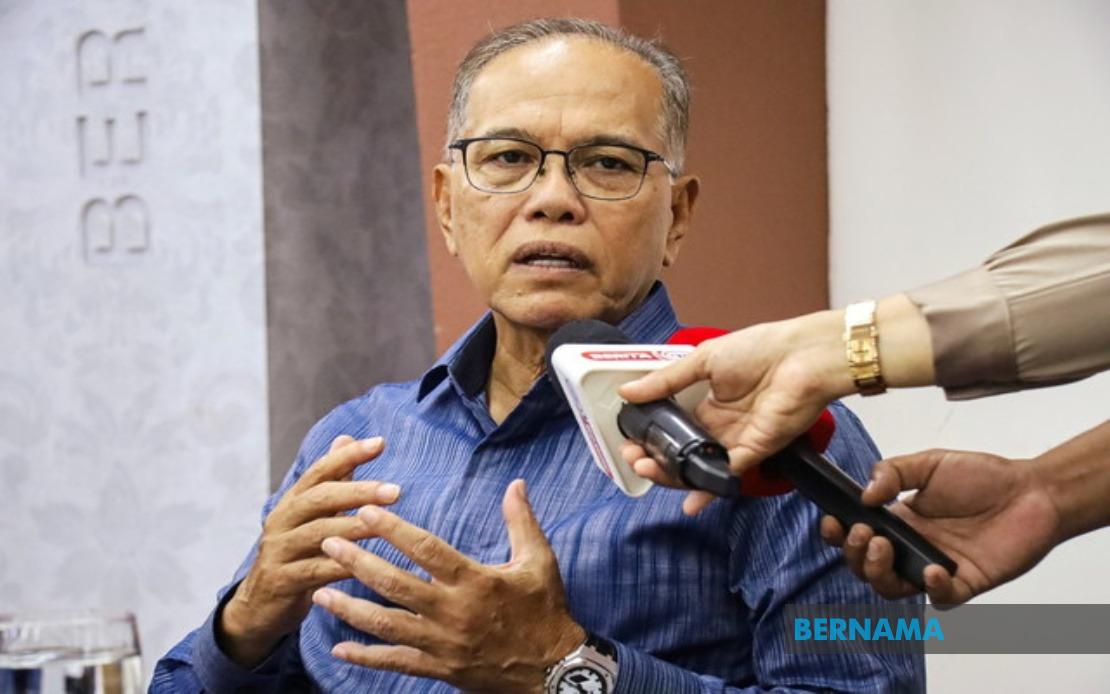
Pahang Barisan Nasional remains committed to sustaining its Unity Government partnership with Pakatan Harapan through the 16th General Election, according to Menteri Besar Datuk Seri Wan Rosdy Wan Ismail. The declaration carries significant weight as Pahang navigates its political trajectory following the previous election cycle that reshaped Malaysia's parliamentary landscape and state governance structures.
Wan Rosdy made these remarks during the launch of an overseas scholarship initiative in Kuantan, emphasizing that the state leadership's priority lies in fulfilling its core mandate of advancing public welfare. The statement reflects an intention to prioritize governance continuity over political maneuvering, at least for the duration of the current electoral cycle. His comments suggest that despite potential tensions within coalition arrangements, the Pahang administration aims to maintain operational stability.
The political arithmetic in Pahang following the 2022 general election established a delicate balance that necessitates cross-coalition cooperation. The state assembly comprises 42 seats distributed among three main political entities: Barisan Nasional and Perikatan Nasional each secured 17 seats, while Pakatan Harapan won eight seats. This configuration meant that no single entity possessed a working majority, making the BN-PH alliance arrangement essential for forming a viable government. When the Pahang Regent consented to the Unity Government structure in November 2022, it represented a pragmatic political solution that prioritized governance over ideological alignment.
Wan Rosdy's openness to additional political cooperation ahead of GE16 suggests flexibility in Pahang's political strategy. Rather than viewing the current coalition as the only viable arrangement, the Menteri Besar has signaled willingness to engage with other political entities should circumstances warrant. This positioning provides the state government with tactical options while maintaining its current operational framework. Such political maneuvering is typical as parties prepare for forthcoming electoral contests and seek to maximize their negotiating positions.
The significance of Pahang's political stability extends beyond state boundaries. As Malaysia's largest peninsula state by area and home to substantial mineral and agricultural resources, the state's governance conditions influence regional development trajectories. A cohesive administration enables long-term planning and project implementation that might otherwise be disrupted by constant political flux. Conversely, coalition instability could compromise development initiatives and investor confidence in the state's capacity for sustained policy implementation.
Beyond political declarations, Wan Rosdy highlighted the Makmur Pahang Initiative, which channeled RM118,000 to support 118 tertiary students pursuing further education in Egypt and New Zealand. Additionally, the state government allocated USD1,000 through Yayasan Pahang for students studying in Jordan and Morocco. These investments reflect the administration's commitment to developing human capital through international educational exposure, particularly in fields deemed strategically important.
The scholarship program's emphasis on courses incorporating Islamic elements demonstrates deliberate curriculum selection reflecting state values and demographic considerations. By prioritizing fields of study with relevance to Pahang's economic development priorities, the initiative targets educational pursuits likely to yield beneficial returns when graduates return to contribute to state development. The Menteri Besar's exhortation that scholarship recipients uphold Pahang's reputation abroad underscores expectations that international education investments yield not merely individual advancement but collective state prestige.
The challenges facing overseas students deserve attention within Malaysia's broader educational strategy. Wan Rosdy's acknowledgment that studying abroad presents significant mental and physical challenges reflects awareness of adjustment difficulties confronting Malaysian students in unfamiliar educational and cultural environments. Supporting infrastructure for overseas scholars—including emotional wellbeing resources and academic guidance—remains critical for maximizing educational outcomes and ensuring graduates return with intended expertise rather than becoming permanently displaced overseas.
The Makmur Pahang Initiative's planned expansion and enhancement signals ongoing commitment to enlarging scholarship opportunities as demand grows. Regular curriculum assessment ensures that supported fields of study remain aligned with evolving economic needs and employment market realities. This adaptive approach contrasts with static scholarship programs that risk funding studies in fields with limited employment prospects.
Pahang's educational investment strategy carries implications for Malaysia's broader human capital development. By systematically channeling state resources toward overseas tertiary education in carefully selected disciplines, the state government participates in developing specialized expertise pools that strengthen national competitiveness. The emphasis on countries including Egypt, New Zealand, Jordan, and Morocco reflects geographic diversification in educational partnerships, potentially exposing Pahang's youth to varied educational philosophies and international perspectives.
The timing of these announcements—during a politically dynamic period as coalitions consolidate and parties prepare for eventual electoral contests—suggests strategic communication. Emphasizing educational investment and developmental initiatives allows state leadership to emphasize governance contributions beyond partisan positioning. Such framing helps political coalitions justify their continued partnership to constituents by highlighting tangible benefits delivered through unified administration.
Looking ahead, Pahang's political stability during the current parliamentary term appears contingent on maintaining the BN-PH arrangement, absent significant external political disruptions. The Menteri Besar's affirmation of commitment through GE16 provides reassurance regarding continuity, though Malaysian politics has demonstrated capacity for unexpected shifts. Educational investments like the Makmur Pahang Initiative represent visible, popular governance outcomes that bolster coalition legitimacy regardless of underlying political considerations.

