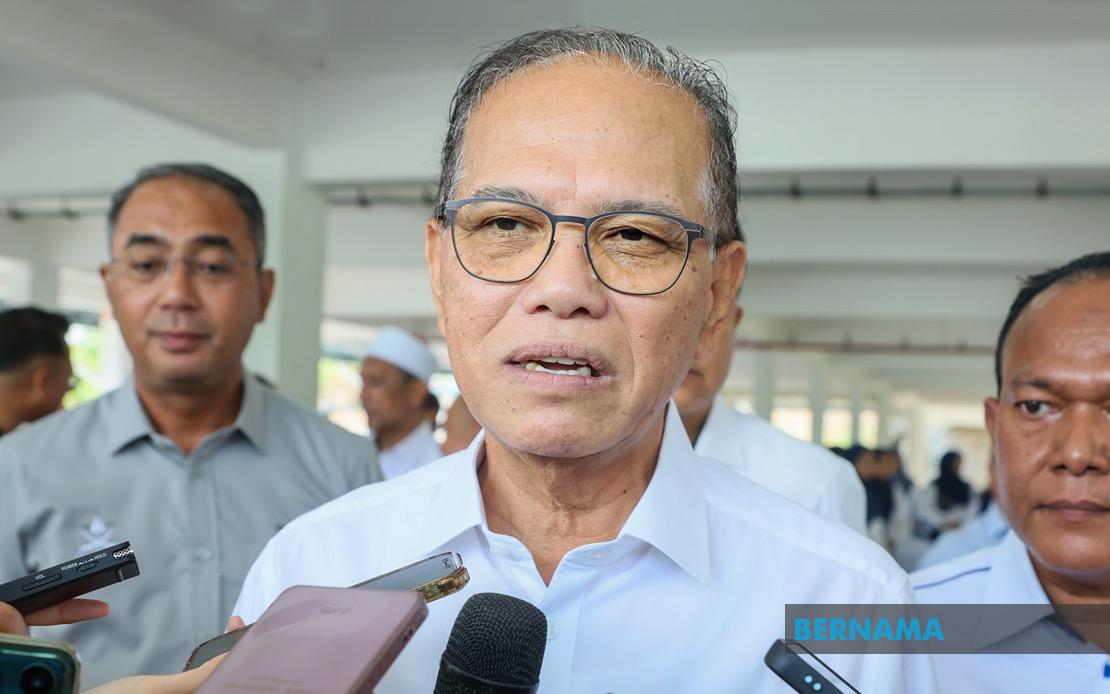
Datuk Seri Wan Rosdy Wan Ismail, the Menteri Besar of Pahang, has made a renewed push to encourage young members of the Orang Asli community to pursue Technical and Vocational Education and Training (TVET) programmes, framing such qualifications as essential tools for improving economic prospects and reversing entrenched patterns of educational disengagement. Speaking at the YP Advanced Skills Malaysian Skills Certificate and Diploma Convocation Ceremony at the Sultan Haji Ahmad Shah Silver Jubilee Hall in Kuantan, Wan Rosdy highlighted the urgency of addressing dropout rates that continue to constrain social mobility within indigenous communities across Pahang, which hosts approximately 90,000 Orang Asli residents.
The challenge of educational attainment among Orang Asli populations remains one of Malaysia's most persistent developmental issues. Historically marginalised and geographically dispersed across forested and rural areas, Orang Asli communities have experienced systemic barriers to schooling—ranging from limited infrastructure and transport to cultural factors and economic pressures that force young people into livelihoods rather than classrooms. Pahang, with its large concentration of indigenous populations, bears particular responsibility in confronting this structural problem. The Menteri Besar's intervention reflects growing recognition within state-level administration that TVET pathways offer pragmatic alternatives to traditional academic routes, potentially opening doors that might otherwise remain closed.
Wan Rosdy's remarks emphasised that vocational and technical qualifications no longer occupy a subordinate position in Malaysia's educational hierarchy. Speaking directly to perceptions that skills-based training represents a second-tier option, he articulated a modernised understanding of the labour market, where employers across manufacturing, construction, hospitality, and emerging sectors actively seek graduates with certified technical competencies. This reframing carries particular significance for communities where completion of secondary schooling may itself prove challenging; TVET programmes structured at various proficiency levels can provide structured pathways to employment without requiring lengthy academic prerequisites. The symbolic importance of his statement extends beyond rhetoric—it signals official sanction for educational choices that families and communities might otherwise view with hesitation.
The convocation ceremony itself served as a tangible demonstration of programme success, celebrating 388 graduates who have completed qualifications in diverse technical fields. These individuals represent not merely statistical outputs but potential community ambassadors whose visible achievements can shift attitudes toward vocational training within their own villages and family networks. Wan Rosdy explicitly articulated hope that graduates would return to their communities and function as role models, establishing a multiplier effect wherein educational success becomes more culturally normalised within Orang Asli peer groups. This informal social mechanism—peer influence and witnessed success—often proves more persuasive than top-down policy messaging in communities where trust in external institutions may be limited.
The employment outcomes available to TVET graduates present tangible incentives for participation. Unlike purely academic credentials, technical qualifications immediately translate into job-ready capabilities sought by employers. Wan Rosdy articulated two distinct pathways: wage employment in established enterprises and self-employment through business ventures. Both carry genuine income-generation potential, particularly valuable in contexts where formal employment opportunities remain geographically constrained. The flexibility inherent in skills qualifications—enabling graduates to move between employment and entrepreneurship—aligns well with economic realities in resource-rich but infrastructure-limited regions where Orang Asli populations concentrate. A certified electrician or construction specialist, for instance, can secure employment in nearby towns or establish independent contracting operations within their locality.
YP Advanced Skills' track record in producing graduates described as possessing both strong character development and high employability suggests that programme design has moved beyond purely technical instruction. Integration of soft skills, workplace ethics, and professional comportment acknowledges that employment success depends upon holistic preparation. This comprehensive approach carries particular importance for marginalised communities, where external stereotypes and discrimination may compound individual shortcomings. Young Orang Asli workers entering the labour market with both technical competence and demonstrated professionalism gain tools to counter prejudices and establish themselves as reliable contributors. The institutional validation offered by formal qualifications provides objective credentials that supplement educational backgrounds potentially marked by earlier disadvantage.
The Menteri Besar's encouragement for continued advancement—his suggestion that graduates pursue higher-level study whenever feasible—recognises that technical qualifications function most effectively not as terminal credentials but as foundations for progressive development. Pathways enabling movement from diploma-level qualifications toward degree-level studies in engineering, technology management, or related fields create extended opportunity structures. Malaysian institutions increasingly recognise TVET graduates as viable candidates for higher education; this expanded mobility means that initial technical qualification need not constrain ultimate achievement. For communities where university attendance has been historically rare, articulated pathways from vocational training into degree programmes make advanced credentials psychologically and materially more attainable.
Addressing the educational dropout challenge within Orang Asli populations requires multifaceted intervention beyond encouraging vocational pathways alone. Infrastructure investment, transportation support, stipends addressing opportunity costs of schooling, culturally-informed curriculum development, and recruitment of indigenous educators all contribute to systemic change. Nevertheless, Wan Rosdy's emphasis on TVET represents recognition that expanded educational options—not assuming that traditional academic tracks represent the only legitimate pathway—increases overall participation rates. Some young people who might abandon formal education entirely when faced only with conventional secondary schooling may engage positively with practically-oriented programmes offering visible relevance to economic realities they and their families understand.
The broader policy implications resonate across Southeast Asia, where indigenous and minority communities throughout the region confront comparable educational disadvantages. Malaysia's visible investment in TVET access for Orang Asli communities, particularly through state-level leadership articulation, contributes a regional model emphasising inclusive growth through skills diversification. As economies across the region grapple with demographic transitions, skills shortages, and the need to bring disadvantaged populations into productive participation, expanding vocational pathways represents pragmatic policy. Wan Rosdy's public advocacy helps normalise technical education as a legitimate developmental strategy rather than a residual option.
Implementing such ambitions sustainably requires continued institutional commitment and resource allocation. Ensuring that TVET programmes maintain quality and relevance, that graduates encounter genuine employment demand in their localities, and that communities receive consistent messaging about programme value demands consistency beyond individual ceremonial endorsements. The 388 graduates celebrating completion of their qualifications today represent both accomplishment and responsibility—their successful integration into the labour market and their capacity to influence younger community members will ultimately determine whether this educational initiative produces lasting change in Orang Asli participation rates and economic mobility.

