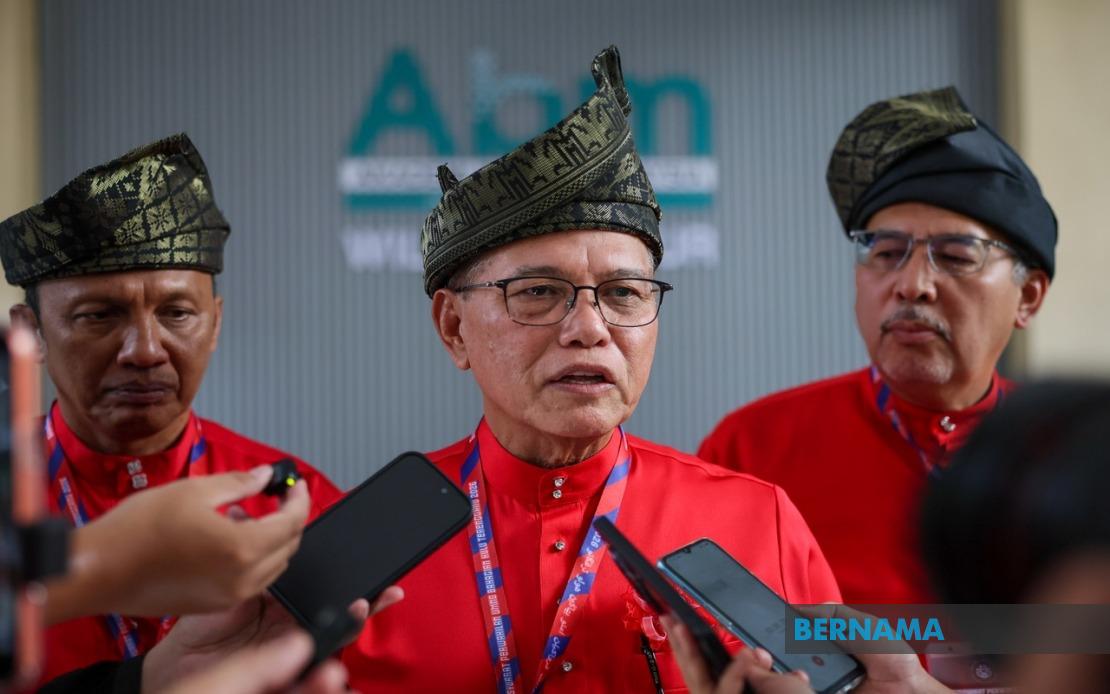
Pahang has achieved a significant milestone in resolving decades-long land ownership disputes affecting Federal Land Development Authority (FELDA) settlers across the state. According to Menteri Besar Datuk Seri Wan Rosdy Wan Ismail, approximately 43,600 settlers have now received official land titles, representing a completion rate of 99.5 per cent—a substantial administrative accomplishment for a program that has historically faced complex paperwork and documentation backlogs.
The state government's handling of this matter reflects broader efforts across Malaysia to regularize land tenure among agricultural communities. FELDA, established in 1956, has long grappled with administrative challenges in documenting settlers' land rights across its various schemes nationwide. The Pahang achievement suggests that coordinated state-level intervention, combined with dedicated administrative resources, can meaningfully expedite what had previously been a protracted process for many families dependent on smallholder agriculture for their livelihoods.
Wan Rosdy revealed that only marginally more than 200 applications remain outstanding, with these cases predominantly involving inheritance disputes—a category of land matters typically requiring more extensive legal investigation and family coordination. He expressed confidence that these remaining issues would be fully resolved before the year concludes, provided the administrative machinery maintains its current momentum. The inheritance complications often arise when settler beneficiaries lack clear documentation of familial relationships or when multiple heirs make competing claims to the same plot.
The resolution of land title applications carries substantial implications for FELDA settler families beyond the symbolic value of formal ownership documentation. Secure land titles enable settlers to access credit from financial institutions, use property as collateral for business ventures, and provide their families with documented assets that can be transferred or inherited with legal clarity. For communities that have often operated in uncertain tenure conditions, these documents represent tangible improvements in economic security and generational wealth preservation.
Wan Rosdy, speaking in his capacity as UMNO vice-president at the Hulu Terengganu UMNO division delegates meeting in Kuala Berang, emphasised that the state government views settler welfare as a fundamental responsibility. His framing of land title distribution as a rights issue rather than merely an administrative task signals recognition that this extends beyond bureaucratic procedure to encompass the dignity and economic participation of rural communities. This positioning may reflect broader political awareness of the electoral significance of agricultural constituencies in Pahang and the East Coast region more broadly.
The state government's commitment extends beyond title regularization. Officials have simultaneously focused on supporting the second generation of FELDA settlers by allocating approximately 16,000 housing plots across Pahang. This forward-looking initiative acknowledges a demographic reality: the original settler generation is aging, and their children increasingly seek independent homeownership within or near existing FELDA schemes. Without deliberate intervention to provide affordable housing opportunities, second-generation settlers might migrate toward urban areas, potentially destabilizing agricultural production and community cohesion in these schemes.
Wan Rosdy's articulation of housing provision as evidence of the state government's responsiveness to settler concerns suggests an understanding that agricultural communities expect multi-faceted support beyond land tenure security. The combination of title regularization and housing allocation represents an integrated approach to sustaining these communities economically and socially. For policymakers evaluating FELDA's overall trajectory, Pahang's experience offers a model of what coordinated state intervention can achieve within a defined timeframe and geographic scope.
Comparable progress in neighbouring Johor, where between 14,000 and 16,000 land titles have been issued to settlers, indicates that systematic title distribution is becoming achievable across multiple states. However, the variation in absolute numbers and completion rates across different states suggests that resources, administrative capacity, and political prioritization remain uneven. Pahang's near-completion status may reflect either superior administrative efficiency, higher initial documentation standards, or greater budget allocation—factors that would merit examination by other states managing larger settler populations.
The implications for Malaysia's agricultural sector are noteworthy. FELDA schemes encompass hundreds of thousands of hectares and millions of people across multiple generations. Resolving land tenure insecurity at scale could unlock productivity improvements by enabling farmers to invest confidently in soil enhancement, infrastructure improvements, and crop diversification. Settlers with formal documentation may also find it easier to participate in agricultural modernization initiatives, cooperative ventures, and value-added production, provided complementary services and market access are available.
Looking forward, Pahang's achievement suggests that the outstanding inheritance cases, while numerically modest, warrant specialized legal and administrative attention. Such cases often involve complex family situations and may require mediatory approaches rather than purely bureaucratic processing. The state's timeline commitment—resolving these by year-end—will test whether specialized attention can match the efficiency achieved with straightforward title applications, particularly where disputes exist among multiple heirs or documentation gaps require investigative reconstruction.
For Malaysian policymakers and regional observers, Pahang's near-completion of FELDA land title distribution demonstrates that long-standing agrarian issues, though administratively demanding, remain solvable through sustained commitment and adequate resourcing. The integration of title regularization with second-generation housing provision further illustrates that sustainable rural development requires concurrent attention to multiple household needs. As Malaysia contemplates broader agricultural modernization and rural development objectives, the Pahang experience offers empirical evidence that foundational tenure security—paired with complementary social investments—constitutes an achievable and valuable starting point for more ambitious agricultural transformation initiatives.

