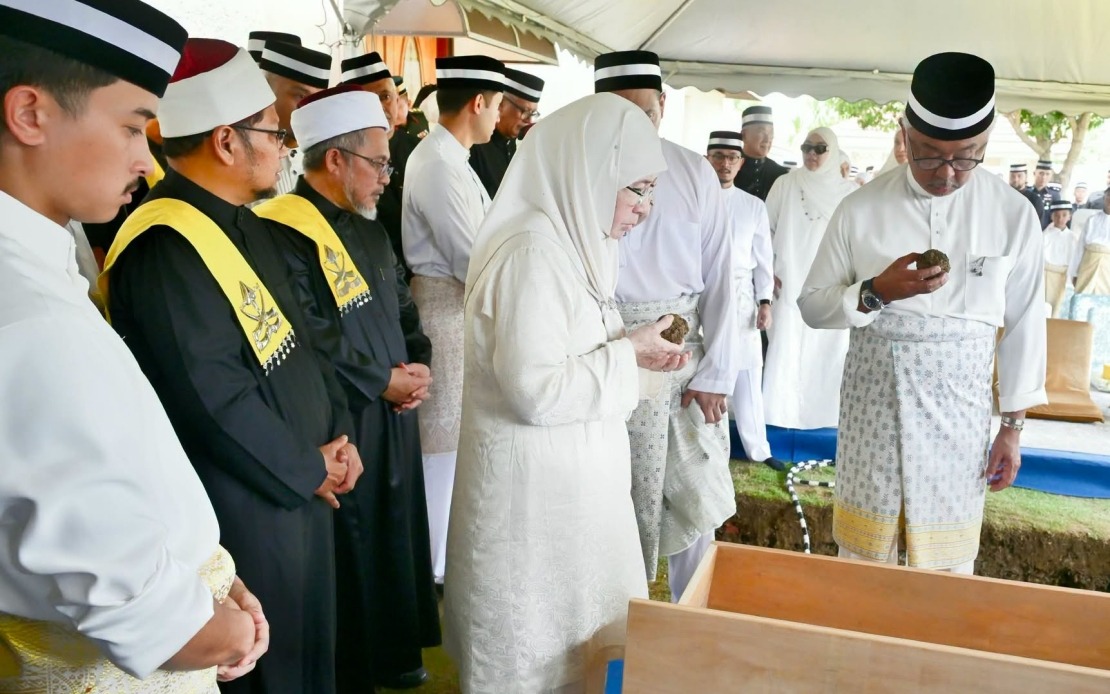
The royal family of Pahang has commenced an official period of mourning spanning three days in response to the death of Tengku Puteri Seri Kemala Tengku Datuk Seri Aishah, the elder sister of Sultan Al-Sultan Abdullah Ri'ayatuddin Al-Mustafa Billah Shah. The directive came directly from the Sultan, establishing a formal observance that reflects both the family's loss and the state's cultural protocols surrounding royal bereavement.
Major General Datuk Mohamed Zahari Yahya, who serves as Comptroller of the Royal Household, announced the mourning procedures through an official statement. The three-day period commenced on August 27 and will conclude on Saturday, encompassing the immediate aftermath of Tengku Puteri's passing. This formal timeline allows the extended royal family and the broader Pahang community to participate in collective grief and remembrance according to established royal protocols.
Specific dress codes have been prescribed for the duration of the mourning period, reflecting longstanding royal traditions in Malaysia. All members of the Pahang royal family are required to wear white clothing throughout the three-day observance. Additionally, male family members must adhere to particular sartorial conventions during this time, though the official statement did not fully elaborate on these specific requirements. These visible symbols of mourning serve both a personal and public function, signalling to the state's population the gravity of the loss and the family's respectful observance.
Tengku Puteri Seri Kemala Tengku Datuk Seri Aishah passed away at a Kuala Lumpur hospital at 9:15 pm on Wednesday evening. Her final interment took place later that afternoon at the Royal Mausoleum located in Pekan, the traditional burial site for members of the Pahang royal lineage. The swift arrangement of funeral rites adheres to Islamic practices while honouring the status and significance of the deceased within the state's royal hierarchy.
The loss carries particular poignancy for Sultan Al-Sultan Abdullah Ri'ayatuddin Al-Mustafa Billah Shah and his wife, Tengku Ampuan of Pahang Tunku Azizah Aminah Maimunah Iskandariah. As Tengku Puteri's younger siblings, both have been substantially affected by her passing. The comptroller's statement characterised her death as representing a profound absence within the royal family structure, underscoring the close familial bonds that characterise Malaysia's sultanates.
Beyond the immediate royal household, Pahang's broader population has been invited to participate in commemorating Tengku Puteri through spiritual means. The comptroller urged residents to recite Al-Fatihah, the opening chapter of the Quran, and to engage in personal prayers on behalf of the deceased. These invitations reflect the integration of Islamic practice within Malaysia's constitutional monarchy framework, where royal observances often carry religious dimensions that extend beyond the palace walls.
The collective prayer request specifically sought that Tengku Puteri's soul receive divine forgiveness and mercy, and that she be granted entry to paradise. This spiritual dimension of the mourning announcement underscores how Malaysia's royal institutions remain deeply embedded within Islamic tradition, even as they function within a modern constitutional system. The framing emphasises the interconnection between personal loss, family obligation, and broader communal religious practice.
Tengku Puteri Seri Kemala's position within the Pahang royal family carried historical significance beyond her immediate relationships. As the elder sibling, she held considerable symbolic importance within the state's institutional structure. Her passing therefore represents not merely a private loss but an event of public consequence that warrants the formal, three-day observance orchestrated by palace authorities.
The mourning period, though circumscribed in duration, reflects Malaysian royal protocol's balance between visible public recognition of loss and the eventual return to normal institutional functioning. The three-day timeline permits the royal family and state population to acknowledge the significance of Tengku Puteri's life while providing a defined endpoint for the formal mourning observance. This structure has precedent within Malaysia's sultanate systems and demonstrates consistency in how royal households mark significant transitions.
For Malaysian observers, the announcement illuminates the continuing relevance of royal ceremonial practices in contemporary Malaysia. Despite modernisation across many spheres of national life, royal institutions maintain formal protocols surrounding death, mourning, and remembrance. The specific requirements regarding dress, the designation of funeral sites, and the mobilisation of public spiritual participation all reflect traditions that have persisted across generations of Pahang's sultanate.
The Pahang royal family's formal observance also demonstrates the institutional mechanisms through which royal households communicate with their populations during periods of transition. Through official statements released by palace officials, information regarding mourning protocols and behavioural expectations reaches the public domain, allowing both immediate family members and the broader state population to coordinate their responses to the loss in culturally appropriate ways.

