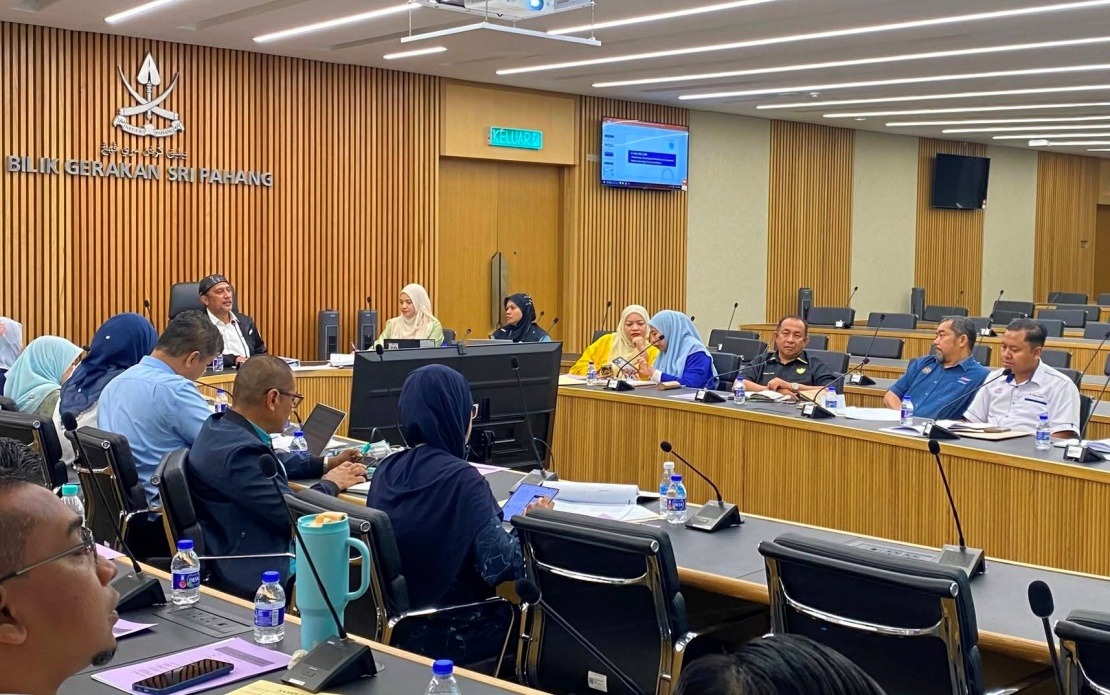
The Pahang state government has instructed key federal and state agencies to investigate a longstanding land dispute affecting the Orang Asli community in Kampung Sungai Cot, Maran, signalling a renewed commitment to untangle the complex overlapping claims that have created tension between indigenous cultivators and corporate interests. Datuk Seri Syed Ibrahim Syed Ahmad, who chairs the state committee overseeing Islamic affairs and Orang Asli development, announced that the Department of Orang Asli Development (JAKOA), the Pahang Land and Mines Office (PTG), and the Land and District Office will collaborate to find a legally sound path forward that serves all stakeholders.
The controversy centres on twelve Orang Asli individuals who have been working the land based on formal applications submitted to JAKOA, yet the same parcel was allocated to a private company through a State Executive Council decision made on 4 November 2015. This temporal overlap—where two separate approval processes appear to have been issued for identical terrain—represents a classic administrative entanglement that has affected indigenous land rights across Malaysia. Syed Ibrahim stressed that the state government disputes media narratives portraying the situation as a simple case of dispossession, instead characterising it as a matter requiring careful examination of documentation and historical context.
Progress on dialogue has been modest but noteworthy. JAKOA officials have engaged directly with representatives of the Orang Asli claimants through multiple discussion sessions aimed at narrowing the dispute. Crucially, these talks revealed that of the original twelve individuals with documented interest in the land, only six have continued actively pursuing their claims through formal channels. During these consultations, the continuing claimants asserted that the contested area formed part of their ancestral heritage, yet authorities conducting due diligence could not substantiate these claims against existing administrative records and verifiable evidence. This gap between oral tradition and documentary verification underscores a persistent challenge in Orang Asli land administration across the peninsula—the difficulty of establishing indigenous occupancy when formal colonial-era surveys often failed to recognise such claims.
Pahang's broader Orang Asli portfolio reveals an administration grappling with comprehensive indigenous affairs across multiple dimensions. The state currently recognises 264 Orang Asli settlements harbouring more than 90,000 registered community members. Among these, thirty villages have achieved formal gazette status under the Orang Asli Act 1954 and related national land legislation, providing them with heightened legal protection and clearer property delineation. Beyond gazette recognition, the state has extended landownership rights to the Orang Asli in sixteen additional villages through section 76 of the National Land Code, an advancement that tangibly strengthens indigenous tenure security.
The pipeline of pending applications demonstrates that land regularisation remains an active, if slow-moving, undertaking. Seventy-five gazettement applications from Orang Asli communities are currently navigating state processes. Of these, thirty-one applications have completed preliminary procedures and now await consideration by the State Executive Council, while forty-four applications are stalled at the critical resolution stage due to identified overlaps with other claimed or allocated land. A further cohort of 143 applications remains in initial surveys conducted by JAKOA—a substantial workload that suggests resolution of disputes like Kampung Sungai Cot will unfold within a broader, congested administrative timeline.
The Maran case exemplifies the structural complications inherited from Malaysia's land administration system, where historical leases, concessions, and development approvals often predate any formalised recognition of indigenous rights. When a company receives State Executive Council approval in 2015 for land that Orang Asli residents claim as ancestral territory, the resolution cannot simply privilege one party retroactively without acknowledging the other's legitimate administrative positioning. Syed Ibrahim's emphasis on handling the matter through law and consultation reflects the state's awareness that heavy-handed approaches risk inflaming indigenous grievances and drawing national and international scrutiny.
For the six claimants continuing to pursue their case, the outcome carries existential weight. Loss of access to cultivated land disrupts livelihoods, severs connections to place-based identity, and can force involuntary relocation—consequences that ripple through Orang Asli communities already marginalised within Malaysia's economic and political structures. Conversely, if corporate development is halted or substantially delayed due to unresolved indigenous claims, investors may lose confidence in Pahang's regulatory reliability, potentially deterring future projects. This tension between development imperatives and indigenous welfare remains unresolved in Malaysian governance, even as federal and state governments invoke consultation and legal frameworks.
The consultative approach championed by Pahang's leadership carries both promise and limitation. Multi-stakeholder dialogue can illuminate solutions—such as benefit-sharing arrangements, joint venture structures, or relocation with substantial compensation—that crude legal victories cannot achieve. However, consultation depends on genuine negotiating space and material concessions that state authorities may be unwilling to grant, particularly when a company has already received formal approval. Moreover, the inability of authorities to verify Orang Asli ancestral claims against existing records hints at broader documentation deficits; if Orang Asli occupancy predates modern survey systems, insisting on written evidence essentially privileges colonial-era administrative silence over indigenous presence.
The Kampung Sungai Cot dispute also raises questions about coordination between JAKOA and state land offices. If JAKOA processes Orang Asli applications independently while state councils allocate the same land to companies, bureaucratic failures rather than policy disagreement may be driving the overlaps. Strengthening inter-agency communication and establishing clear sequencing rules—such as requiring JAKOA pre-approval before releasing state land in areas of known or potential indigenous occupancy—could prevent similar disputes from arising. Whether Pahang will implement such procedural reforms remains unclear.
For Malaysian observers and Southeast Asian indigenous rights advocates, the Maran case offers a microcosm of how postcolonial states manage the intersection of economic development, indigenous welfare, and rule of law. Pahang's decision to formally task multiple agencies with finding a solution suggests recognition that the status quo is untenable, yet the glacial pace of application processing and the reliance on verifiable evidence rather than lived experience suggest that systemic change remains incremental. The outcome in Kampung Sungai Cot will likely influence expectations among other Orang Asli communities pursuing land claims across Pahang and neighbouring states, making this small village dispute a bellwether for indigenous land justice in peninsular Malaysia.

