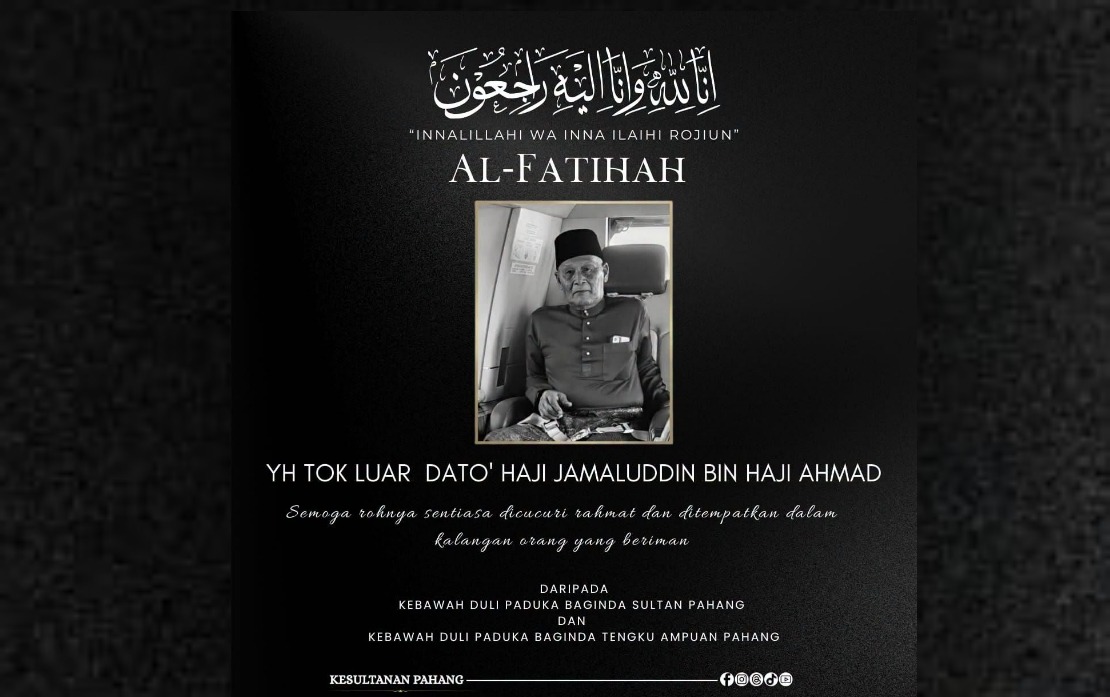
The Sultan of Pahang Al-Sultan Abdullah Ri'ayatuddin Al-Mustafa Billah Shah and Tengku Ampuan of Pahang Tunku Azizah Aminah Maimunah Iskandariah have expressed their sorrow following the death of Tok Luar Datuk Jamaluddin Ahmad, who passed away on the morning of June 28 at Tengku Ampuan Afzan Hospital (HTAA) in Kuantan at 6.48 am.
The royal couple's message of condolence was shared through the official Kesultanan Pahang Facebook page, emphasizing the deep personal loss experienced by the state's ruling institution. The announcement highlighted the significance of Jamaluddin's contributions to Pahang and his longstanding association with the sultanate's affairs, positioning him as a figure whose dedication had earned recognition from the highest levels of the state's leadership.
In their formal statement, Their Royal Highnesses characterized Jamaluddin as a loyal and devoted supporter of the Pahang Sultanate institution, reflecting the traditional bonds that connect the state's leadership with prominent community figures and institutional loyalists. Such recognition from the Sultan and Tengku Ampuan underscores the respect accorded to individuals who have maintained unwavering commitment to royal institutions throughout their lives, a practice deeply rooted in Malaysian constitutional and cultural traditions.
The royal message included prayers for the deceased's spiritual welfare, invoking Islamic traditions in seeking divine mercy and forgiveness for Jamaluddin's soul. According to the statement released by Kesultanan Pahang, the Sultan and Tengku Ampuan prayed that his soul would receive abundant mercy, that his sins would be forgiven, his righteous deeds accepted by the Almighty, and that he would be placed among the faithful and virtuous servants of Allah.
Beyond spiritual considerations, the royal couple also extended their sympathies to Jamaluddin's family members, recognizing the emotional burden they now face. The statement conveyed hopes that the family would find strength, resilience, and patience to navigate the difficult period following their loss, a gesture reflecting the royal institution's role as a source of moral support during times of grief within Pahang society.
The timing and manner of the royal condolence demonstrate the accessibility and responsiveness of Pahang's leadership to developments within the state community. By utilizing social media channels to share their message promptly, the Sultan and Tengku Ampuan ensured that news of their sympathy reached the broader public alongside the announcement of Jamaluddin's passing, exemplifying modern approaches to royal communication while maintaining traditional respectfulness.
In the Malaysian context, such formal condolences from the Sultan represent more than ceremonial protocol. They reflect the constitutional role of the monarch as a unifying figure within the state, personally acknowledging the contributions of individuals who have served institutional or community interests. The explicit mention of Jamaluddin's loyalty to the Pahang Sultanate suggests his involvement in matters touching state governance, ceremonial functions, or community leadership.
The death of prominent figures in Pahang's institutional circles carries implications for the state's administrative and social fabric. Individuals recognized as loyal supporters of the sultanate often occupy positions of influence in various sectors, from business to community organizations, making their passing significant beyond their immediate family circles. The royal acknowledgment validates the broader importance of their life work and ensures their contributions are remembered at the highest institutional levels.
For Malaysian readers, particularly those in Peninsular Malaysia where sultanate institutions remain constitutionally significant, such tributes underscore the continuing relevance of traditional hierarchies and the bonds between rulers and their subjects. The exchange of condolences between royalty and prominent citizens maintains social cohesion and reinforces shared values around respect, loyalty, and community responsibility that characterize Malaysian society.
The Kesultanan Pahang's use of Islamic invocations in the royal statement—including the phrase "Al-Fatihah," referring to the opening chapter of the Quran commonly recited for the deceased—reflects the integration of Islamic practice within state ceremonial functions. This approach is consistent across Malaysian sultanates and demonstrates how religious and institutional traditions interweave in the country's constitutional monarchy framework.
Jamaluddin's passing at Tengku Ampuan Afzan Hospital, one of Pahang's major medical facilities, suggests he had been receiving care in the state's healthcare system. The hospital's name itself reflects the sultanate's involvement in public health infrastructure, named after a previous Tengku Ampuan, further illustrating the deep connections between the state's royal family and its institutional foundations.
The royal condolence serves as a public record of Jamaluddin's standing within Pahang's social hierarchy and institutional memory. By formally acknowledging his loyalty and seeking divine mercy for his soul, the Sultan and Tengku Ampuan ensure that his contributions are memorialized in official channels, providing his family and community with recognition during their period of mourning. This practice reflects broader Malaysian customs surrounding death, respect, and the maintenance of social bonds across generations.

